
A 72-year-old with prolonged BiPAP use, nasogastric tube, and recent tracheostomy develops redness under the mask bridge, ear groove pressure from oxygen tubing, sacral moisture redness from supine positioning, and peristomal irritation. Which assessment best evaluates skin integrity related to devices, positioning, and stomas?
Select an answer to reveal the explanation.
Short Explanation
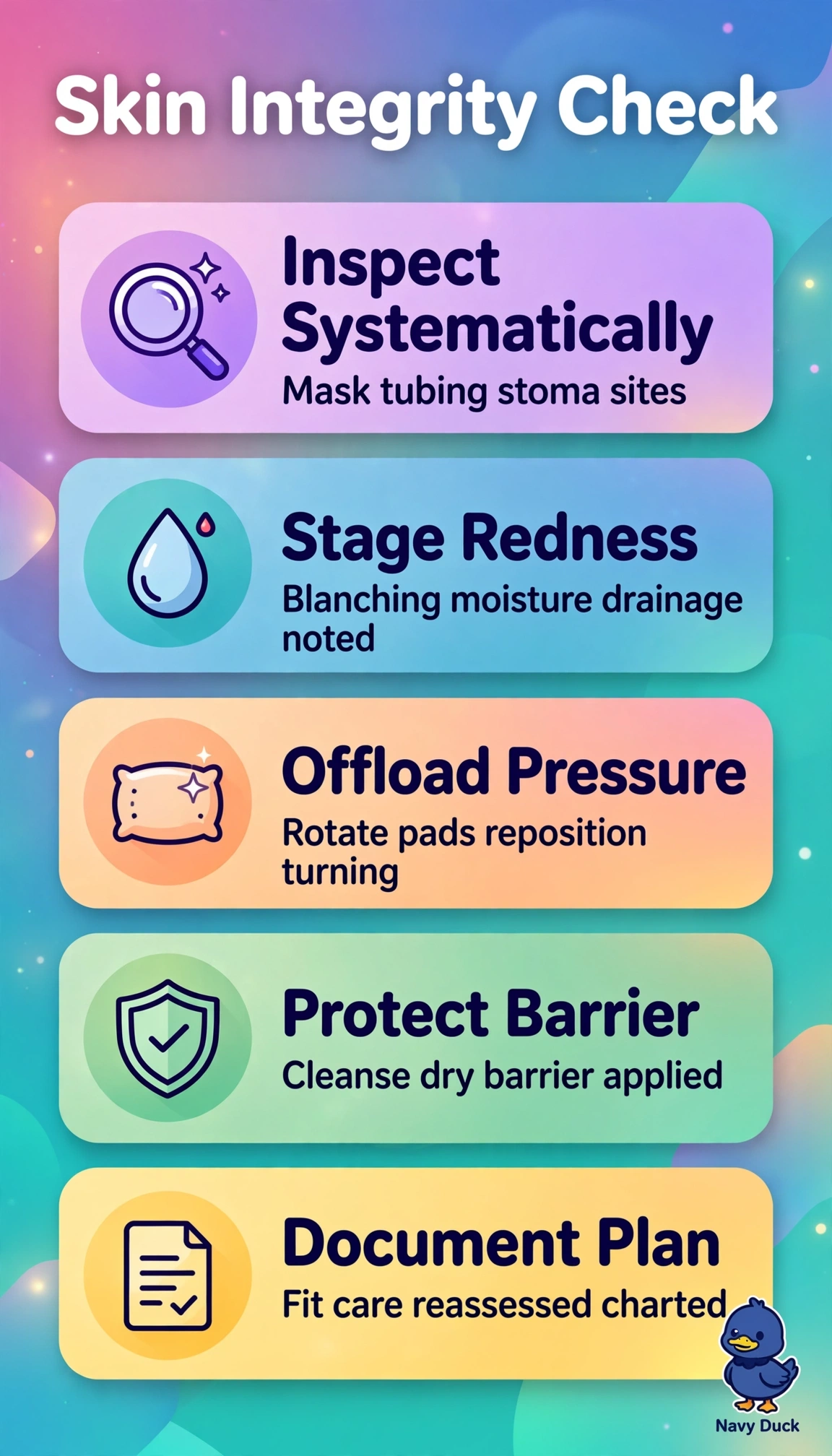
Your skin can’t call for help where gear rubs, so you’re its daily check-in, like a gardener spotting wear on a favorite hose. You’ll want a full check of the mask, tubing, pressure points, and stoma, with rotation, offloading, and barriers before redness turns serious.
Full Explanation
The correct response is comprehensive because prolonged BiPAP, nasogastric and oxygen tubing, supine immobility with moisture, and a recent tracheostomy create concurrent risks that must be assessed together: device-related pressure at the nasal bridge and ears, pressure plus moisture at the sacrum, and friction or drainage injury around the stoma. Inspection of the mask, tubing, pressure points, and stoma, paired with rotation, offloading, and a barrier plan, addresses these risks. The response focused on mask seal, ear tubing position, and sacral moisture with repositioning and barrier cream evaluates device pressure and positioning but omits peristomal irritation, so stomal excoriation, infection, or poor seal could go undetected. The response covering the mask bridge, sacral skin, and peristomal tissue with rotation and barrier care omits ear-groove pressure from tubing, leaving a classic medical device-related pressure injury unassessed. The response focused on BiPAP fit, tubing routing, and the tracheostomy stoma with padding and a stoma barrier neglects sacral assessment related to supine positioning and moisture, missing pressure injury and moisture-associated skin damage. Exam caveat: when a stem describes device, positioning, and stoma findings, don’t choose an answer that addresses only devices or stomas; completeness is being tested. Practical check: trace each device-skin interface, inspect the sacrum and stoma for drainage, and confirm that rotation, offloading, and barrier care are documented and implemented.