
A 4-year-old with known asthma presents to the ED with 2 days of viral upper respiratory symptoms, now with wheezing, accessory muscle use, SpO2 92% on room air and a moderate asthma score. Parents report albuterol at home helped briefly. Which assessment-driven management should the therapist implement for this pediatric asthma exacerbation with likely viral trigger?
Select an answer to reveal the explanation.
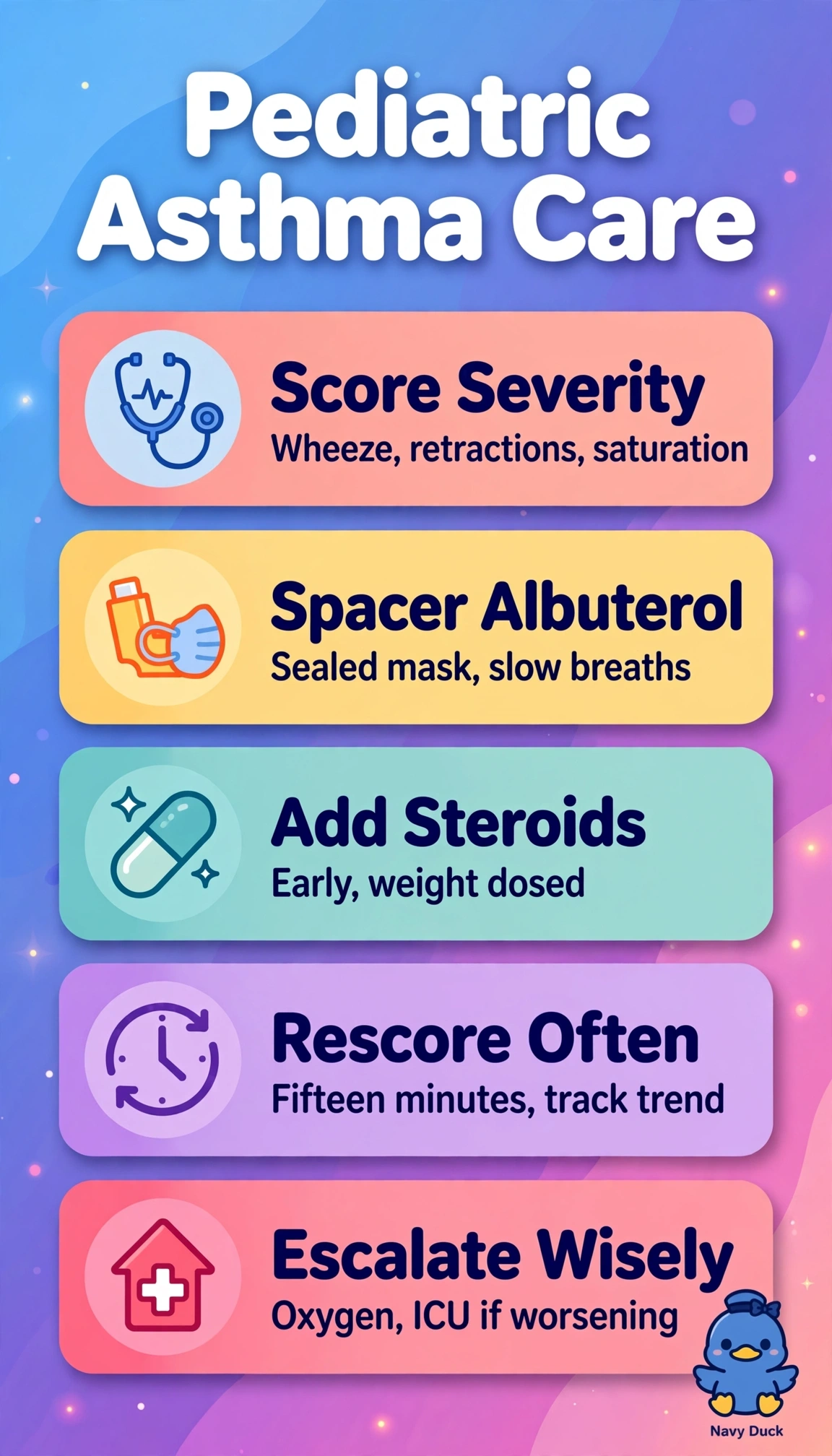
Short Explanation
Your quick reassessment matters because a child’s breathing can change rapidly during an asthma flare. Spacer albuterol and timely steroids address bronchospasm and inflammation, while serial rescoring helps you judge whether treatment is working or escalation is needed.
Full Explanation
Spacer-delivered albuterol with steroids and serial scoring is appropriate because this child has a moderate exacerbation, wheezing, accessory muscle use, SpO2 of 92% and only brief benefit from home albuterol after a viral prodrome. Albuterol provides prompt bronchodilation, steroids address airway inflammation, and repeated assessment of breathing work guides further treatment or escalation. Nebulized albuterol with oxygen and serial scoring provides bronchodilation and oxygen support, but omits systemic steroids, which are important in a moderate exacerbation to help limit a prolonged course and relapse. Spacer albuterol with steroids but only a baseline score gives appropriate medication but misses the dynamic reassessment needed when hypoxemia and increased work of breathing raise concern for deterioration and affect decisions about admission or intensified therapy. Inhaled corticosteroids with steroids and serial scoring includes anti-inflammatory treatment and reassessment, but omits the short-acting beta-agonist needed for immediate relief of active bronchospasm. Exam caveat: a viral trigger does not change the need to pair prompt bronchodilation with steroids and repeated scoring in a moderate exacerbation. Practical check: confirm a good spacer and mask seal, give steroids early, then reassess score, retractions, air entry, respiratory rate and SpO2 after each treatment; titrate oxygen if hypoxemia persists and use clear escalation criteria.