
A 55-year-old with obesity and loud snoring is drowsy after sedation for a procedure, breathing spontaneously at 10/min with SpO2 89%, soft stridor, and posterior tongue obstruction noted on exam. No cervical spine injury or vomiting is present. Which positioning maneuver best maintains a patent airway in this spontaneously breathing adult?
Select an answer to reveal the explanation.
Short Explanation
Gravity can be your airway assistant. The recovery position moves the tongue aside so each slow breath has a clearer path.
Full Explanation
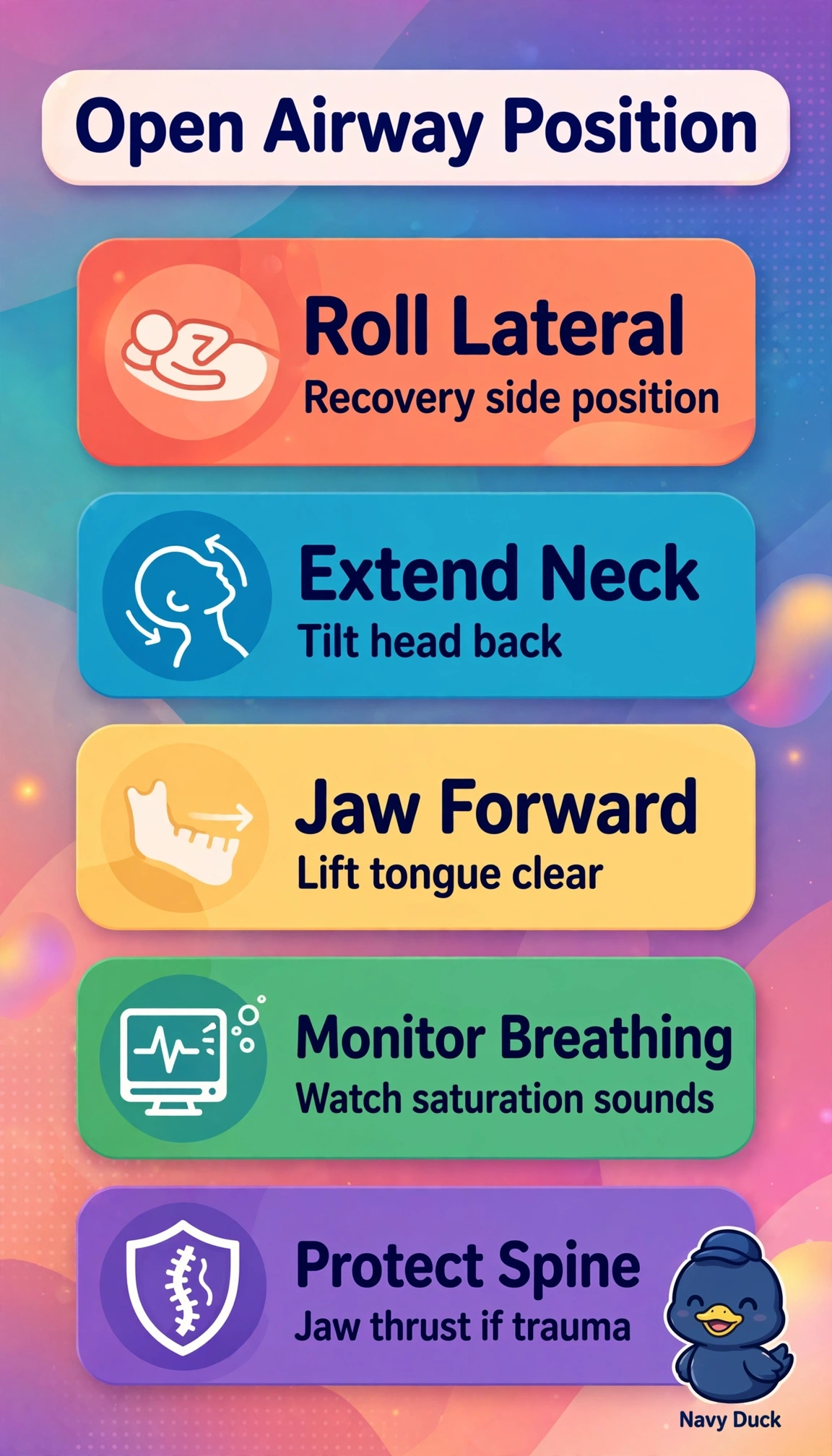
The lateral recovery position with neck extension and forward jaw support maintains the airway because lateral gravity draws the obese tongue and soft palate away from the posterior pharynx, extension opens the hypopharyngeal airway to relieve soft stridor, and jaw support prevents passive fallback. Together, these measures support patency during spontaneous breathing at 10/min and may allow SpO2 to rise from 89% without assisted ventilation; the absence of cervical injury makes extension acceptable, and no vomiting complicates care. Keeping the patient supine with neck extension and jaw thrust fails because, despite opening the atlanto-occipital angle, gravity can worsen posterior tongue obstruction and redundant tissue collapse in an obese loud snorer, so stridor and desaturation may persist. Lateral positioning with a neutral neck and forward jaw support fails because, without extension, the tongue base and epiglottis may remain close to the posterior wall, leaving obstruction unresolved. Sitting the patient semi-upright with neck extension and jaw support fails because a drowsy patient recovering from sedation may not maintain posture and can slump into flexion, losing passive airway protection. Exam caveat: distinguish spontaneous-breathing airway maintenance from apnea or cervical trauma, which may require immediate ventilation or neutral alignment rather than positioning alone. At the bedside, check for quieter breathing, less snoring and stridor, rising SpO2, adequate tidal excursion, stable jaw support without neck pressure, and readiness to escalate if drowsiness worsens.