
A term newborn is limp and apneic immediately after birth with no cry, heart rate 80 beats/min after drying and stimulation, and no meconium obstruction, in a delivery room with warm towels, suction, and a Neonatal Resuscitation Program team present. The cord is clamped and the warmer is on. Which neonatal resuscitation sequence best restores heart rate and ventilation?
Select an answer to reveal the explanation.
Short Explanation
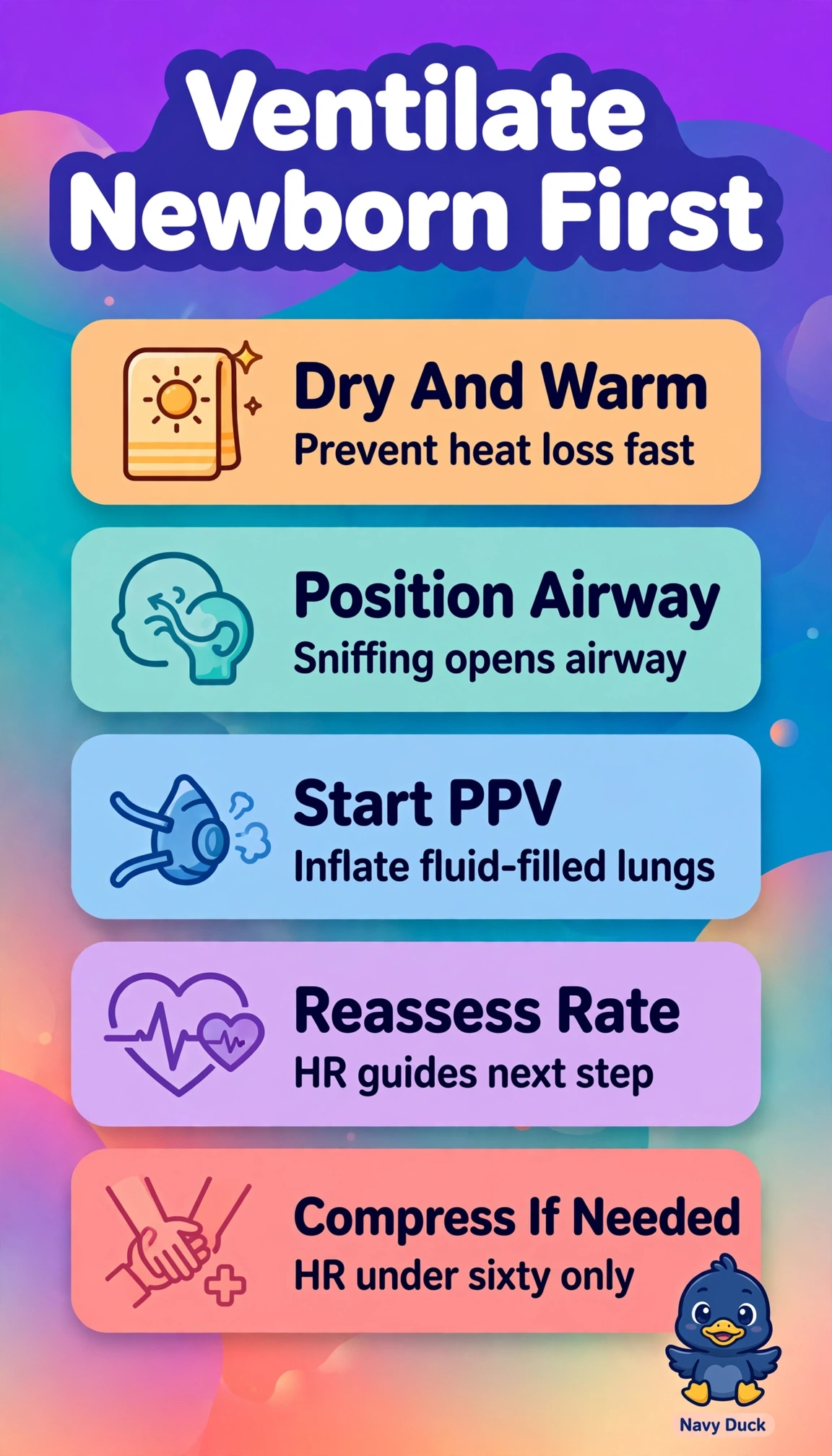
You're breathing for a baby who can't yet. Prompt ventilation after brief stimulation lifts heart rate fastest in newborns. You'll feel the win the moment tone and rate rebound.
Full Explanation
The correct sequence is right because this term infant has already failed drying, warming, positioning, airway clearing and stimulation yet remains limp and apneic with heart rate 80 beats/min and no meconium obstruction, so Neonatal Resuscitation Program guidance prioritizes prompt effective positive-pressure ventilation with room air to aerate lungs, establish functional residual capacity, and drive heart rate recovery, followed by reassessment of heart rate, breathing, and oxygenation. Continued drying and tactile stimulation under the warmer fails by delayed escalation because stimulation suits only initial apnea with adequate tone, while persistent apnea plus heart rate below 100 mandates ventilation rather than further delay. Starting ventilation with 100% oxygen fails by oxygen titration because routine term resuscitation begins in room air with oxygen blended upward only to meet preductal saturation targets, since unneeded hyperoxia increases oxidative injury without improving heart rate return. Starting compressions for heart rate still below 100 after ventilation fails by threshold physiology because most neonatal bradycardia responds to aeration alone and compressions are reserved for heart rate below 60 beats/min despite at least 30 seconds of effective ventilation with chest movement. Exam caveat: below 100 triggers ventilation, below 60 after effective ventilation triggers coordinated compressions with ventilation, and persistent bradycardia despite those measures triggers epinephrine and volume considerations. Practical check: confirm neutral airway, tight mask seal, visible chest rise, rising heart rate, and right-wrist pulse oximetry, using MR SOPA corrections before escalating oxygen or compressions.