
A 70-year-old in septic shock with pneumonia develops hypotension MAP 58 mmHg, atrial fibrillation with rapid rate, crackles with volume overload, and rising creatinine despite 30 mL/kg fluids and norepinephrine. Cultures are pending and potassium is elevated. Which medication care-plan change best recommends vasoactives, antiarrhythmics, antimicrobials, and diuretics?
Select an answer to reveal the explanation.
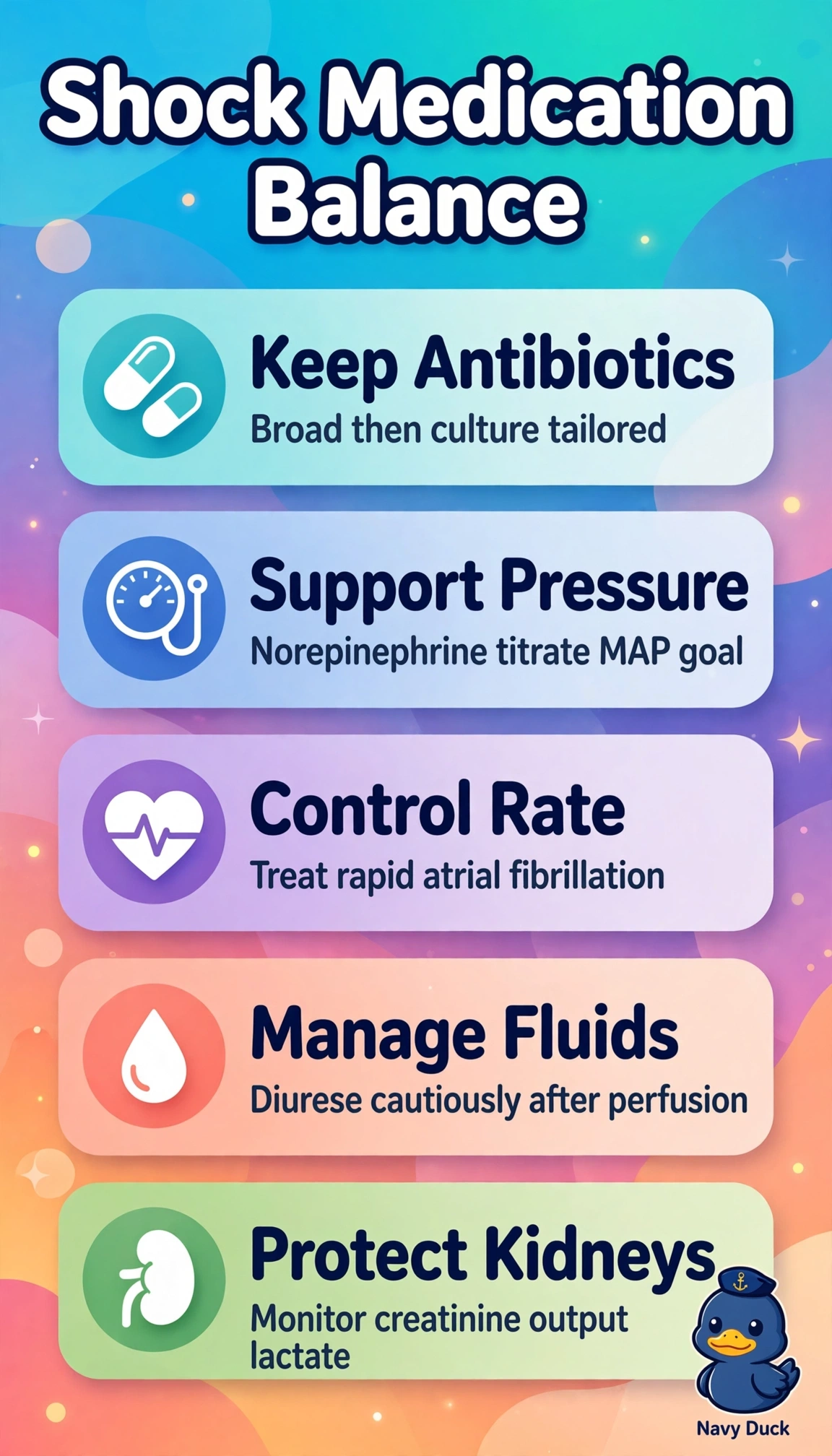
Short Explanation
You're juggling pressure and fluid like keeping a seesaw level in a storm, so you've got to keep perfusion first while antibiotics keep working. Don't stop pressors or flood the lungs — gentle rate control and cautious diuresis let everything work together.
Full Explanation
The correct plan fits refractory septic shock from pneumonia with persistent hypotension after 30 mL/kg, rapid atrial fibrillation, pulmonary overload, kidney injury and hyperkalemia. Continuing broad-spectrum antibiotics until cultures return prevents uncovered pathogens during instability, tailored vasopressor support restores MAP to at least 65 mmHg without worsening lung water, perfusion-compatible rate control limits rapid response without sacrificing contractility or pressure, and diuresis deferred until perfusion improves treats overload-driven hypoxemia while avoiding further renal hypoperfusion. The bolus-first plan violates volume physiology because added crystalloids after adequate loading with crackles and overload increase pulmonary edema and cardiac strain without raising effective perfusion, so pressure needs vasopressor titration and reassessment. The early-narrowing plan violates stewardship and sepsis principles because de-escalation requires culture data and clinical stability, and narrowing during ongoing shock with pending cultures risks treatment failure. The aggressive beta-blocker titration plan violates hemodynamic pharmacology because potent negative inotropic and chronotropic effects during hypotension on norepinephrine blunt compensatory output and worsen hypotension and organ perfusion. An exam caveat is that rising creatinine is not an absolute bar to diuresis when overload impairs gas exchange; timing, dose caution and monitoring matter more than avoidance. Practically, recheck MAP, lactate, urine output, creatinine trend, potassium, ECG, volume examination and concurrent vasopressor and rate-control doses before changing antibiotics, perfusion support and diuresis.