
A 54-year-old with pneumonia develops moderate ARDS with PaO2/FiO2 135 on FiO2 0.70, bilateral opacities, PEEP 10 cm H2O, and plateau pressure 29 cm H2O. Ventilation is volume control at 8 mL/kg predicted body weight with persistent dyssynchrony. No improvement after 12 hours and hemodynamics tolerate positioning. Which lung-protective strategy with proning and recruitment best manages this ARDS?
Select an answer to reveal the explanation.
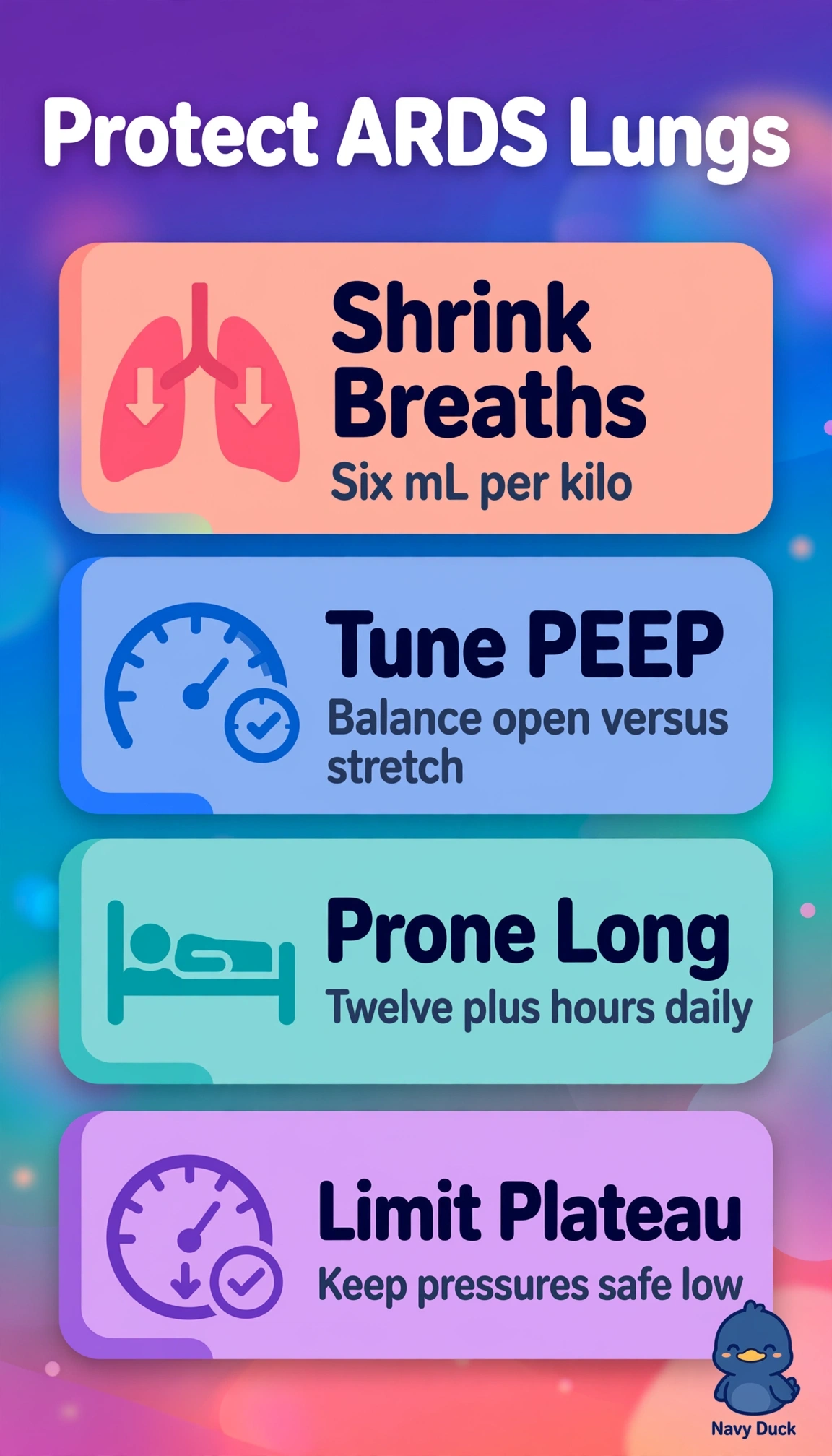
Short Explanation
You're protecting fragile lungs while coaxing them open. Small breaths win here, like tip-toeing on thin ice instead of stomping.
Full Explanation
Moderate ARDS is defined here by PaO2/FiO2 135 with bilateral opacities on PEEP 10, persistent hypoxemia on FiO2 0.70 after 12 hours, plateau 29 cm H2O on 8 mL/kg and dyssynchrony, with positioning tolerated, so full lung protection plus prolonged proning is indicated. Lowering tidal volume to 6 mL/kg predicted body weight reduces volutrauma and driving pressure, helps maintain plateau below 30 cm H2O and improves synchrony, optimized PEEP balances recruitment against overdistension for high FiO2 needs, and prolonged prone sessions improve ventilation-perfusion matching and dorsal aeration with benefit when PaO2/FiO2 remains below 150. Continuing supine ventilation with low volume and optimized PEEP fails by omitting indicated proning for refractory disease and leaves recruitable lung atelectatic. Maintaining PEEP fixed at 10 cm H2O with low volume and prolonged proning fails by omitting titration required by plateau elevation and persistent FiO2 need. Preserving 8 mL/kg with optimized PEEP and prolonged proning fails by omitting volume limitation and perpetuates plateau stress and dyssynchrony. An exam caveat is to distinguish moderate-severe thresholds where prolonged proning is prioritized from mild ARDS managed with PEEP and low volumes alone. A practical check is to recalculate predicted body weight, remeasure plateau and driving pressure, titrate PEEP to oxygenation and blood pressure, and monitor skin, eyes, tubes and sedation during proning.