
A 34-year-old with prior traumatic intubation is now anxious, tearful and declining a needed nebulizer treatment, citing fear of choking and mistrust of procedures. The therapist has limited time before the next scheduled medication. Which culturally aware, trauma-informed communication should the therapist use to support acceptance of this respiratory treatment?
Select an answer to reveal the explanation.
Short Explanation
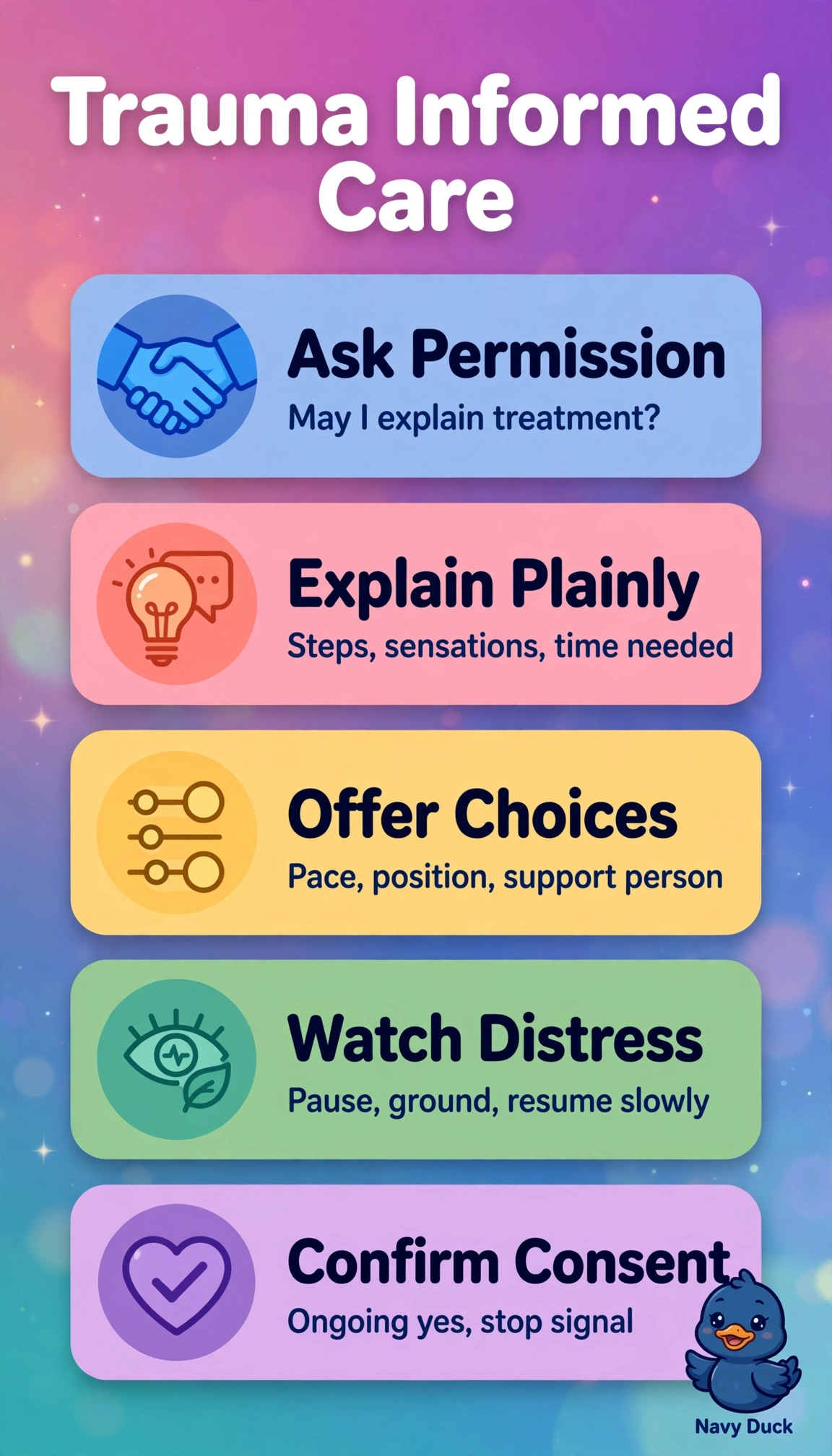
You can build trust by asking permission, explaining each step, offering choices, and pausing when distress appears. That autonomy helps restore control after a frightening procedure and can make treatment feel safer.
Full Explanation
The correct approach reflects trauma-informed, culturally aware care: prior traumatic intubation, current anxiety and tearfulness, refusal, and mistrust call for safety, transparency, and restored control. Asking permission, explaining each step to address the fear of choking, offering choices, and pausing for distress provide these supports without coercion. Validating fear, explaining steps, and offering choices while continuing promptly on schedule may seem efficient, but it omits pausing when distress signals a need for attention and risks making time pressure more important than the patient’s sense of safety. Acknowledging anxiety, asking permission, explaining steps, and pausing attentively is supportive, but without offering choices it misses a way to rebuild trust and counter helplessness after trauma. Listening respectfully, asking permission, offering choices, and pausing while summarizing only benefits provides several important supports, but it omits stepwise explanation, leaving the specific fear of choking and mistrust of procedures unaddressed. For exams, limited time does not justify skipping permission, stepwise explanation, choice, or a pause for distress. In practice, agree on a stop hand signal, watch breathing and affect, and confirm readiness before each next step.