
A respiratory therapist obtains PaO2 210 mm Hg on FiO2 0.40 with normal SpO2 96%, plus erratic CO-oximetry carboxyhemoglobin readings and point-of-care analyzer QC failures on repeated samples with air bubbles and delayed iced analysis. Which analyzer troubleshooting approach best ensures reliable blood gas results?
Select an answer to reveal the explanation.
Short Explanation
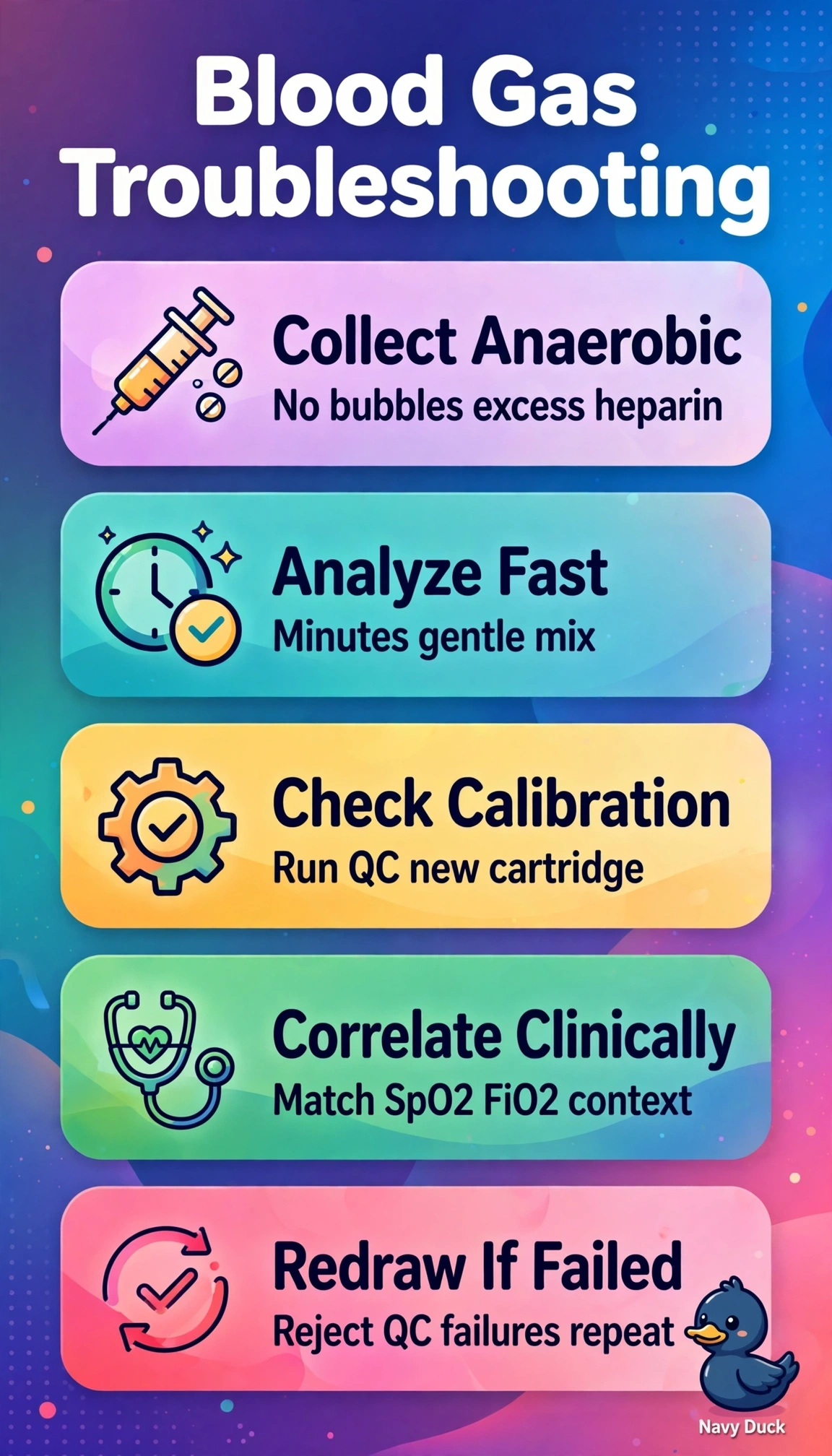
You’re treating the sample like fresh evidence, not leftovers. Air-free handling plus fresh calibration keeps gases and oximetry honest.
Full Explanation
The PaO2 of 210 on FiO2 0.40 cannot coexist with SpO2 96%, indicating falsely elevated PaO2 from room-air bubbles which contain PO2 near 150 mm Hg plus delayed analysis effects, while erratic carboxyhemoglobin points to co-oximetry interference and repeated QC failures mean results are nonreportable until the analyzer is recalibrated and QC passes; anaerobic sampling with complete bubble expulsion, analysis within minutes to prevent metabolism, gas loss and clotting, combined with recalibration and documented acceptable QC, directly addresses all three faults. Immediate analysis after bubble expulsion without new QC fails quality-system control because unresolved bias can affect all electrodes and optical channels despite perfect handling. Rapid analysis with recalibration but retaining bubbles fails gas-tension accuracy because even tiny bubbles equilibrate and disproportionately elevate hypoxemic samples while disturbing co-oximetry readings. Iced storage with bubble expulsion and recalibration fails timeliness because prolonged delay allows continued metabolism and gas shifts and violates point-of-care expectations for fresh whole blood, icing being for brief transport only. Exam caveat is to treat SpO2-FiO2-PaO2 discordance and any QC failure as hard stops requiring investigation, not averaging. Practical check is to verify anaerobic syringe, note time to analysis, inspect QC and calibration logs, and recollect a fresh bubble-free sample to confirm concordance.