
A 48-year-old with chemotherapy neutropenia, fever and hypoxemia, plus a 140-kg patient with obesity hypoventilation and a patient with amiodarone lung toxicity all present with respiratory failure on the medical ward. Which tailored support best manages immunocompromised, obesity-related and drug-toxicity respiratory failure?
Select an answer to reveal the explanation.
Short Explanation
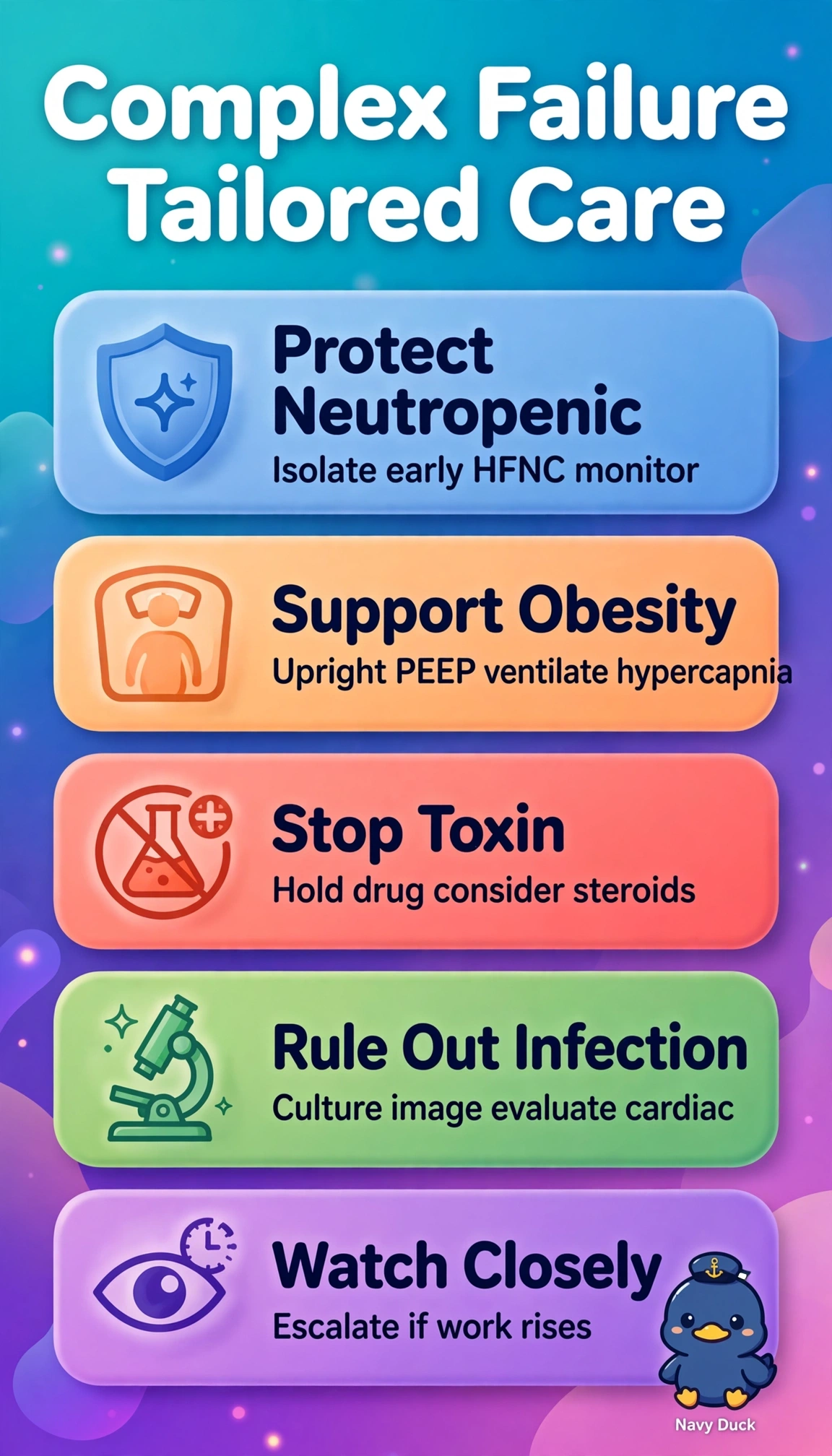
You’re personalizing oxygen, position, and meds instead of one-size-fits-all. Targeted support plus removing the toxin turns complex failure around faster.
Full Explanation
The correct approach works because it aligns support with distinct pathophysiology: early HFNC or NIV improves hypoxemia and reduces intubation need in immunocompromised and obese patients when monitored for failure, isolation protects the neutropenic patient with fever from nosocomial acquisition while workup proceeds, upright posture with PEEP restores functional residual capacity and reduces atelectasis and chest-wall loading in the 140-kg patient with obesity hypoventilation, and amiodarone toxicity requires prompt drug withdrawal plus corticosteroids for inflammatory pneumonitis after excluding infection. Continuing amiodarone pending routine review fails on drug-toxicity principle because ongoing exposure perpetuates alveolar injury and fibrosis despite oxygenation support. Omitting isolation fails on host-defense principle because chemotherapy neutropenia with fever and hypoxemia carries high risk for rapid invasive bacterial, viral and fungal progression without barrier precautions. Keeping patients flat and supine fails on mechanics principle because supine positioning in severe obesity worsens airway closure, shunt and hypercapnia and undermines PEEP benefit. Exam caveat is that NIV and HFNC require explicit escalation thresholds, so increasing work of breathing, worsening hypercapnia, altered mentation or hemodynamic instability mandates prompt intubation planning. Practical check is to confirm improved saturation and respiratory rate, tolerated upright PEEP, active isolation and cultures, documented amiodarone stop with cardiology substitution plan, and steroid risks reviewed.