
A 60-year-old scheduled for open upper abdominal surgery has a 30 pack-year smoking history, BMI 34 and baseline atelectasis. The surgeon requests preoperative respiratory input to lower pulmonary complications. Which preoperative teaching bundle should the therapist deliver to reduce postoperative atelectasis for this high-risk surgical patient?
Select an answer to reveal the explanation.
Short Explanation
You wouldn't try to learn to ride a bike in a storm, so you don't want your lungs learning new tricks when you're groggy and sore. Rehearsing your spirometer, splinted cough, and walking plan now builds muscle-memory you'll lean on after surgery.
Full Explanation
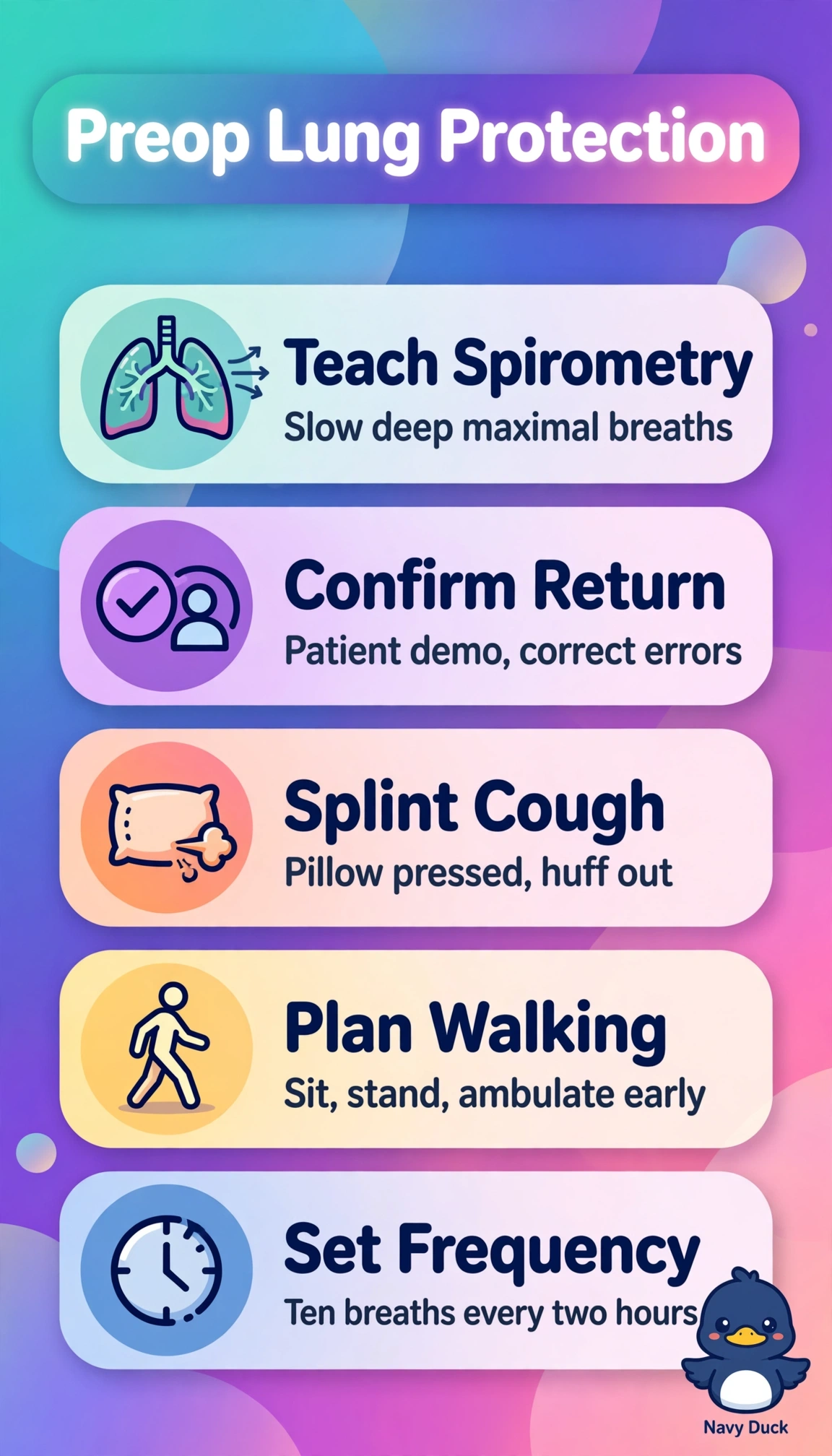
The correct bundle is right because open upper abdominal surgery in an older obese smoker with baseline atelectasis creates high risk for postoperative atelectasis from anesthesia, diaphragmatic dysfunction, pain-limited breathing and prolonged supine time, and preoperative coaching of volume-based incentive spirometry with teach-back return demonstration ensures correct slow maximal inspiration and adherence, splinted coughing with pillow support enables effective secretion clearance despite incisional pain, and a preplanned early walking program restores functional residual capacity and ventilation distribution. The bundle that omits splinted cough training fails by pain management concept because unprotected coughing after upper abdominal incision causes severe pain, shallow effort and retained secretions despite good inspiration and mobility. The bundle substituting diaphragmatic breathing for incentive spirometry fails by lung recruitment concept because although diaphragmatic retraining is valuable, high-risk patients with established atelectasis require visual volume feedback to achieve and sustain maximal inflation consistently. The bundle delivering identical content only postoperatively fails by prevention timing concept because pain, sedation and atelectasis already established reduce learning and efficacy compared with preoperative mastery. Exam caveat is to distinguish generally helpful respiratory care from what the stem specifically demands for high-risk open upper abdominal cases where all three elements plus preoperative timing are expected together. Practical check is to verify return demonstration to target volume, observe splinted cough technique with a pillow, and confirm a documented walking frequency, distance and escalation plan.