
A 4-year-old with known asthma and a 10-month-old with rhinovirus bronchiolitis arrive together with wheezing, cough, retractions, and SpO2 90-92% on room air. The asthmatic has prior steroid response; the infant has poor feeding and nasal congestion. A third child has suspected congenital heart disease with cyanosis. Which management best addresses pediatric asthma, bronchiolitis, and congenital defects?
Select an answer to reveal the explanation.
Short Explanation
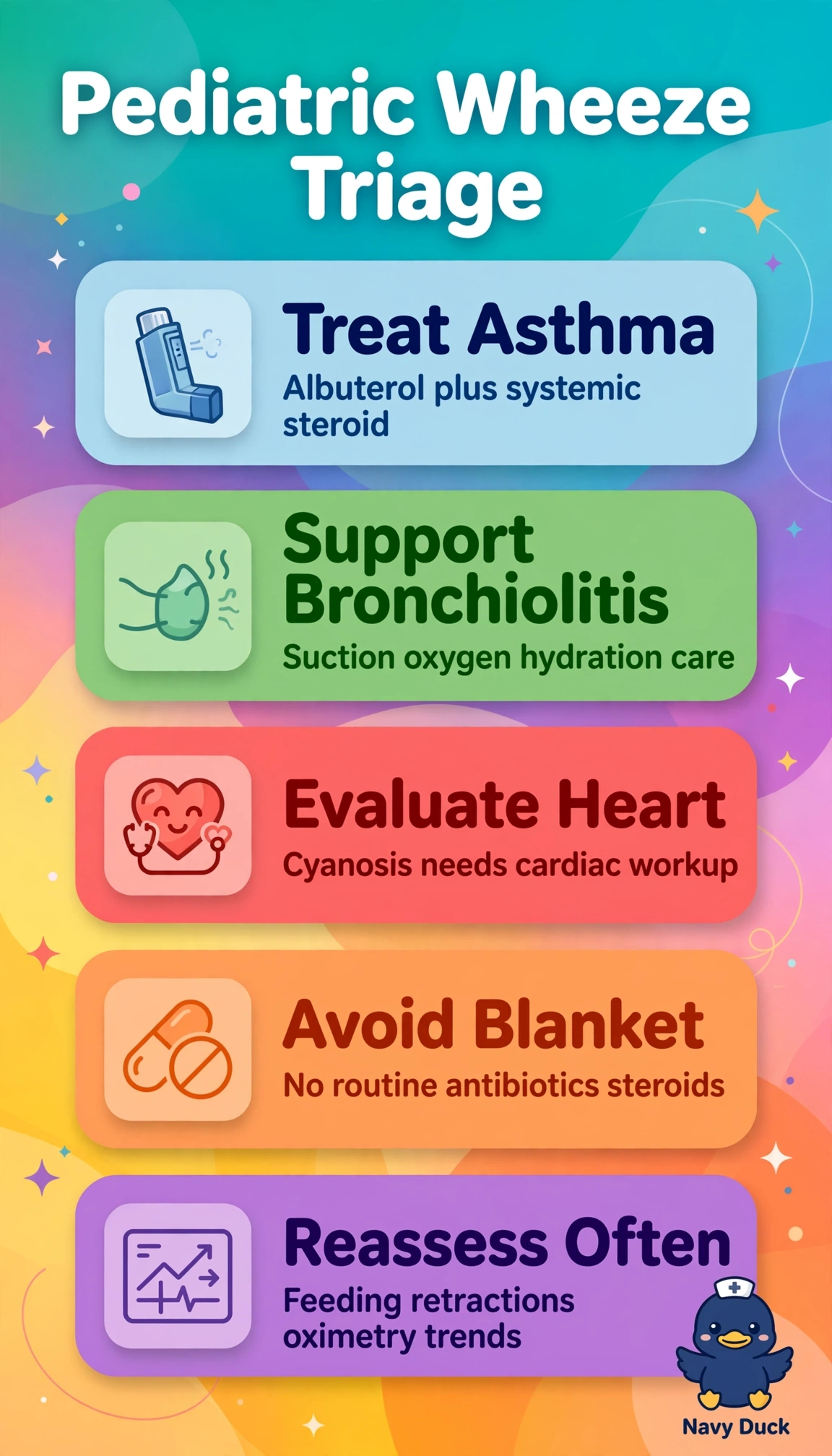
You've got three wheezers who need totally different playbooks, like sorting mail into the right boxes. You'll give your asthmatic albuterol plus steroids, support your bronchiolitic infant with suction and oxygen, and get that cyanotic heart baby a cardiac workup fast.
Full Explanation
The correct plan matches treatment to mechanism and history: known asthma with prior steroid response plus wheeze, retractions and hypoxemia needs albuterol for bronchospasm plus systemic steroids for inflammation, rhinovirus bronchiolitis in a congested 10-month-old with poor feeding and SpO2 90-92% needs supportive nasal suction, oxygen and hydration with close feeding monitoring, and suspected congenital disease with cyanosis needs prompt cardiac evaluation rather than assumption of lung disease. One incorrect plan treats the lung conditions correctly but manages cyanosis with observation as respiratory infection, failing on differentiation because true cardiac cyanosis may persist despite oxygen and requires examination and echocardiography referral. Another incorrect plan gives albuterol and systemic steroids to both wheezing children with correct support and cardiac evaluation, failing on indication because infant bronchiolitis involves viral edema and mucus obstruction rather than steroid-responsive bronchospasm, so routine bronchodilators and steroids do not improve outcomes. The remaining incorrect plan uses albuterol alone without systemic steroids for the asthmatic while handling the other conditions correctly, failing on exacerbation control because prior steroid benefit and moderate distress predict need for anti-inflammatory therapy to prevent relapse. Exam caveat is that shared wheeze and low saturation do not mean shared therapy; age, recurrence, viral prodrome and cyanosis pattern direct care. Practical check is to remeasure work of breathing and saturation after suction and bronchodilator, confirm feeding, hydration and steroid dose, and document cardiology follow-up before disposition.