
A 70-kg predicted body weight adult with ARDS is on volume control ventilation with VT 650 mL, plateau 34 cm H2O, SpO2 86% on FiO2 0.8 and PEEP 8 cm H2O, with bilateral infiltrates and no pneumothorax. ABG shows PaO2 58 mm Hg with permissive hypercapnia tolerated. Which invasive ventilation adjustment best improves oxygenation while ensuring lung protection?
Select an answer to reveal the explanation.
Short Explanation
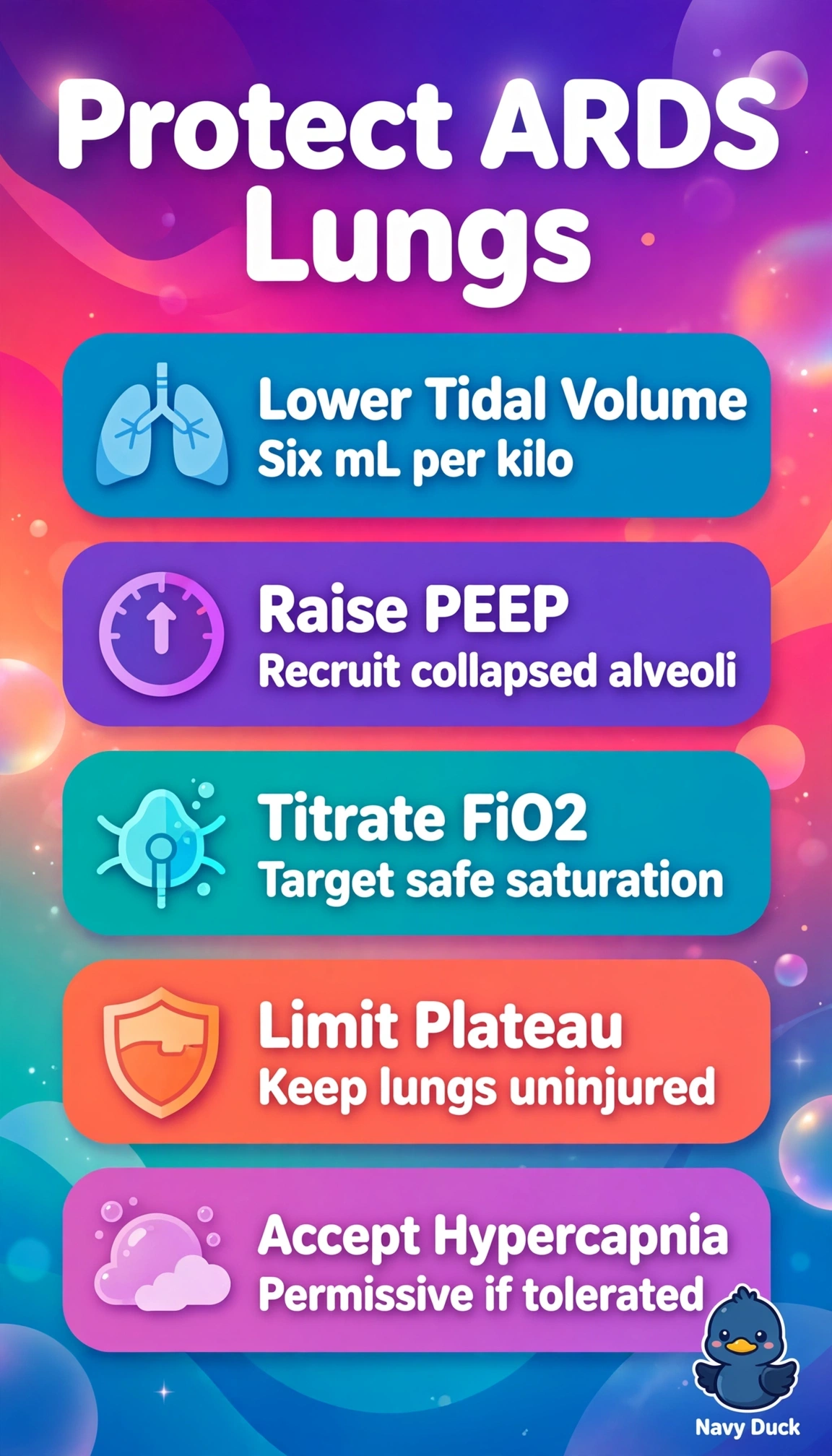
You're trading big breaths for smarter pressure. Smaller volumes plus PEEP open lungs without stretching them raw. You'll see oxygen rise as plateau pressure finally settles.
Full Explanation
ARDS with high plateau pressure and refractory hypoxemia requires lung-protective ventilation with 6 mL/kg predicted body weight tidal volume to limit volutrauma, combined with protocol-driven higher PEEP to recruit collapsed alveoli and titrated FiO2 to target saturation, accepting permissive hypercapnia rather than normalizing gases at the cost of injury. Increasing tidal volume with lower PEEP and higher FiO2 to normalize gases fails by lung-protection concept because large volumes raise transpulmonary pressure and plateau, worsening ventilator-induced lung injury despite transient oxygen improvement. Maintaining current settings while adding prolonged breath-holds fails by recruitment concept because sustained holds without tidal reduction or adequate PEEP do not provide stable recruitment and risk hemodynamic compromise and barotrauma. Using high rate alone with zero PEEP and room air fails by oxygenation concept because removing PEEP derecruits alveoli and room air cannot correct severe shunt, guaranteeing worsening hypoxemia. Exam caveat: NBRC expects 4 to 8 mL/kg PBW, plateau under 30, and PEEP/FiO2 tables for ARDS. Practical check: recalculate PBW, monitor plateau, driving pressure, SpO2, and blood pressure after each change.