
A 52-year-old with BMI 46 on recent chemotherapy presents with fever, neutropenia, bilateral infiltrates and hypercapnic hypoxemic failure from obesity hypoventilation plus suspected drug toxicity. The patient is tachypneic, drowsy but arousable and protecting the airway. Which respiratory support plan should the therapist recommend to stabilize this immunocompromised obese patient with mixed failure?
Select an answer to reveal the explanation.
Short Explanation
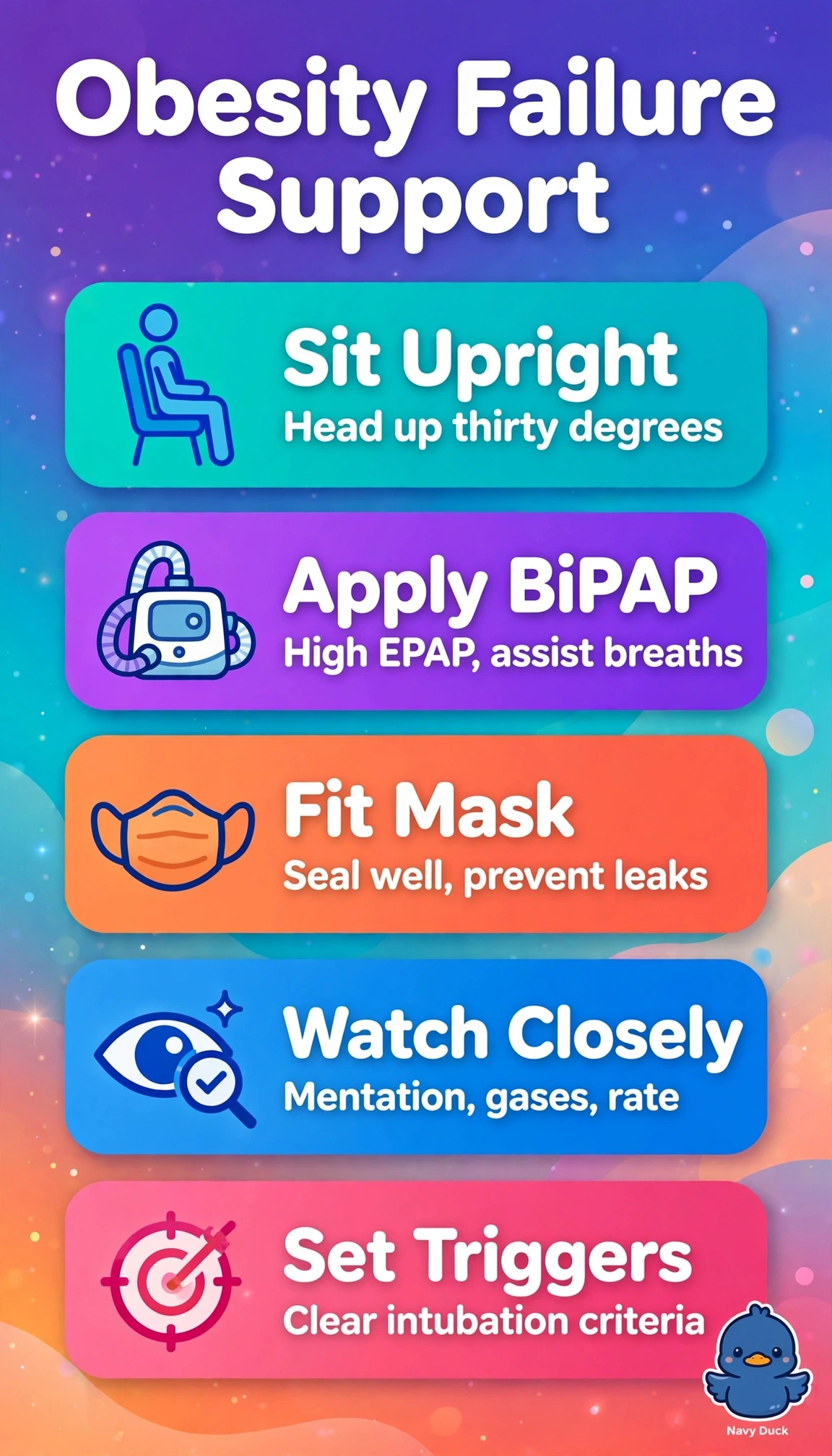
You need to stent a heavy chest without delaying rescue. Upright BiPAP with enough EPAP unloads upper airway and basal atelectasis while clear criteria tell you exactly when to intubate.
Full Explanation
Upright BiPAP with high EPAP plus vigilant monitoring and intubation thresholds stabilizes mixed failure in severe obesity while protecting an immunocompromised host because upright posture raises functional residual capacity and diaphragmatic efficiency, high EPAP recruits atelectasis and splints collapse to reduce shunt and work of breathing, and pressure support raises tidal volume to clear CO2 from hypoventilation and suspected toxicity, while a monitored trial avoids excess pneumonia and mortality of intubation during neutropenia without delaying rescue. Upright CPAP with high PEEP fails by ventilation concept because it aids oxygenation but gives no inspiratory assistance to reverse hypercapnia, tachypnea and hypoventilation in a drowsy patient. Upright BiPAP with low EPAP fails by mechanics concept because BMI 46 causes major loading and volume loss, so inadequate pressure leaves atelectasis, shunt and high effort. Upright BiPAP with high EPAP plus immediate intubation fails by risk-benefit concept because an arousable patient protecting the airway lacks indication for definitive airway and practice favors a watched trial to spare sedation and infection. Exam caveat: preserved arousability and protection support monitored support, while loss of protection, instability or worsening gases despite titration mandates intubation. Practical check: nurse 45-90 degrees upright, titrate EPAP for saturation and IPAP for volume and PaCO2, track mentation, effort, gases and infiltrates, and intubate if deterioration occurs.