
In the emergency department, a 69-year-old with severe community-acquired pneumonia was placed on bilevel noninvasive ventilation for hypoxemia and tachypnea. After one hour, RR is 34, SpO2 87% on FiO2 0.60, accessory muscles are active, mentation is drowsy, secretions are copious and blood pressure is 88/54 mm Hg. Which criterion confirms noninvasive ventilation failure requiring escalation?
Select an answer to reveal the explanation.
Short Explanation
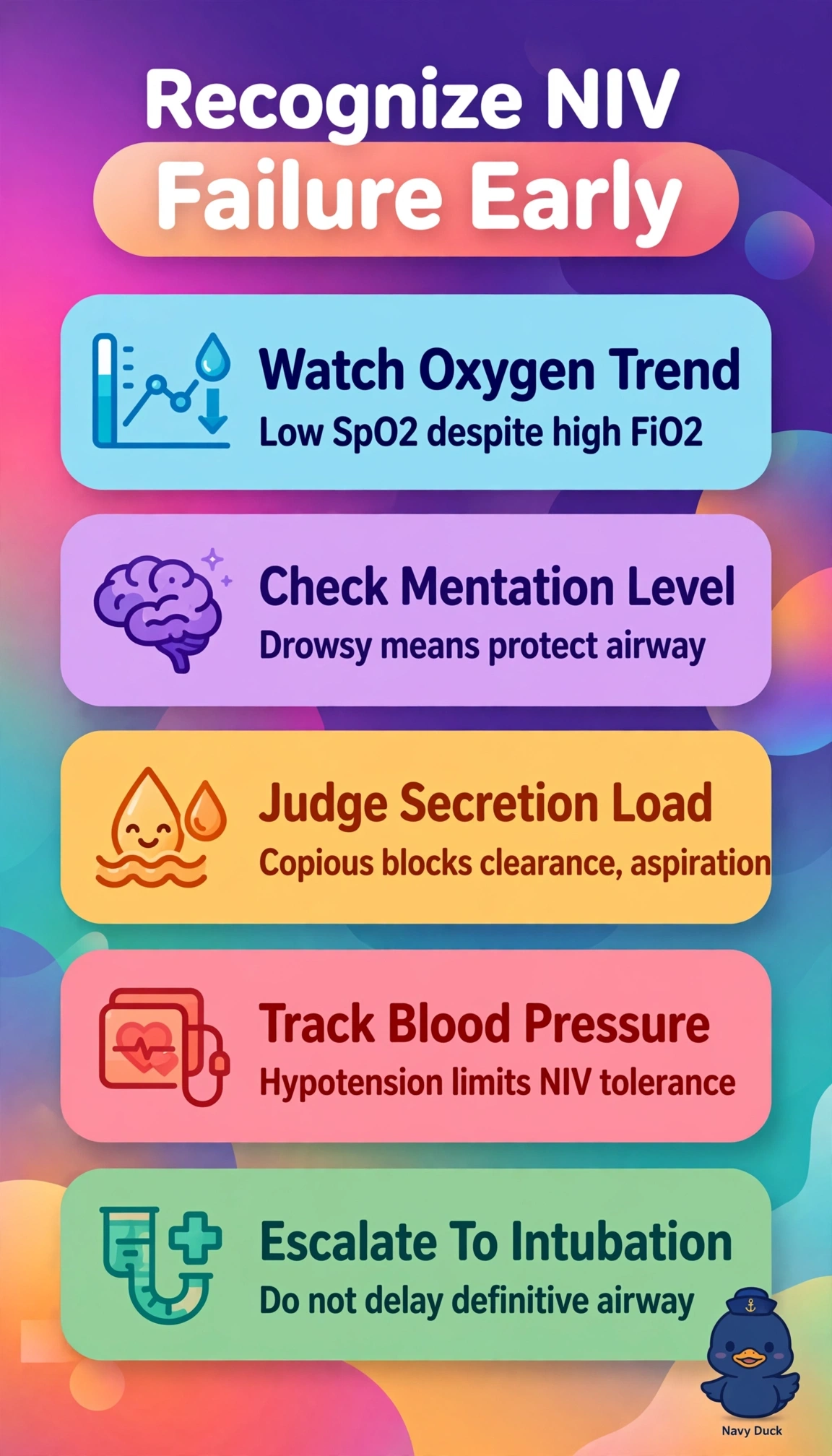
NIV can help, but it can’t protect a fading airway. With low oxygen, sleepiness, heavy secretions and low pressure together, you’ve crossed into must-intubate territory defined by failure-criteria recognition.
Full Explanation
Noninvasive ventilation succeeds only when gas exchange stabilizes, work of breathing falls, mentation remains intact, secretions are manageable and hemodynamics remain stable enough to tolerate positive pressure and protect the airway, so persistent hypoxemia despite high FiO2 combined with depressed consciousness, copious retained secretions and hypotension signals loss of airway protection, aspiration risk, inability to cooperate and circulatory compromise that positive-pressure titration cannot reverse and mandates timely intubation. Raising inspiratory pressure with humidification and coaching targets tidal volume and comfort and is appropriate for hypercapnic hypopnea or dyssynchrony but fails to address depressed drive, secretion burden and shock that preclude continued noninvasive support. Raising expiratory pressure with FiO2 titration and leak correction targets atelectasis, shunt and interface leak and is appropriate for isolated hypoxemia with alert cooperative patients but fails to correct inability to clear secretions, protect the airway and maintain perfusion. In-line bronchodilator with breathing coaching targets bronchospasm and tachypnea and is appropriate as an adjunct in wheezing patients but fails to reverse worsening consciousness, refractory hypoxemia and hypotension that define systemic failure. Exam caveat is that one improving number does not equal success when mentation, secretions or blood pressure deteriorate, and practical check is to use a timed NIV trial with preset thresholds for rate, SpO2, PaCO2, mentation, secretion handling and hemodynamics and prepare airway equipment early when any failure criterion appears.