
A 54-year-old with sudden pleuritic chest pain and dyspnea after knee surgery has tachycardia, clear lungs, SpO2 90% on room air, and a chest radiograph without infiltrate, plus a high-probability V/Q scan showing mismatched perfusion defects with normal ventilation. ECG shows sinus tachycardia without ST elevation. Which imaging and ECG interpretation best guides immediate respiratory management for suspected embolism?
Select an answer to reveal the explanation.
Short Explanation
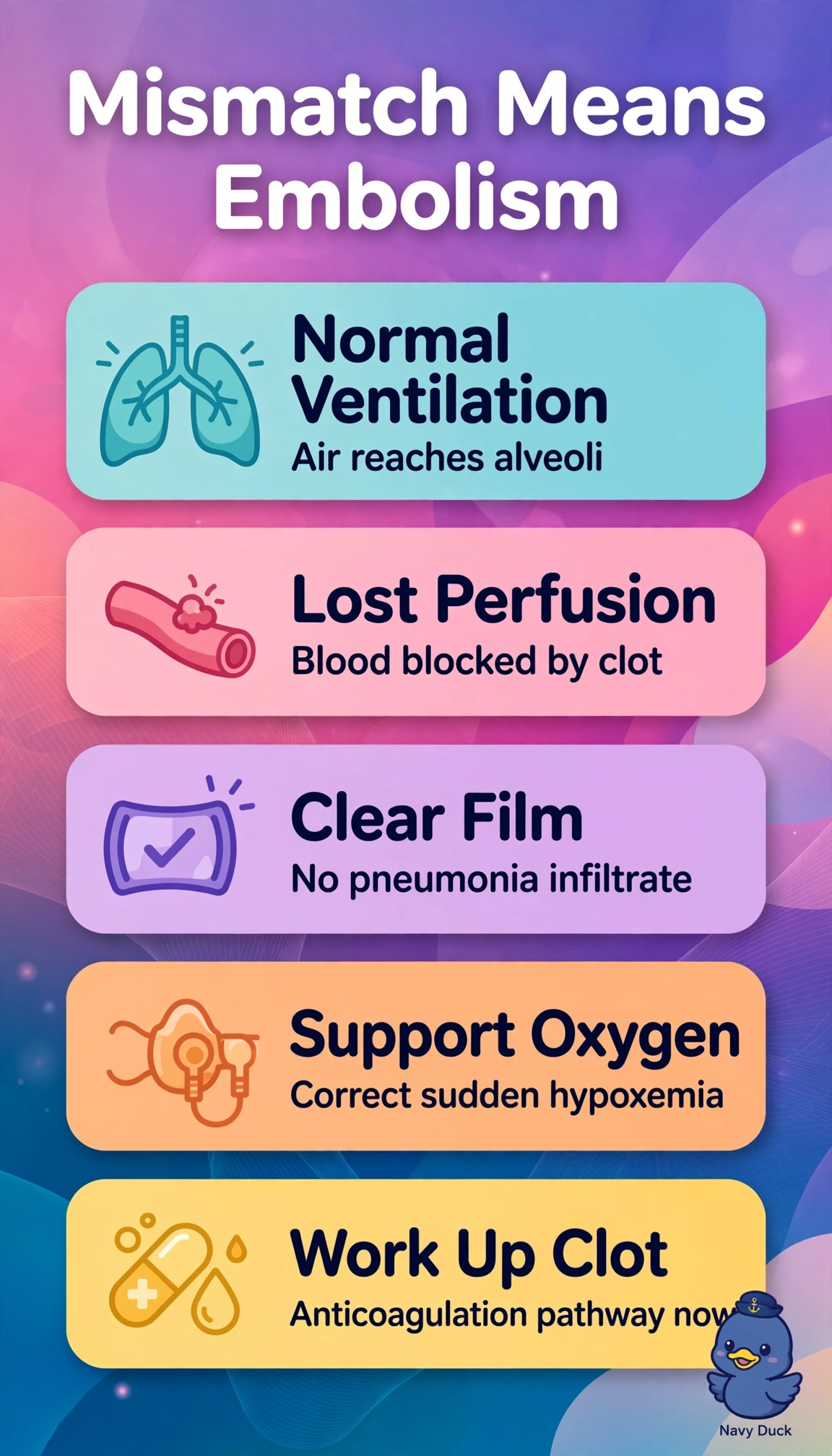
You're spotting blood blocked from air that is ready. A mismatched perfusion defect screams clot, not infection or wheeze. You'll prioritize oxygen and clot workup before anything else.
Full Explanation
Acute pulmonary embolism is favored because sudden pleuritic pain and dyspnea after knee surgery combine immobilization risk with tachycardia, SpO2 90% on room air, clear lungs, no infiltrate, and high-probability V/Q mismatch with perfusion defects and normal ventilation, while sinus tachycardia without ST elevation reflects compensatory hypoxia rather than coronary occlusion, so immediate oxygen plus anticoagulation workup is indicated. The catheterization-priority interpretation fails by ECG concept because sinus tachycardia without ST elevation does not meet infarction criteria and misattributes secondary tachycardia to STEMI, delaying PE care. The diuresis-added interpretation fails by examination-imaging concept because clear lungs and no infiltrate or edema argue against cardiogenic edema, making diuresis unsupported and risky by lowering preload in a preload-dependent right ventricle. The chronic-outpatient interpretation fails by acuity concept because sudden onset, recent surgery, hypoxemia and high-probability mismatch demand urgent inpatient evaluation, not deferred care for old disease. Exam caveat: high-probability V/Q is probabilistic and must integrate pretest probability, with CT angiography often confirmatory when available, without delaying oxygen or anticoagulation assessment. Practical check: recheck oximetry after oxygen, vitals, right-heart signs, bleeding risk and heparin contraindications, plus prophylaxis and leg symptoms.