
A 55-year-old with pneumonia has PaO2/FiO2 110 on FiO2 0.80, PEEP 12 cm H2O, bilateral infiltrates, VT 6 mL/kg PBW, plateau 28 cm H2O and no cardiac failure after fluids and workup. Proning and recruitment are being considered. Which ARDS strategy best applies lung protection, proning and recruitment?
Select an answer to reveal the explanation.
Short Explanation
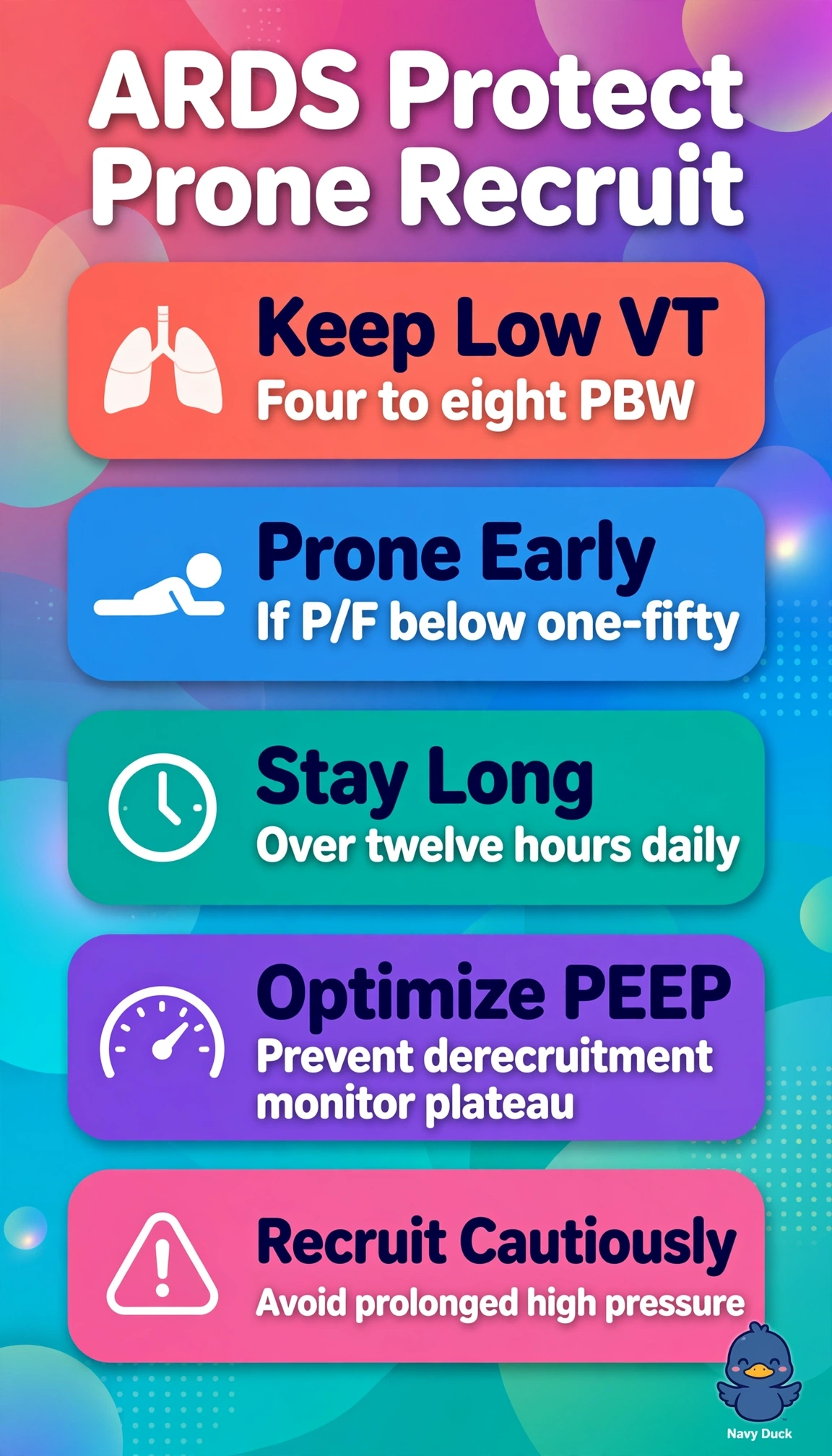
You’re committing to small breaths and long tummy time when oxygen is truly bad. Sustained proning unlocks recruitment that supine ventilation can’t reach.
Full Explanation
This presentation meets moderate ARDS with PaO2/FiO2 110 on PEEP 12, bilateral infiltrates and excluded hydrostatic edema after fluids and workup, so continuing 6 mL/kg predicted body weight ventilation with plateau 28 cm H2O preserves lung protection while prone positioning over 12 hours daily improves ventilation-perfusion matching, dorsal recruitment and survival when PaO2/FiO2 remains below 150 as shown in PROSEVA. An approach that optimizes PEEP with recruitment while remaining supine is otherwise sound for hypoxemia but fails here by omitting timely proning despite meeting the severity threshold, delaying mortality benefit and prolonging high FiO2 exposure. Another approach that reserves prolonged proning until PaO2/FiO2 falls below 80 applies a severe ARDS or ECMO consideration to the wrong intervention and would deny indicated therapy through the 80 to 150 window where benefit is established. A further approach that raises tidal volume to 8 mL/kg during proning to clear CO2 undermines the core protective concept, risking volutrauma with higher plateau and driving pressure when the current 6 mL/kg strategy is safe and effective, with hypercapnia better managed by rate, dead space reduction or pH goals. Exam caveat is to distinguish proning and higher PEEP thresholds from ECMO thresholds and to remember plateau target below 30 cm H2O calculated on predicted, not actual, body weight. Practical check is to confirm predicted weight, plateau and driving pressure, hemodynamic tolerance and contraindications, eye and pressure-point protection, and daily reassessment of PaO2/FiO2 and FiO2 to decide continuation.