
A 54-year-old woman with obesity and severe OSA scheduled for total knee arthroplasty uses CPAP at home, snores loudly, has a morning headache, and reports poor sleep adherence. Anesthesia plans for general anesthesia with opioids. Which perioperative respiratory plan best manages pre- and post-operative risk for this OSA patient?
Select an answer to reveal the explanation.
Short Explanation
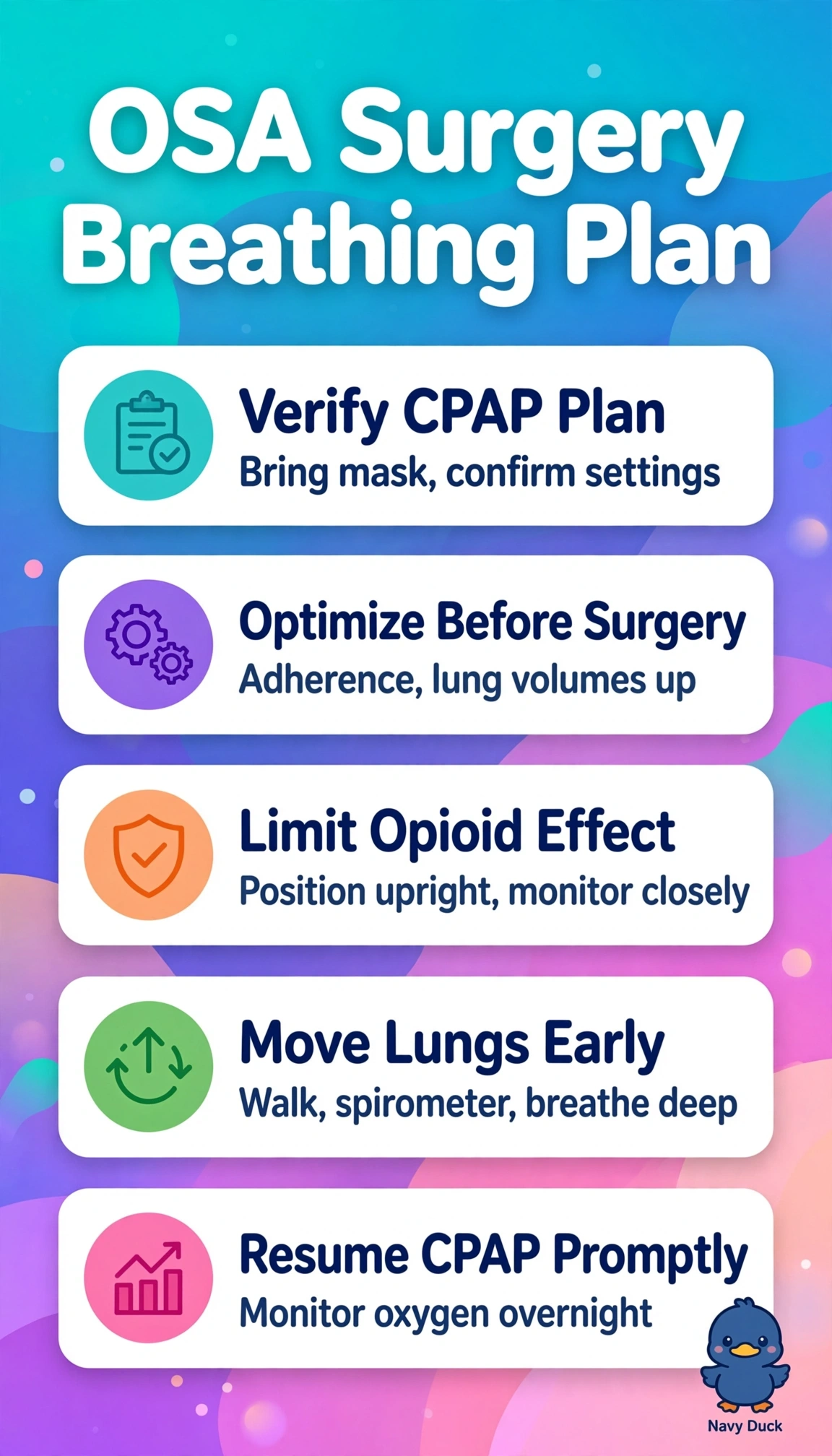
Surgery plus OSA is a risky combination, but you can help manage it. Keeping her own CPAP going, getting her upright and moving early, and watching her breathing closely can reduce the airway problems anesthesia and opioids invite.
Full Explanation
Confirming CPAP adherence and bringing her device, planning upright mobilization with incentive spirometry, and using monitored CPAP after anesthesia best addresses severe OSA with obesity, loud snoring, morning headache, and poor adherence. These features suggest persistent nocturnal obstruction and possible hypercapnia risk; general anesthesia and opioids blunt arousal, pharyngeal tone, and ventilatory drive. Checking use, mask fit, pressures, and barriers helps ensure effective therapy. Upright positioning raises functional residual capacity and improves ventilation-perfusion matching after knee arthroplasty, while incentive spirometry supports lung expansion against hypoventilation and atelectasis. Monitored CPAP with oximetry helps maintain airway patency during residual sedation. Keeping her supine at bed rest fails because supine posture promotes airway collapse and lowers functional residual capacity, worsening obstruction and desaturation. Standard ward CPAP fails to provide the surveillance severe OSA with anesthetics and opioids warrants, including continuous oximetry and observation for apnea or need for escalation. Relying on prescribed home settings fails to address poor adherence and headache, which call for counseling, equipment checks, and coordination rather than assumed protection. Exam caveat: spirometry and oxygen alone never replace CPAP in severe OSA. Practical check: document pressure, mask, and adherence; ensure the device arrives; order a monitored bed with oximetry; and arrange early upright mobilization and spirometry teaching before opioids.