
An intubated adult needs cuff pressure verification and a febrile ventilated neighbor needs diagnostic mini-BAL for suspected pneumonia, while a ward patient with weak cough needs sputum induction for tuberculosis testing. Which procedure selection and technique best gathers clinical information safely?
Select an answer to reveal the explanation.
Short Explanation
You’re matching each job to the right sterile tool and dose. Clean technique plus correct cuff pressure gives trustworthy samples and safer airways.
Full Explanation
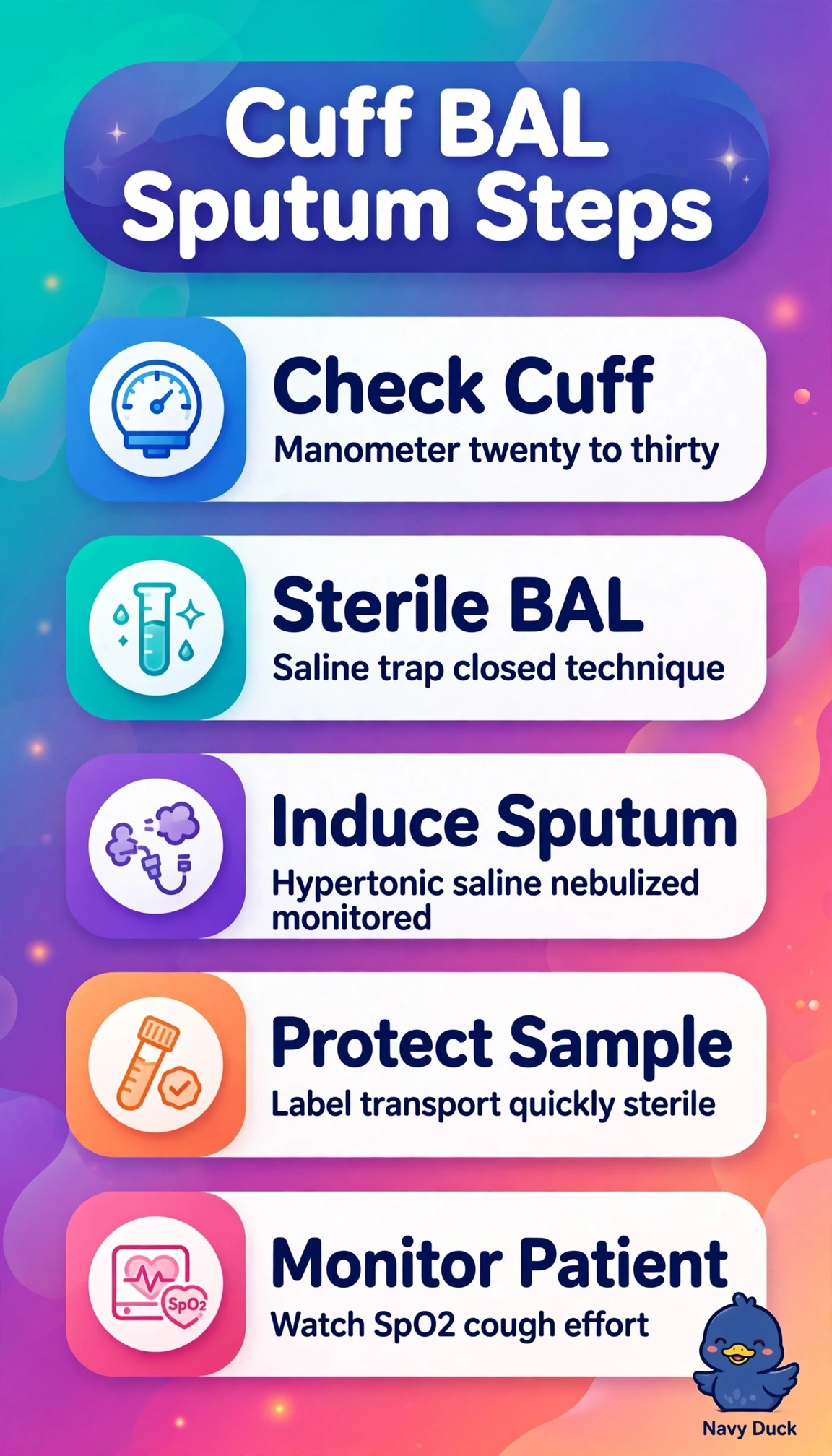
The correct combination reflects three distinct safety and diagnostic principles applied together: maintaining endotracheal cuff pressure at 20-30 cm H2O measured objectively with a manometer prevents both microaspiration from underinflation and tracheal mucosal ischemia and stenosis from overinflation, while sterile protected mini bronchoalveolar lavage using sterile saline with closed trap and quantitative culture obtains distal alveolar sampling for ventilator-associated pneumonia with reduced upper airway contamination, and nebulized hypertonic saline for sputum induction creates osmotic irritation and mucus hydration to mobilize Mycobacterium tuberculosis in weak cough for smear and nucleic acid testing. Substituting isotonic saline mist for induction is common for comfort humidification and routine nebulization but fails here by concept because it lacks sufficient osmotic stimulus for reliable mycobacterial yield. Maintaining higher cuff pressures for seal is a familiar bedside response to audible leak but fails by concept because sustained pressures above capillary perfusion pressure cause mucosal injury without added infection benefit. Sending open tracheal aspirate for culture is standard for colonization screening and useful for surveillance but fails by concept because it samples proximal secretions and biofilm and cannot replace protected distal lavage for febrile pneumonia diagnosis. An exam caveat is to distinguish routine humidification, leak management, and colonization screening from targeted diagnostic indications that change fluid, pressure, and sterility requirements. A practical check is to calibrate the manometer, confirm a sterile lavage kit with labeled trap, and preassess bronchospasm and hypoxemia risk before hypertonic induction with monitoring available.