
A home-care patient reports a 5-L stationary oxygen concentrator alarming with low output and the flowmeter ball bouncing at 2 L despite a 2-L prescription. Tubing is 25 feet, humidifier bottle is attached and power is on. Which troubleshooting sequence should the therapist perform first for this concentrator and flow delivery system?
Select an answer to reveal the explanation.
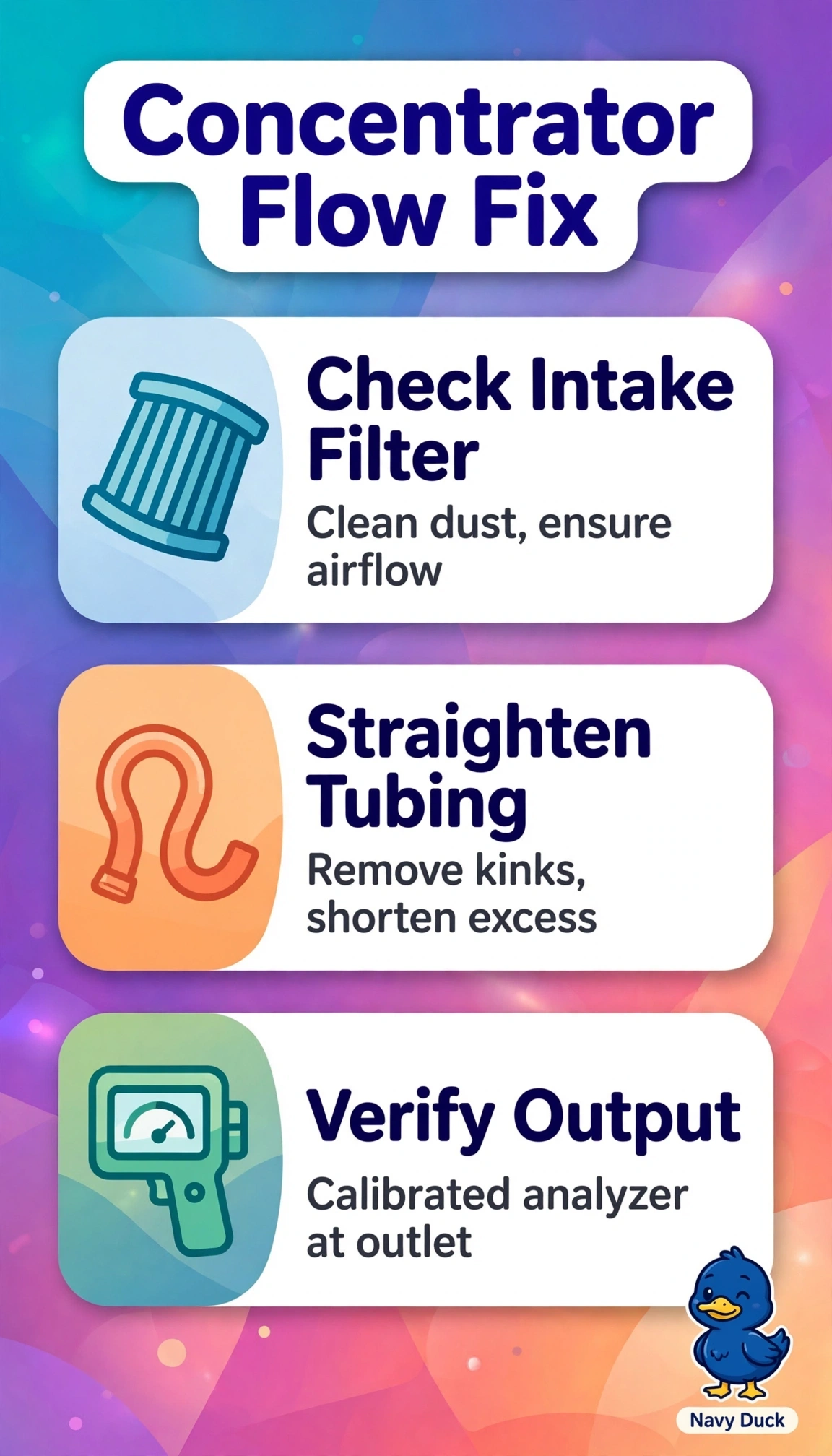
Short Explanation
Start simple before you swap expensive parts. Most low-flow alarms come from blocked intake or pinched tubing, so cleaning and verifying with a calibrated analyzer quickly separates device fault from delivery fault.
Full Explanation
The correct sequence prioritizes reversible low-cost causes of low-output alarm with unstable flowmeter indication: a clogged inlet filter restricts intake air and reduces sieve pressure swing adsorption efficiency, while kinked or compressed 25-foot tubing distal to the humidifier creates back pressure that makes the ball bounce and drops delivered flow despite correct 2-L setting, so inspecting and cleaning the filter, unkinking and straightening the full run, then confirming delivered flow and concentration with a calibrated analyzer directly verifies both concentrator function and delivery integrity without altering therapy. Removing the humidifier to check connectors and verifying purity alone misses intake restriction and replaces objective flow measurement with purity testing, so unstable flow from resistance persists undiagnosed. Cleaning vents, securing power and resetting the alarm addresses electrical supply and silences notification but leaves filtration and tubing obstruction uncorrected, allowing hypoxemia to continue and violating first-cause troubleshooting hierarchy of fixing cause before resetting alarms. Replacing the filter, emptying the bottle and listening to the compressor correctly addresses intake and water trap resistance yet substitutes subjective sound for calibrated flow measurement and ignores kinks along the long tubing, which is insufficient documentation for home-care efficacy. Exam caveat: always troubleshoot from patient outward then device inward and never change prescribed liter flow to quiet bouncing; practical check at bedside is to unkink tubing, run the concentrator with humidifier filled to line, and confirm steady 2 L on both the device meter and an independent calibrated flow analyzer with oxygen percentage above 85% at 2 L.