
A 66-year-old with pneumonia is tachypneic and hypoxemic with SpO2 86% on 6-L nasal cannula, alert, protecting the airway, with no hypercapnia or hypotension, in a monitored step-down unit with close supervision. The team wants to avoid intubation if possible while improving oxygenation and work of breathing. Which oxygenation support initiation best improves oxygenation while reducing intubation risk?
Select an answer to reveal the explanation.
Short Explanation
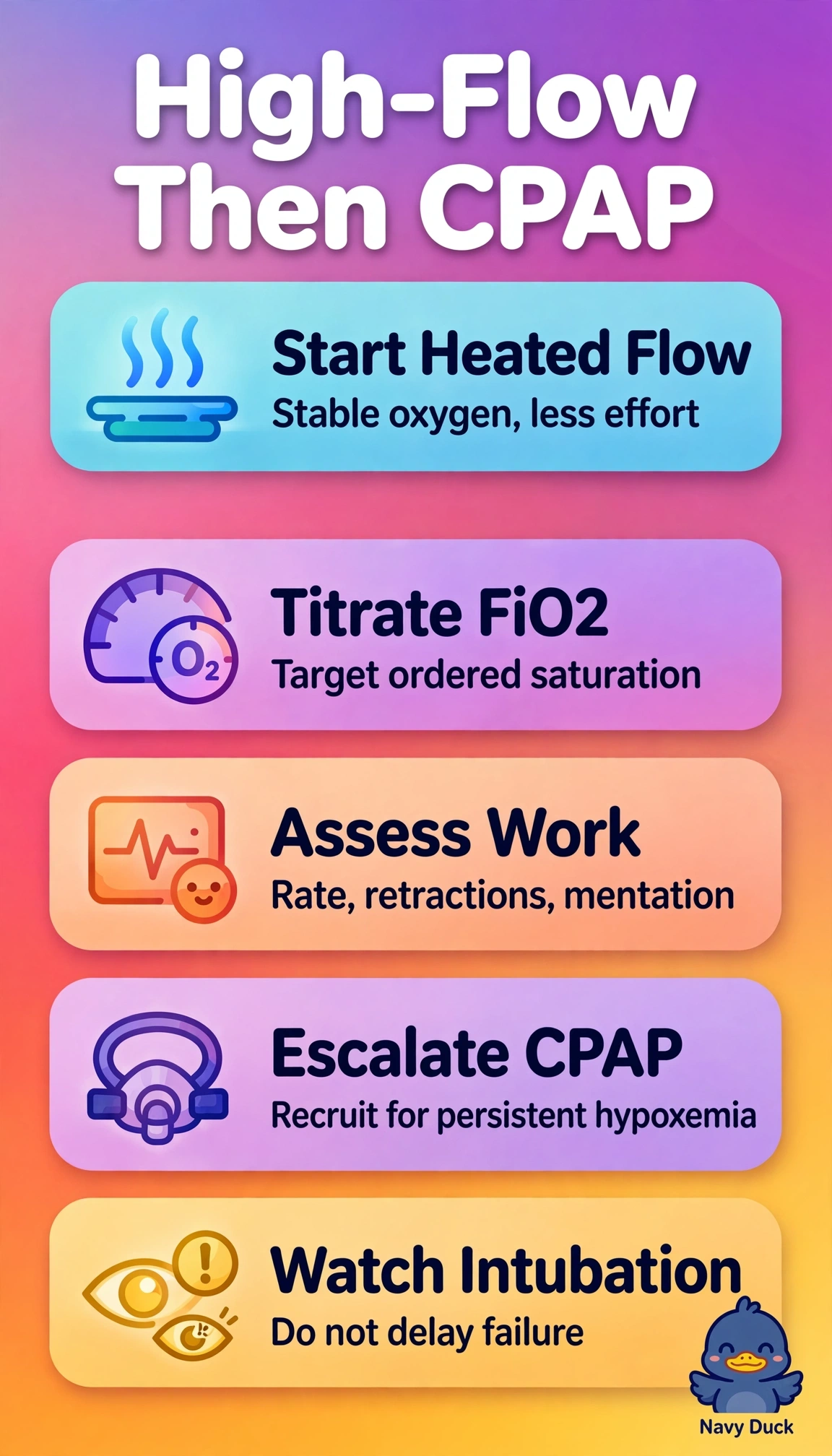
You're adding flow, warmth, and a little pressure exactly where it's needed. Heated high-flow with titration washes out dead space and eases work. You'll know quickly if CPAP needs to join.
Full Explanation
Heated high-flow nasal cannula is preferred for hypoxemia persisting at SpO2 86% on 6-L oxygen in alert pneumonia without hypercapnia, hypotension, or airway loss because titrated FiO2 plus flow matching inspiratory demand, dead-space washout, humidification, and low-level distending pressure improve oxygenation, reduce work of breathing, improve comfort, and lower intubation versus conventional oxygen, while conditional escalation to CPAP if hypoxemia persists adds recruitment for shunt under close step-down observation without premature invasive ventilation. Bilevel ventilation with pressure support fails by indication because it augments ventilation for hypercapnic failure such as COPD exacerbation, and in isolated hypoxemic pneumonia it does not reduce intubation versus high-flow or CPAP while risking large tidal volumes and delayed intubation. High-concentration oxygen by nonrebreather fails by support mechanics because it raises FiO2 transiently without reliable positive pressure, flow matching, or muscle unloading and does not reduce intubation risk. Increasing conventional cannula flow fails by ceiling effect because variable FiO2 without recruitment cannot overcome shunt and high demand already shown by tachypnea, leaving effort high. Exam caveat is to separate hypoxemic from hypercapnic failure and integrate airway protection, mentation, hemodynamics, and pH rather than SpO2 alone, since deterioration mandates timely intubation. Practically reassess respiratory rate, effort, SpO2 to FiO2 ratio or ROX index, gases, and preset CPAP or intubation thresholds hourly.