
In an outpatient clinic a 32-year-old with persistent asthma vapes daily, shares a home nebulizer with a sibling, rinses the cup with tap water, air-dries rarely, and misses doses during colds. The patient wants fewer flare-ups without judgment. Which infection-control, equipment, and cessation education bundle should the therapist provide first?
Select an answer to reveal the explanation.
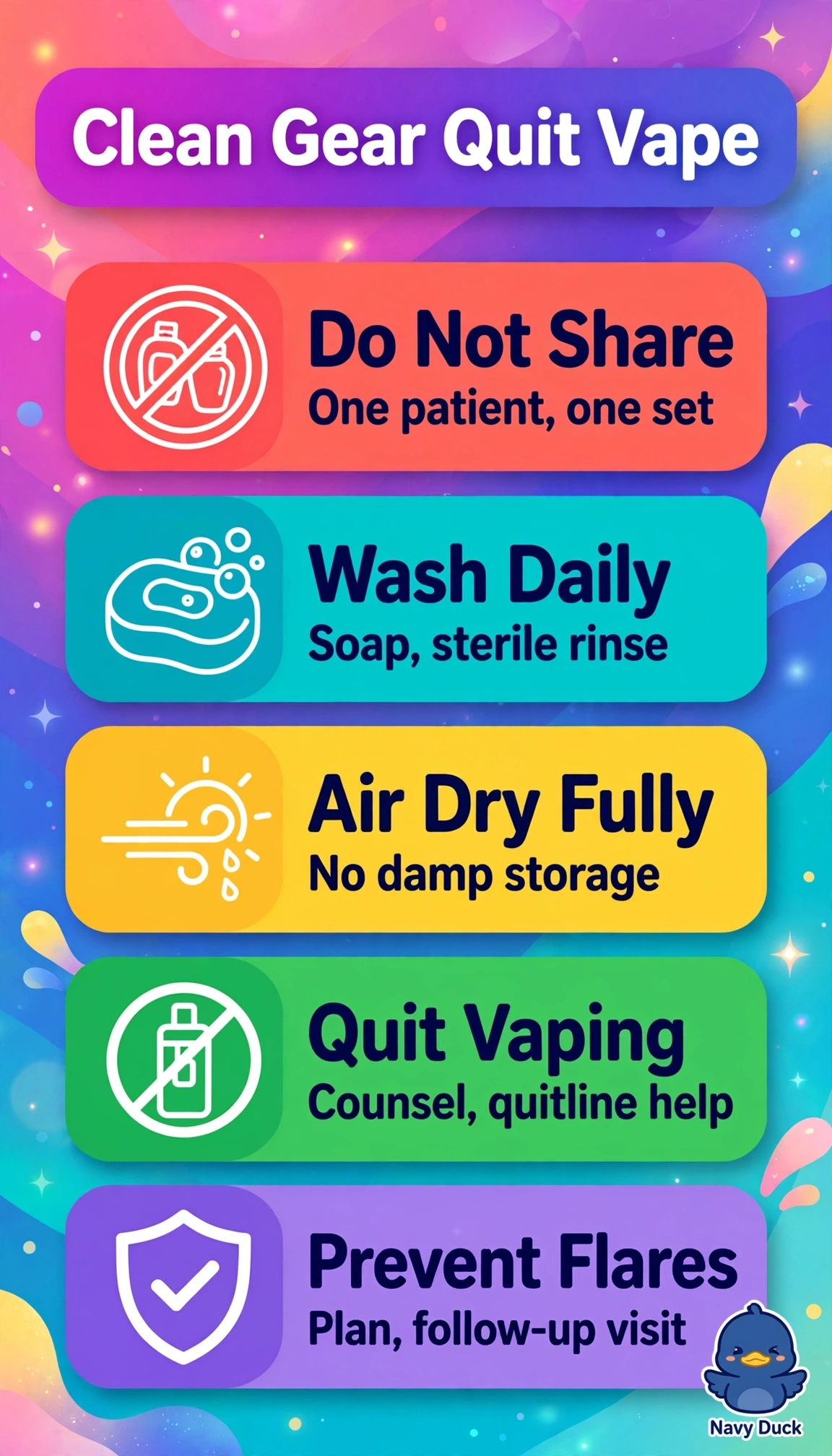
Short Explanation
You paired clean equipment with compassionate quitting support. Germs love damp cups and shared mouthpieces, so dry, personal gear plus quitting help gives lungs a real break with asepsis.
Full Explanation
The correct bundle is right because persistent asthma with daily vaping, shared equipment, tap-water rinsing, rare air-drying, and missed doses during colds requires simultaneous reduction of microbial reservoir and airway irritant exposure, where daily cleaning with complete air-drying prevents biofilm and Gram-negative growth, single-user designation prevents sibling cross-contamination, and nonjudgmental cessation counseling respects autonomy while targeting a potent trigger for bronchospasm and flare-ups. The bundle that provides cleaning and cessation support without addressing sharing fails by infection-control concept because even perfect technique cannot eliminate transmission risk if cups and mouthpieces move between users with different flora, so single-patient use is non-negotiable. The towel-drying bundle fails by equipment-processing concept because cloth towels reintroduce lint and pathogens to disinfected surfaces whereas air-drying preserves asepsis, directly relevant to rarely air-drying in the stem. The controller-adherence-during-colds bundle fails by health-behavior priority concept because although adherence matters in persistent asthma, it does not replace cessation counseling when daily vaping continues and the question specifically prioritizes infection-control plus cessation without judgment. An exam caveat is to prioritize what the stem explicitly requests over generally good care, since adherence education is tempting but does not satisfy the stated cessation requirement and tap-water detail signals proper rinsing and drying. A practical check is to use teach-back with demonstration of disassembly, detergent wash, sterile or distilled-water rinse, air-drying on clean tissue, dry storage, and to screen vaping frequency with readiness-to-quit and offer quitline referral.