
An outpatient pulmonary clinic reuses mouthpieces, spacers, and resuscitation masks between patients and currently wipes all items with a damp cloth at day's end. The manager asks how to correct reprocessing. Which disinfection policy should the therapist recommend for these reusable respiratory items?
Select an answer to reveal the explanation.
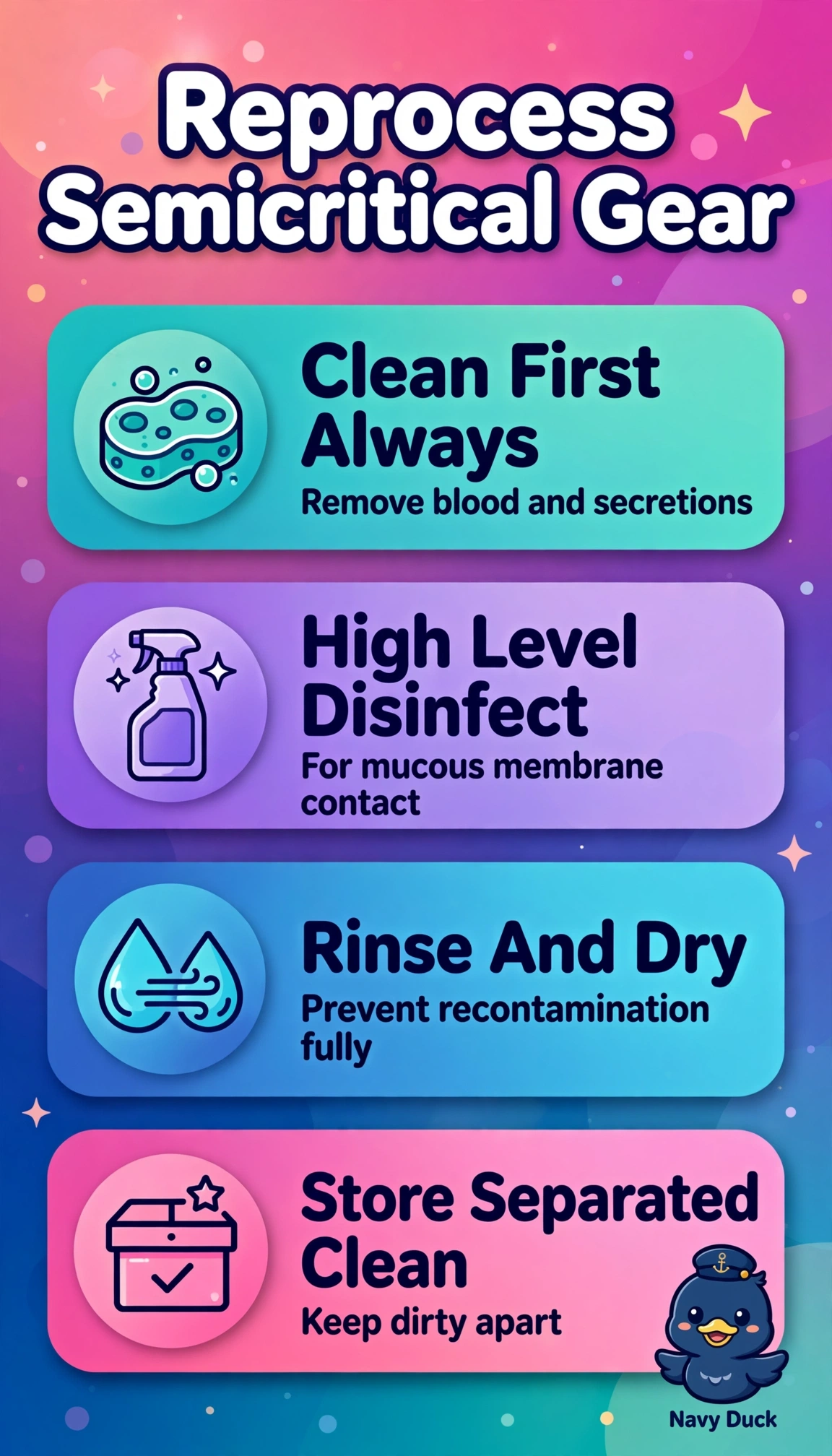
Short Explanation
You're protecting the next lungs that touch that gear. Because these pieces meet mucous membranes, they need germ-killing beyond a wipe, so high-level disinfection after thorough cleaning keeps everyone safe.
Full Explanation
Mouthpieces, spacers, and resuscitation masks reused between patients are semicritical under Spaulding classification because they contact oral mucosa and respiratory secretions, so they require thorough cleaning to remove organic soil followed by high-level disinfection that destroys vegetative organisms, mycobacteria, and most fungal spores, which directly corrects the clinic's inadequate damp-cloth wipe. A protocol using cleaning followed only by low-level disinfection fails by disinfection level because low-level agents are intended for noncritical intact-skin surfaces and lack reliable mycobactericidal and broader virucidal activity needed for mucous-membrane contact. A protocol limiting high-level disinfection to mouthpieces while only wiping other devices fails by scope because spacers and resuscitation masks also become contaminated with saliva and secretions and carry the same cross-infection risk between patients. A protocol deferring cleaning and high-level disinfection until day's end fails by timing because reprocessing must occur between every patient use to prevent carryover, biofilm formation, and drying of soil that impairs disinfection. An exam caveat is to classify the item by tissue contacted rather than by clinic location or heat stability alone, since semicritical respiratory equipment still needs high-level disinfection even when sterilization is not feasible. A practical check is to verify precleaning, correct concentration and contact time, rinsing with clean water, thorough drying, and documented reprocessing after each patient before storage or reuse.