
A mechanically ventilated adult has gurgling around the cuff, tidal volume loss on exhaled measurement, low-pressure cuff alarm, and weak suction with collapsed tubing during inline suctioning. Cuff pressure reads 14 cm H2O and pilot balloon stays flat after inflation attempts. Which device troubleshooting sequence best resolves artificial airway and suction failure?
Select an answer to reveal the explanation.
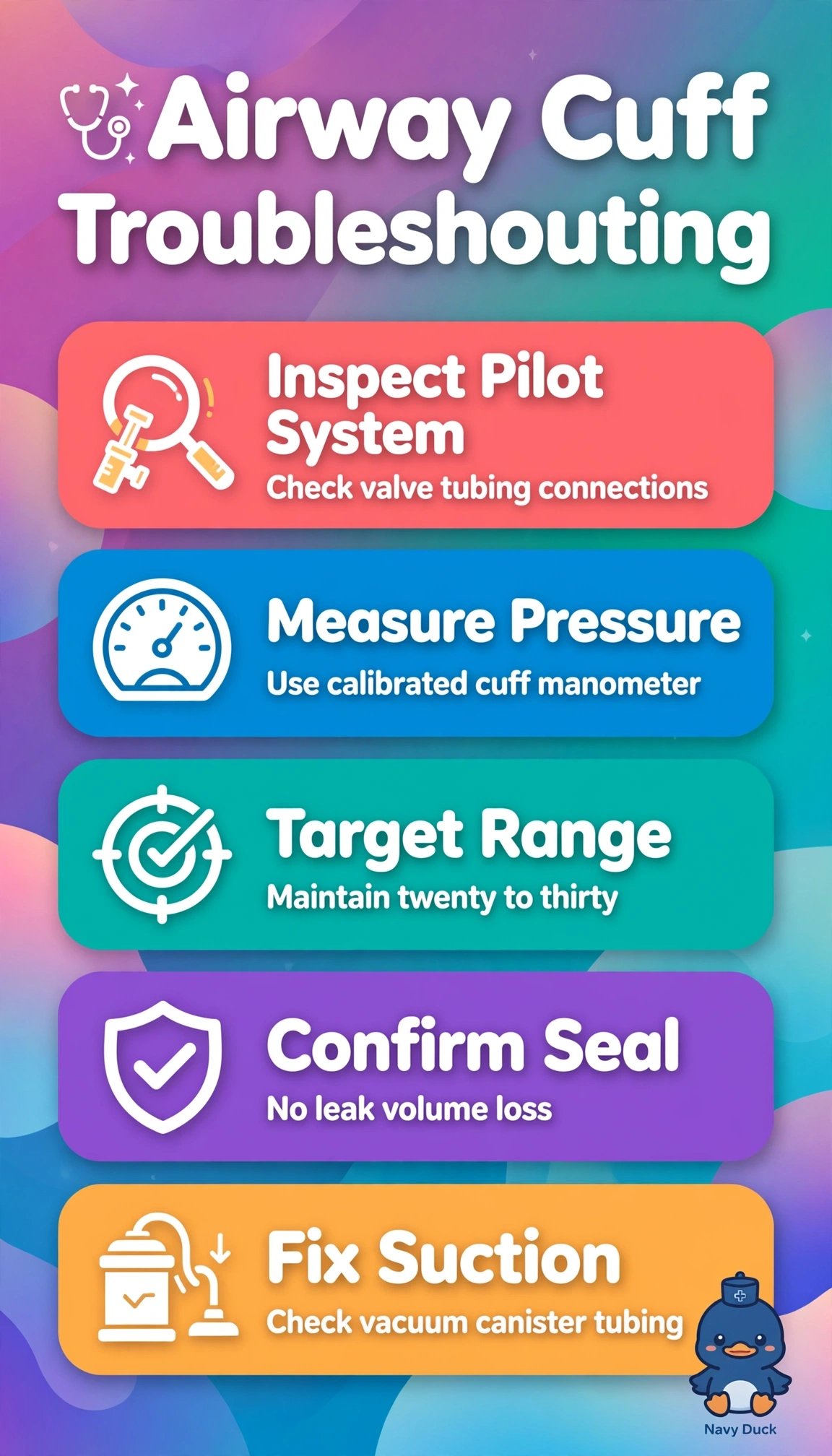
Short Explanation
You’re hunting a leak first, then restoring the seal gently. Precise cuff inflation plus suction checks keep the airway safe without trauma.
Full Explanation
The presentation reflects cuff-seal failure from pilot valve/tubing leak plus inline suction obstruction: gurgling, lost exhaled tidal volume, low cuff-pressure alarm, 14 cm H2O reading, and flat pilot balloon despite inflation prove pressure cannot be held until the leak source is identified, then reinflation to 20-30 cm H2O restores tracheal seal to prevent aspiration and peritubal leak without mucosal overinflation injury, then clearing the inline obstruction from kink, plug, or blocked vent restores flow. The direct reinflation-plus-saline-flush approach fails by cuff mechanics because without leak assessment a damaged valve immediately loses pressure again, recreating gurgling and volume loss. The leak-check-plus-vacuum-escalation approach addresses seal but fails by suction physics because collapsed tubing indicates excessive negative pressure against obstruction or kink, so more vacuum worsens collapse without removing blockage and risks trauma. The leak-check-plus-circuit-change approach addresses seal but fails by volume-loss attribution because the circuit is intact and the deficit is from peritubal leak plus suction failure, so exchange misses obstruction and delays care. Exam caveat: distinguish low-pressure leak alarms with gurgling and flat balloon from high-pressure/obstruction alarms, remembering saline and higher vacuum do not fix mechanical leaks or plugged catheters. Practical check: verify sustained 20-30 cm H2O by manometer with rounded balloon, gurgling resolved and exhaled volume back to set, then test suction on sterile water for brisk flow without collapse before reconnecting.