
A 55-year-old with pneumonia-related ARDS has PaO2/FiO2 112 on FiO2 0.70, PEEP 12 and volume control 6 mL/kg predicted body weight with plateau 28 cm H2O. Chest film shows bilateral infiltrates and bedside ultrasound excludes failure. Which lung-protective strategy adjustment should the therapist advocate to improve oxygenation in this ARDS patient?
Select an answer to reveal the explanation.
Short Explanation
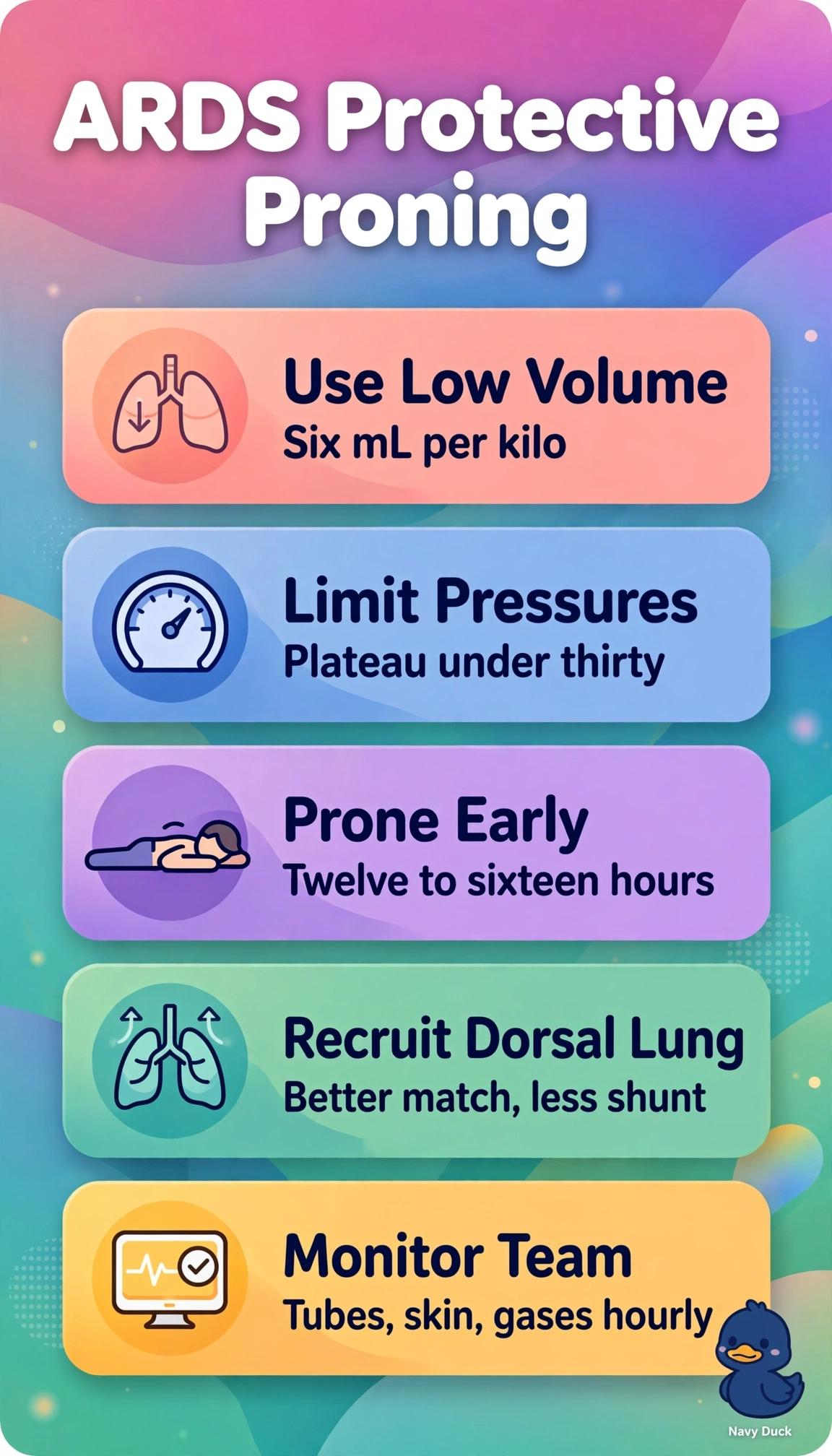
Your lungs need rest, not stretch, when ARDS stiffens them. Low volumes limit overdistension while proning recruits dorsal lung for better matching, raising oxygen without extra pressure injury.
Full Explanation
ARDS creates heterogeneous shunt with dorsal atelectasis and ventral overdistension, so 6 mL/kg predicted body weight with limited plateau and driving pressure reduces volutrauma while prone positioning for prolonged sessions homogenizes transpulmonary pressure, recruits dorsal units, improves ventilation-perfusion matching, and improves mortality in moderate-severe ARDS with PaO2/FiO2 below 150. Raising FiO2 to 1.0 while supine improves alveolar oxygen tension but does not recruit shunt units, prolongs oxygen toxicity risk, and misses the mortality benefit of proning. Increasing tidal volume to normalize PaCO2 improves pH at the cost of higher strain, plateau and driving pressures that worsen ventilator-induced lung injury. Repeated prolonged high-pressure recruitment maneuvers may transiently open lung but risk barotrauma, hemodynamic collapse, and loss of lung-protective limits without the sustained benefit of proning. Exam caveat: proning is indicated for PaO2/FiO2 under 150 despite optimized low-volume ventilation, not for every hypoxemic patient. Practical check: confirm predicted body weight calculation, secure tubes and lines with a checklist team, and reassess PaO2/FiO2, compliance, and skin pressure points hourly.