
A 71-year-old intubated for 6 days develops fever 38.6 C, purulent secretions, new left infiltrate, leukocytosis, PaO2/FiO2 210 and suspected ventilator-associated pneumonia with septic hypotension. Cultures are pending and local resistance is high. Which infectious disease management approach best addresses pneumonia in this ventilated patient?
Select an answer to reveal the explanation.
Short Explanation
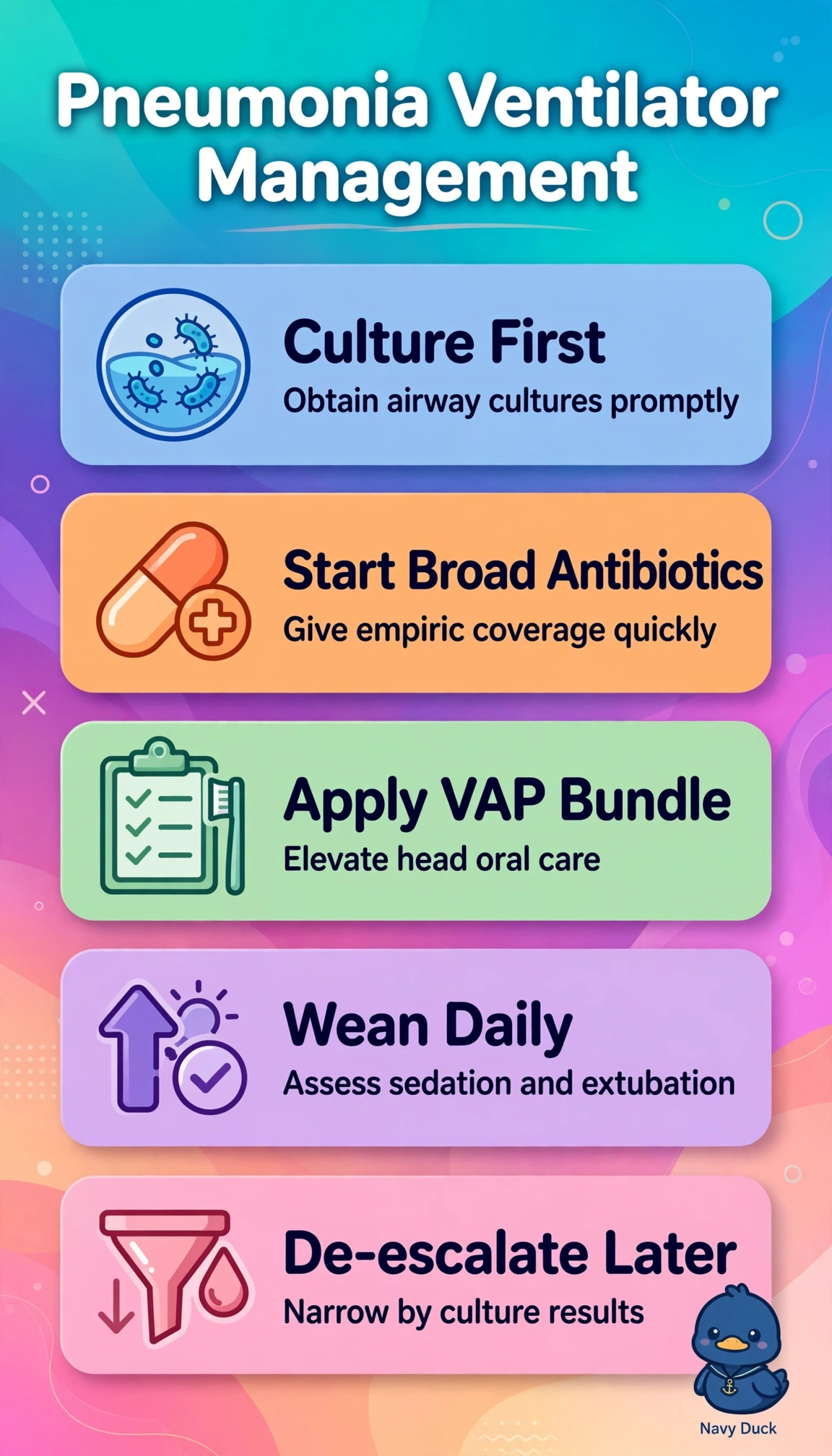
You can’t wait for labs when sepsis is brewing. Early cultures plus broad coverage and bundle care stop pneumonia from spiraling fast.
Full Explanation
This 6-day intubation with fever 38.6C, purulent secretions, new left infiltrate, leukocytosis, PaO2/FiO2 210 and septic hypotension in a high-resistance unit is late ventilator-associated pneumonia with sepsis requiring simultaneous diagnosis, immediate adequate empiric coverage, and prevention because inadequate initial therapy increases mortality. Lower respiratory sampling before antibiotics preserves yield for de-escalation, prompt broad-spectrum therapy covers likely multidrug-resistant Staphylococcus aureus, Pseudomonas aeruginosa and Enterobacterales expected with prolonged ventilation and high resistance, and VAP bundle care with head elevation, sedation review, oral care, subglottic secretion management, and thrombosis and ulcer prophylaxis reduces recurrence and ventilator days. The blood-cultures-only with prompt broad-spectrum and strict bundle approach fails the diagnostic concept because bacteremia is insensitive and endotracheal aspirate or bronchoalveolar lavage is needed to confirm pathogen, exclude mimics like atelectasis or edema, and tailor therapy. The prompt narrow-spectrum for early pneumonia approach fails the spectrum concept because onset beyond 4-5 days with hypoxemia, hypotension and high resistance demands broad coverage. The delayed broad-spectrum until results approach fails the timing concept because septic hypotension requires antibiotics within hours with later narrowing. Exam caveat is to distinguish late severe pneumonia with shock from early low-risk pneumonia where narrower therapy may be debated. Practical check is to confirm cultures drawn then antibiotics hung rapidly, document indication and review date, reassess vasopressors, lactate and oxygenation, and audit bedside bundle compliance.