
A 68-year-old in septic shock on norepinephrine remains hypotensive with MAP 58 mm Hg, lactate 4.2 mmol/L, adequate fluids by dynamic indices, new rapid atrial fibrillation at 150/min, and oliguria with crackles and rising creatinine. Cultures are pending and broad-spectrum antibiotics were started within one hour. Which care-plan medication change best balances perfusion, rhythm, and volume in this shock?
Select an answer to reveal the explanation.
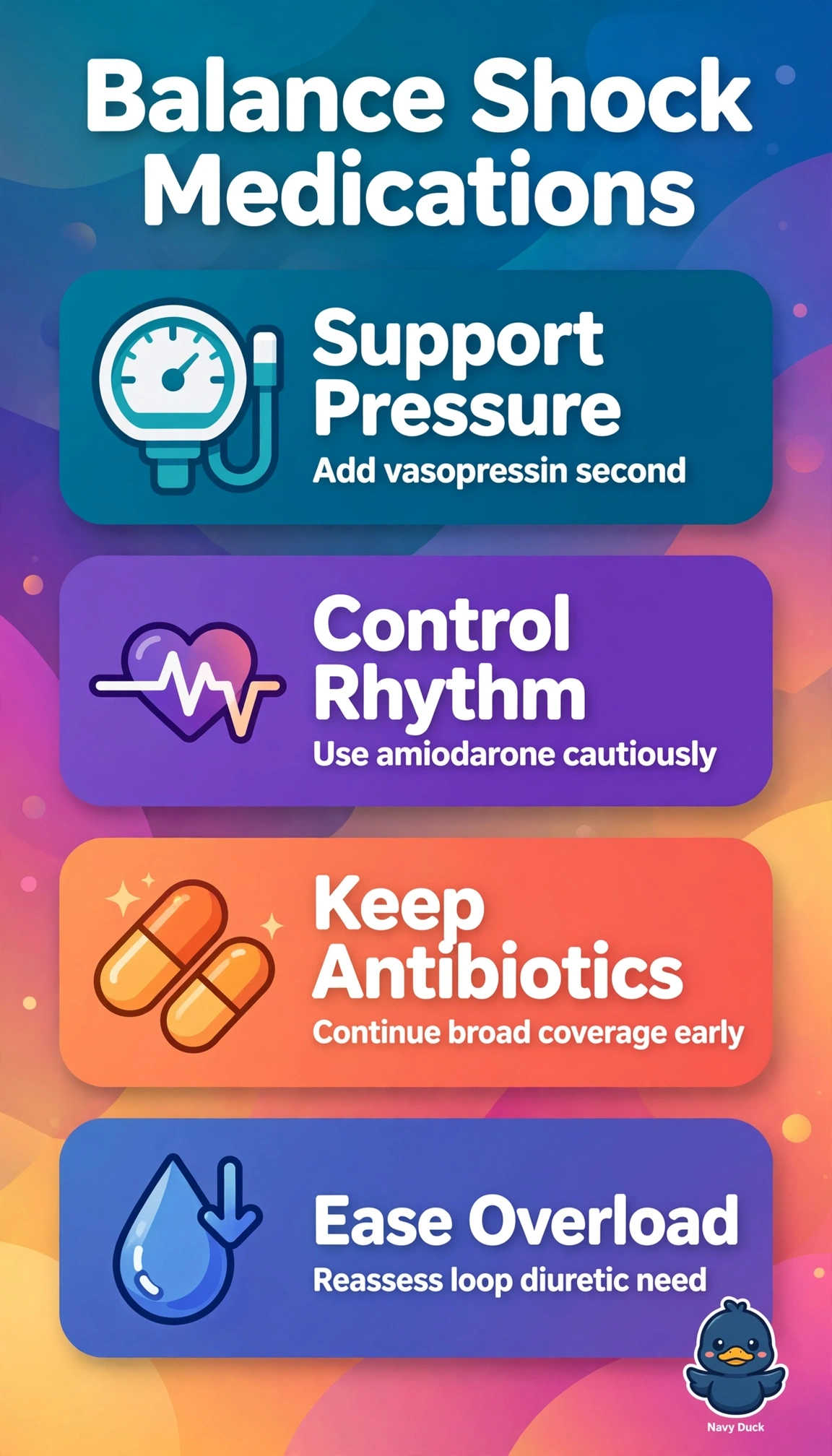
Short Explanation
You’re balancing pressure, rhythm, and soggy lungs all at once. Balance is the win here, like tuning three strings without snapping one.
Full Explanation
Adding vasopressin to norepinephrine addresses persistent hypotension in septic shock despite adequate fluids, helping raise MAP and support tissue perfusion and lactate clearance. Amiodarone provides rate control for new rapid atrial fibrillation with less risk of worsening hypotension and negative inotropy than metoprolol in this unstable, vasopressor-dependent patient. Loop diuretic reassessment is appropriate because crackles, oliguria, and rising creatinine suggest possible fluid overload and renal congestion; continue early broad-spectrum antibiotics. Repeated large fluid boluses fail because dynamic indices indicate adequate fluids, while crackles warn that more fluid may worsen pulmonary edema without correcting hypotension. Metoprolol can suppress compensatory tachycardia and contractility during shock, potentially precipitating collapse. Continuing norepinephrine alone fails to escalate support despite MAP 58 and lactate 4.2, findings consistent with refractory shock. Exam caveat: oliguria alone does not establish hypovolemia; assess fluid responsiveness alongside lung findings and creatinine trends before giving fluids or reassessing diuresis. Practical check: follow MAP, lactate, urine output, lung sounds, continuous ECG, blood pressure, electrolytes, and renal function after vasopressor titration, rhythm therapy, and diuretic review.