
A 29-year-old with Guillain-Barre syndrome in the ICU is alert but reports dyspnea and weak cough. Serial bedside values show vital capacity falling from 28 to 14 mL/kg, MIP weakening from -45 to -22 cm H2O, tachypnea at 32/min, and paradoxical abdominal motion. Bulbar function is intact and gases show early CO2 retention. Which ventilation timing decision best manages this neuromuscular respiratory failure?
Select an answer to reveal the explanation.
Short Explanation
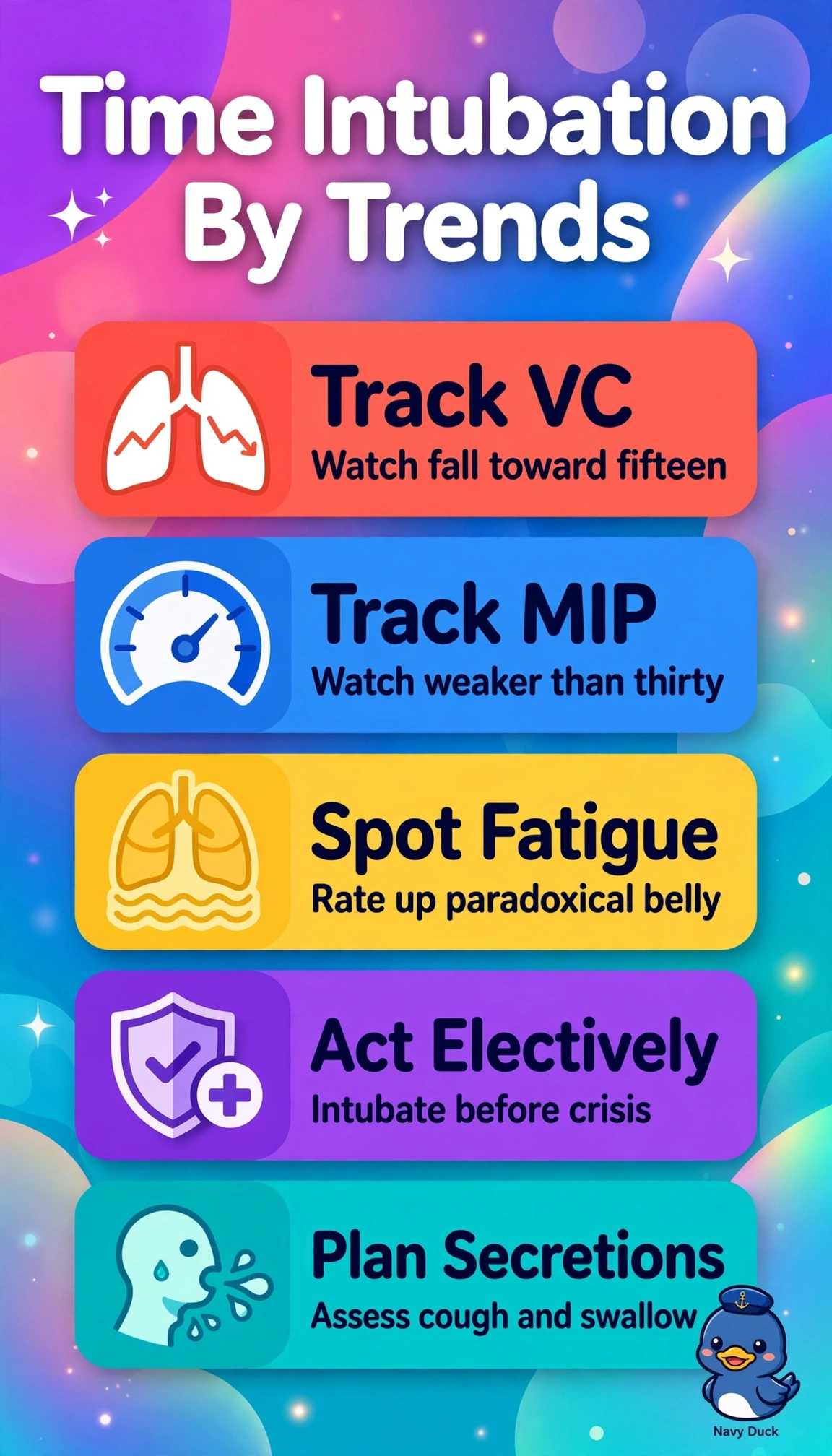
You're watching a fading battery, not a stable patient. Trends beat single numbers here, much like braking early on a downhill slope.
Full Explanation
In Guillain-Barre syndrome progressive decline in vital capacity toward 15 mL/kg, MIP less negative than -30 cm H2O, tachypnea, paradoxical breathing, and CO2 retention signal inspiratory and expiratory muscle failure with high risk for abrupt arrest, so elective intubation before crisis allows controlled airway management. Continued observation for hours ignores the velocity of decline and fatigue signs and risks emergency intubation during bulbar deterioration or autonomic instability. Nocturnal bilevel alone is inadequate for daytime progressive weakness with weak cough and does not protect against aspiration or inability to handle secretions when trends are worsening rapidly. Waiting for incentive spirometry effort to a lower threshold relies on volitional maneuvers in a fatiguing patient and delays definitive support while increasing distress and atelectasis risk. Exam caveat is that absolute cutoffs guide but trajectory, bulbar signs, and secretion clearance determine timing. Practical check is to trend upright VC, MIP, cough peak flow, and blood gases every 1 to 2 hours with ICU and neurology at bedside.