
A 68-kg predicted body weight adult with ARDS is on volume assist-control rate 20, VT 550 mL, PEEP 8 cm H2O, FiO2 0.70 with plateau 32 cm H2O, PaO2 68 mm Hg and pH 7.32. Lung-protective goals and oxygenation both remain unmet despite sedation. Which invasive ventilation adjustment best balances lung protection and oxygenation?
Select an answer to reveal the explanation.
Short Explanation
You’ve got to shrink the breath while giving the alveoli more stent. That combo nails lung-protective ventilation without starving oxygen delivery.
Full Explanation
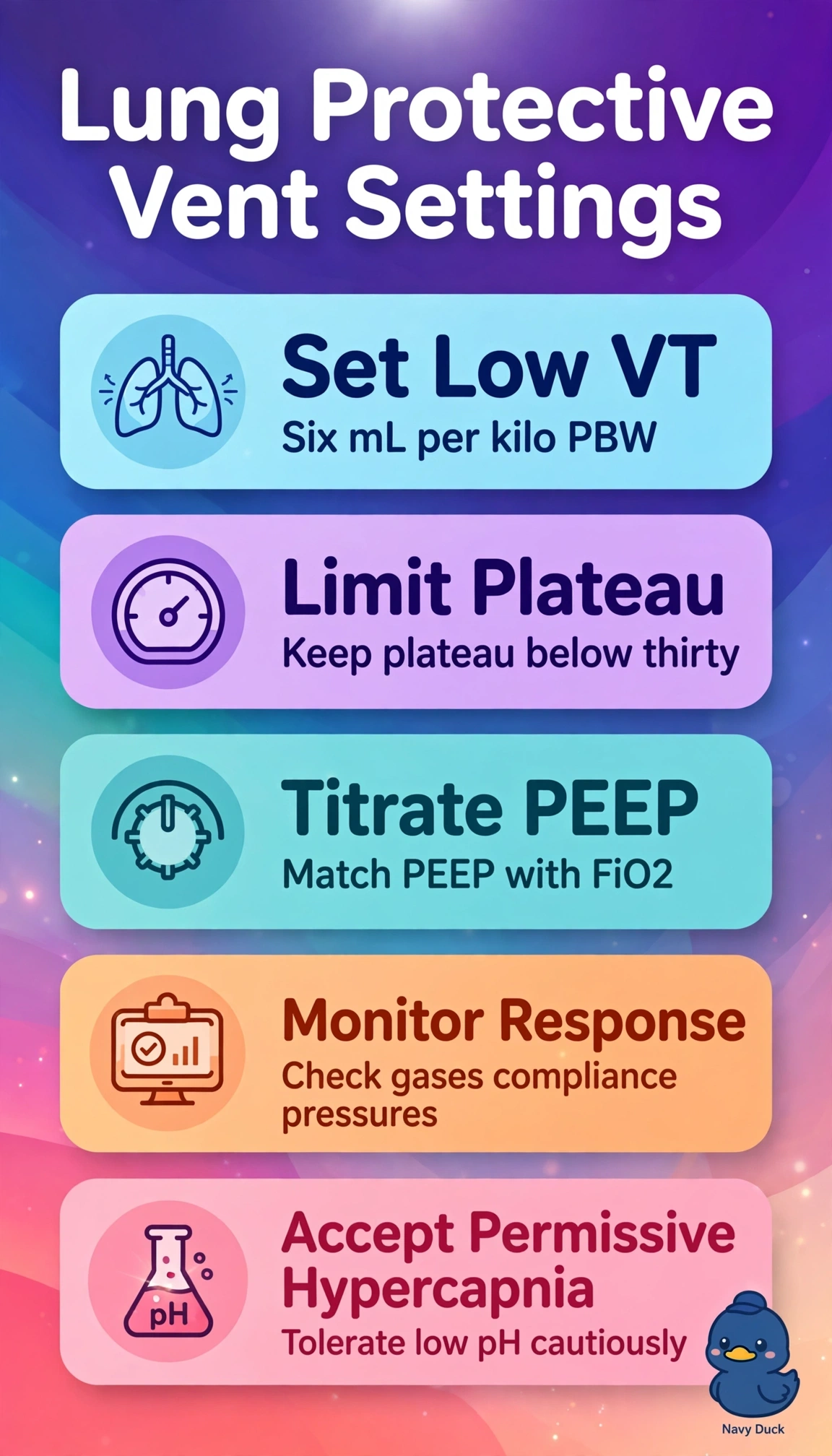
Lung-protective ventilation for ARDS uses approximately 6 mL/kg predicted body weight with plateau pressure below 30 cm H2O to limit volutrauma while using titrated PEEP and FiO2 combinations to recruit and maintain functional residual capacity and improve arterial oxygenation. The correct adjustment reduces tidal volume from about 8 to about 6 mL/kg, accepts permissive hypercapnia within limits, and increases PEEP according to ARDSNet PEEP-FiO2 tables with monitoring of plateau, driving pressure, blood pressure, and compliance. Increasing tidal volume to improve oxygenation raises plateau and driving pressure and worsens ventilator-induced lung injury despite a transient oxygen gain, and raising FiO2 alone without adequate PEEP leaves recruitable alveoli collapsed and prolongs oxygen toxicity risk. Reducing rate and adding inspiratory pause does not address excessive volume or derecruitment and may worsen acidosis and dyssynchrony. Exam caveat is to calculate VT on predicted not actual body weight and verify plateau during an inspiratory hold, and practical check is to reassess plateau, static compliance, SpO2, PaO2, and hemodynamics within 30 minutes of each PEEP change.