
A 48-year-old with chemotherapy-induced neutropenia, morbid obesity, and recent amiodarone therapy develops progressive hypoxemic failure, bilateral infiltrates, fever, and increased work of breathing despite oxygen. The patient requires intubation planning with lung-protective strategy and etiologic workup. Which clinical judgment best manages immunocompromised obesity-related drug-toxicity respiratory failure?
Select an answer to reveal the explanation.
Short Explanation
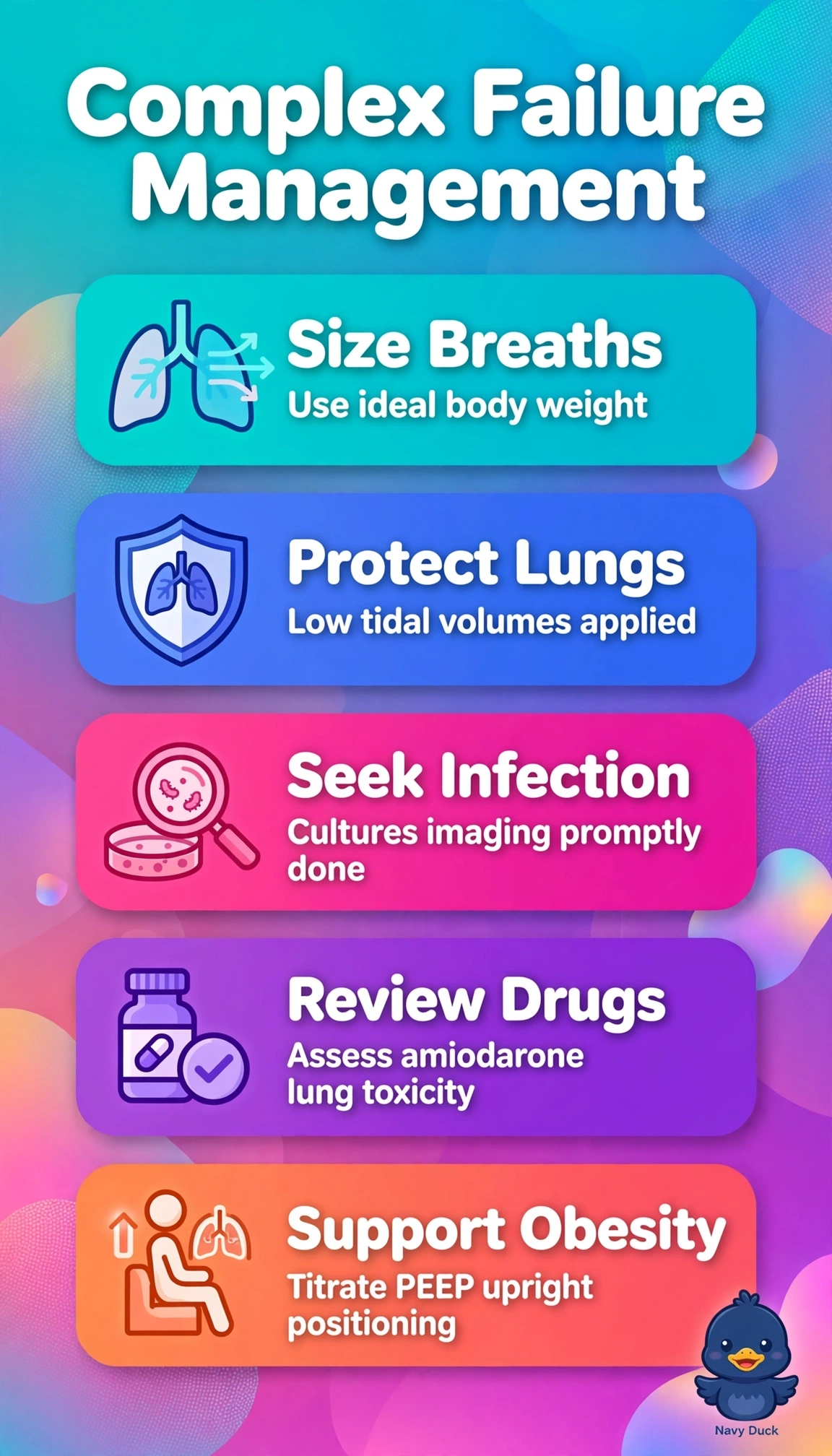
You can protect the lungs by setting breaths to body size rather than the number on the scale. Using ideal body weight while you investigate infection and review amiodarone toxicity addresses the key risks together. Actual-weight breaths, early steroids, or an infection-only focus each leave an important danger unaddressed.
Full Explanation
Lung-protective ventilation by ideal body weight, prompt infectious workup, and review of amiodarone toxicity is the best judgment: morbid obesity makes actual body weight a poor guide to tidal volume, while fever and bilateral infiltrates in neutropenia require urgent investigation for bacterial, fungal, and viral infection. Recent amiodarone exposure also warrants review because drug-induced lung injury can resemble infection and ARDS. Ventilation by actual body weight may overdistend the lungs, since alveolar size relates to height and sex rather than adipose mass, even if infection and drug toxicity are considered. Adding steroids for suspected drug pneumonitis risks treating before infection is adequately assessed; profound neutropenia and fever make invasive infection an urgent concern, and early immunosuppression can mask fever or worsen sepsis. Ideal-weight ventilation, infectious workup, and antibiotics for neutropenic sepsis addresses mechanics and infection but omits amiodarone toxicity review, including discontinuation planning, alternative antiarrhythmic review, and its prolonged half-life. Exam caveat: do not attribute bilateral infiltrates in obesity solely to atelectasis or fluid overload; rising work of breathing supports timely intubation with PEEP titration. Practical check: calculate predicted body weight, obtain blood and sputum cultures, consider chest CT, review medications, and involve critical care and infectious disease early.