
A 71-year-old with known heart failure presents with crackles, pink frothy sputum, SpO2 84% on room air, BP 88/54, cool mottled skin, lactate 4.2, and chest x-ray showing pulmonary edema without infiltrate. Fluids have been held and ECG shows no STEMI. Which cardiopulmonary support strategy best manages cardiogenic shock with acute pulmonary edema?
Select an answer to reveal the explanation.
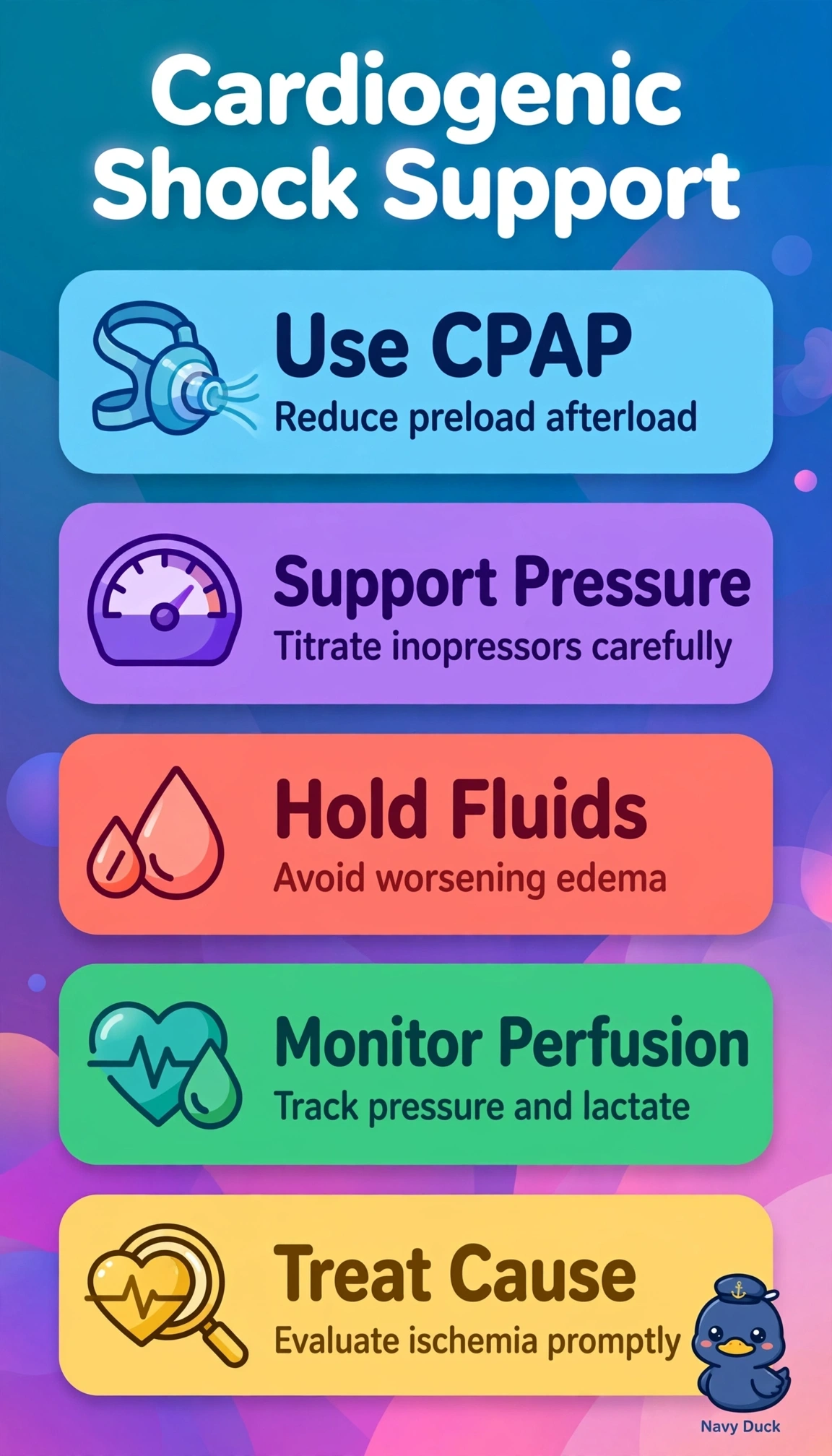
Short Explanation
You’re draining a flooded engine that’s also losing pressure. CPAP eases lung water and heart workload while pressors keep perfusion going.
Full Explanation
The correct strategy succeeds because it treats pump failure and alveolar flooding together: CPAP recruits fluid-filled alveoli, improves functional residual capacity, reduces work of breathing and left ventricular afterload, and corrects severe hypoxemia manifest as crackles, pink frothy sputum, SpO2 84% and pulmonary edema without infiltrate, while cautious inotropy restores contractility for cool mottled skin and lactate 4.2, titrated vasopressor support defends coronary and systemic perfusion at BP 88/54, and avoiding further fluids prevents increased hydrostatic edema after fluids were held. The vasodilator infusion with loop diuretics while avoiding vasopressors fails by perfusion concept because preload and afterload reduction suits hypertensive pulmonary edema but dangerously lowers perfusion and coronary flow in shock with systolic pressure in the 80s. The high-flow nasal oxygen with norepinephrine-dobutamine and fluid avoidance fails by recruitment concept because shock management is correct but oxygen without sustained positive airway pressure inadequately splints edematous alveoli at 84% saturation. The CPAP with fluid boluses, norepinephrine and withheld inotropes fails by volume-contractility concept because boluses raise capillary pressure and worsen edema while delaying contractile support prolongs low output despite hypoperfusion without STEMI. An exam caveat is to check pressure and perfusion before defaulting to routine edema therapy and distinguish cardiogenic edema without infiltrate from distributive or hypovolemic hypotension. A practical check is continuous pressure, oximetry, respiratory effort, mentation, urine output, serial lactate, lung findings and early echocardiography with readiness for invasive ventilation or mechanical support if shock persists.