
A 62-year-old in the ICU with unstable atrial fibrillation is scheduled for elective synchronized cardioversion. The team asks respiratory therapy to assist at bedside with airway equipment, oxygen and monitoring during procedural sedation. Which bedside assistance step should the therapist complete immediately before shock delivery for safe cardioversion support?
Select an answer to reveal the explanation.
Short Explanation
You’re the safety net before that button gets pushed. Syncing to the R-wave avoids shocking vulnerable repolarization, while ready oxygen and suction keep preparation complete when seconds matter.
Full Explanation
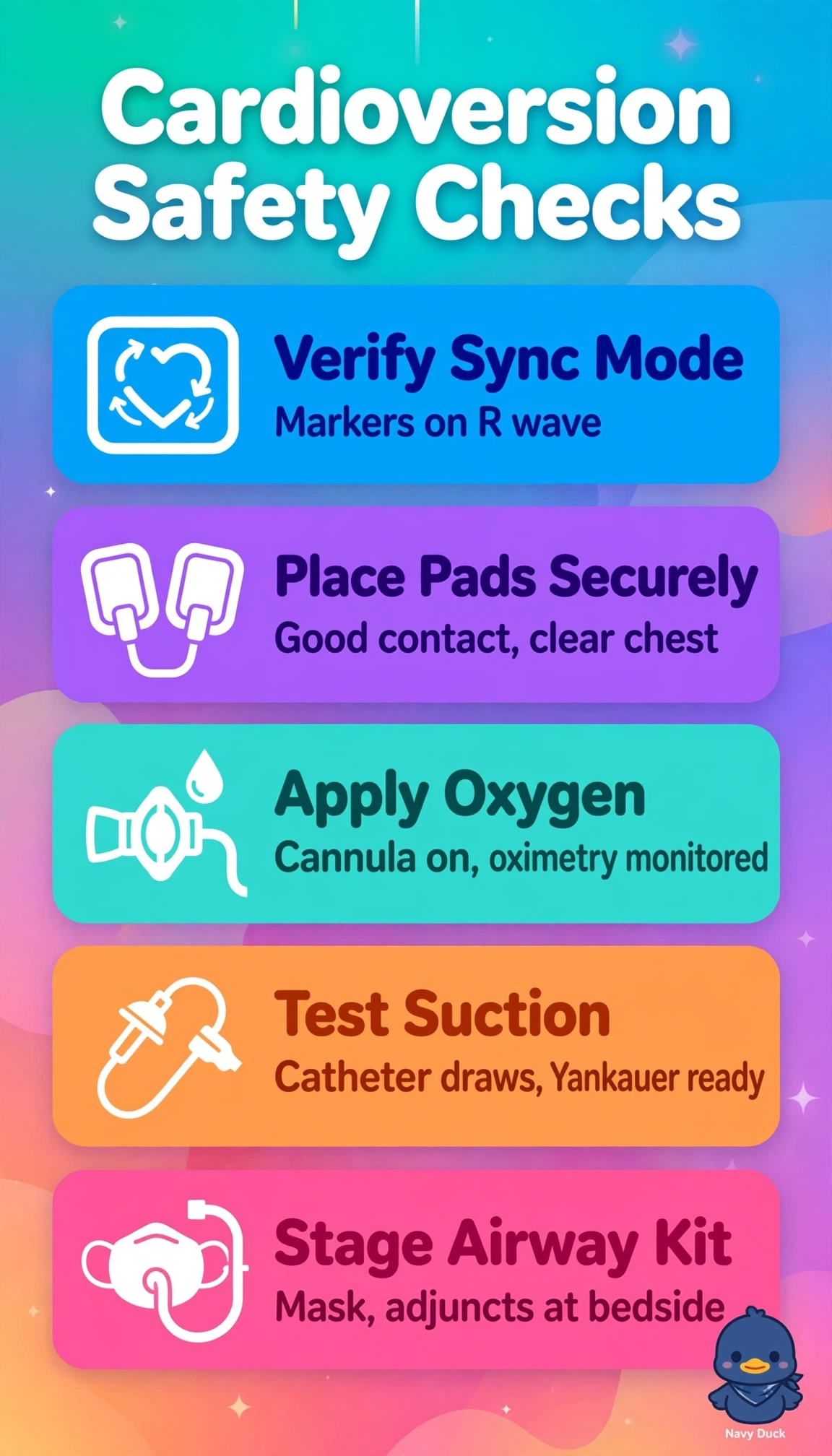
For elective synchronized cardioversion of unstable atrial fibrillation under procedural sedation, confirming synchronizer enabled on R-wave, oxygen applied and suction tested is required immediately before shock because energy timed to ventricular depolarization avoids vulnerable repolarization and prevents R-on-T ventricular fibrillation, oxygen mitigates sedation-related desaturation during apnea, and tested suction ensures immediate clearance if vomiting or secretions threaten the airway during loss of tone. The approach describing sync disabled for unsynchronized shock fails by cardioversion concept because unsynchronized delivery is reserved for ventricular fibrillation or pulseless ventricular tachycardia with no organized R-wave, while perfusing atrial arrhythmia requires synchronization. The approach describing synchronizer enabled on R-wave with airway cart checked fails by timing concept because cart inventory is earlier setup and does not verify immediate suction function at loss of consciousness. The approach describing synchronization on P-wave fails by electrophysiology concept because atrial fibrillation has no consistent P-wave and energy must time to ventricular depolarization, so P-tracking risks mistimed discharge during repolarization. Exam caveat is to distinguish synchronized cardioversion for perfusing tachyarrhythmias from unsynchronized defibrillation for arrest rhythms and setup versus immediate pre-discharge actions. Practical check is to verify sync markers on each R-wave, oxygen flowing with oximetry tracing, occlude tubing to confirm negative pressure with Yankauer at bedside, then join all-clear and shock call.