
A 58-year-old is in the ED after a truck crash with multiple left rib fractures, paradoxical chest wall motion, SpO2 88% on 4 L, severe splinting pain, and CT showing pulmonary contusion without pneumothorax. Pain limits cough and deep breathing despite supplemental oxygen. Which ventilatory support approach best manages flail chest with underlying pulmonary contusion?
Select an answer to reveal the explanation.
Short Explanation
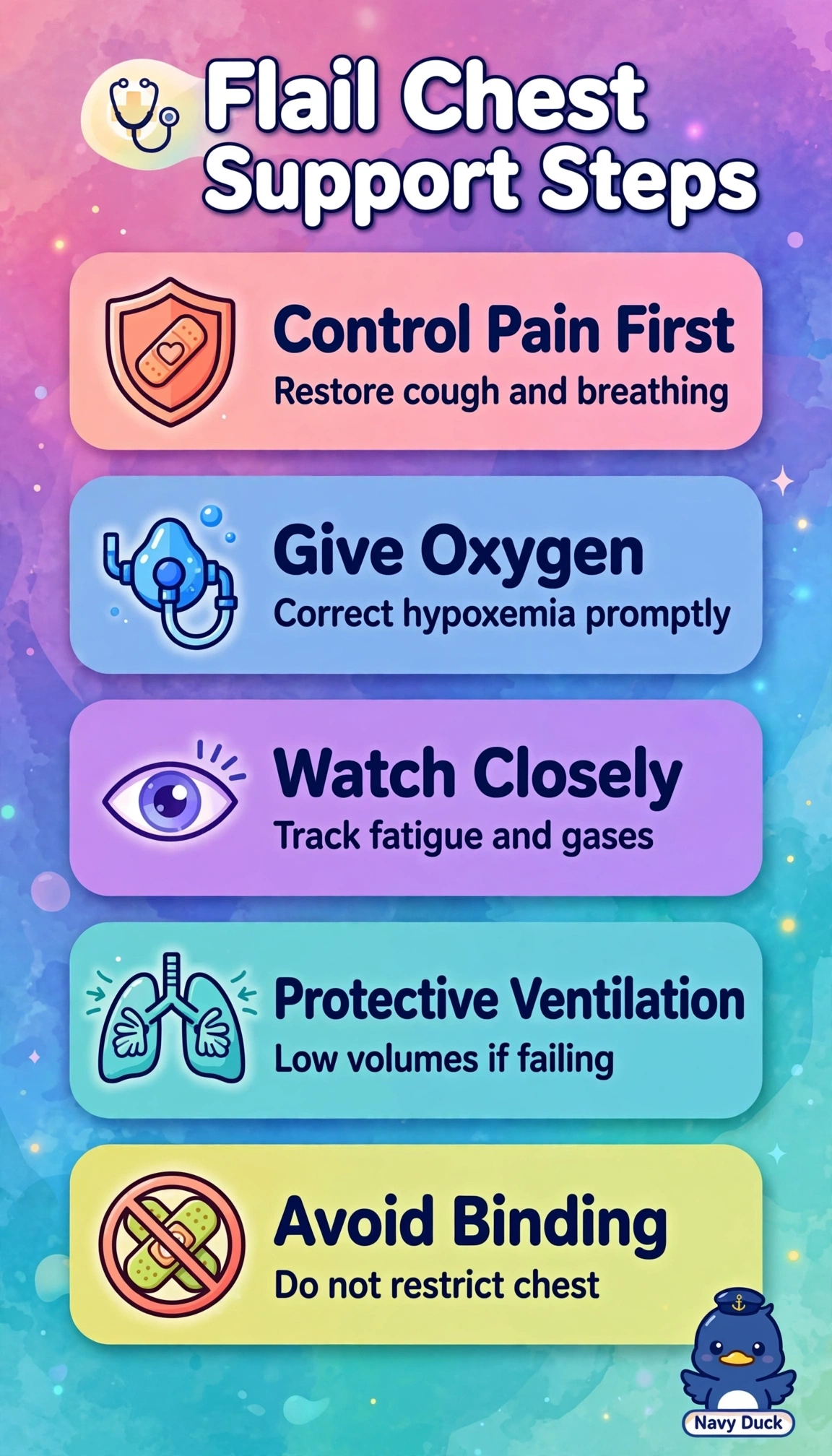
You’re bracing a bruised lung, not splinting a broken board. Analgesia lets the chest move so oxygenation can recover without forcing a ventilator too early.
Full Explanation
Correct care restores mechanics and treats contusion shunt, so regional thoracic epidural or paravertebral analgesia relieves splinting, improves tidal volume, enables cough and clearance and reduces atelectasis while oxygen is optimized first, escalating to invasive low tidal volume ventilation by predicted weight with adequate PEEP to recruit contused alveoli and limit volutrauma only if hypoxemia, fatigue or high work persist, as with SpO2 88% on 4 L here. Commencing bilevel noninvasive ventilation with regional analgesia to avoid intubation suits milder injury but fails here because severe contusion, weak clearance and shunt predict poor mask tolerance, secretion retention, aspiration and delay of definitive control. Continuing oxygen, regional analgesia and physiotherapy without positive pressure is reasonable initially but fails by omission because it never provides PEEP and recruitment when hypoxemia persists, inviting collapse and fatigue. Using titrated systemic opioids with correctly timed lung-protective ventilation preserves timing and lung protection but fails on analgesia because systemic opioids give inferior segmental relief and depress cough while increasing sedation and delirium versus regional techniques for multiple fractures. An exam caveat is that need for ventilation follows contusion severity and gas-exchange failure rather than visible paradox alone. Practically reassess pain, spirometry, cough, rate, accessory use, SpO2 and gases after the block, and if intubated verify 6 mL/kg predicted weight, plateau below 30, PEEP titrated to saturation and compliance, and hemodynamic tolerance.