
A 24-year-old with severe traumatic brain injury is intubated in the trauma ICU with ICP monitor 22 mm Hg, CPP 58 mm Hg, PaCO2 44 mm Hg and SpO2 94% on assist-control ventilation. Head of bed is flat and suctioning triggers coughing and ICP spikes to 30 mm Hg. Which ventilation and positioning strategy best controls intracranial pressure effects on ventilation?
Select an answer to reveal the explanation.
Short Explanation
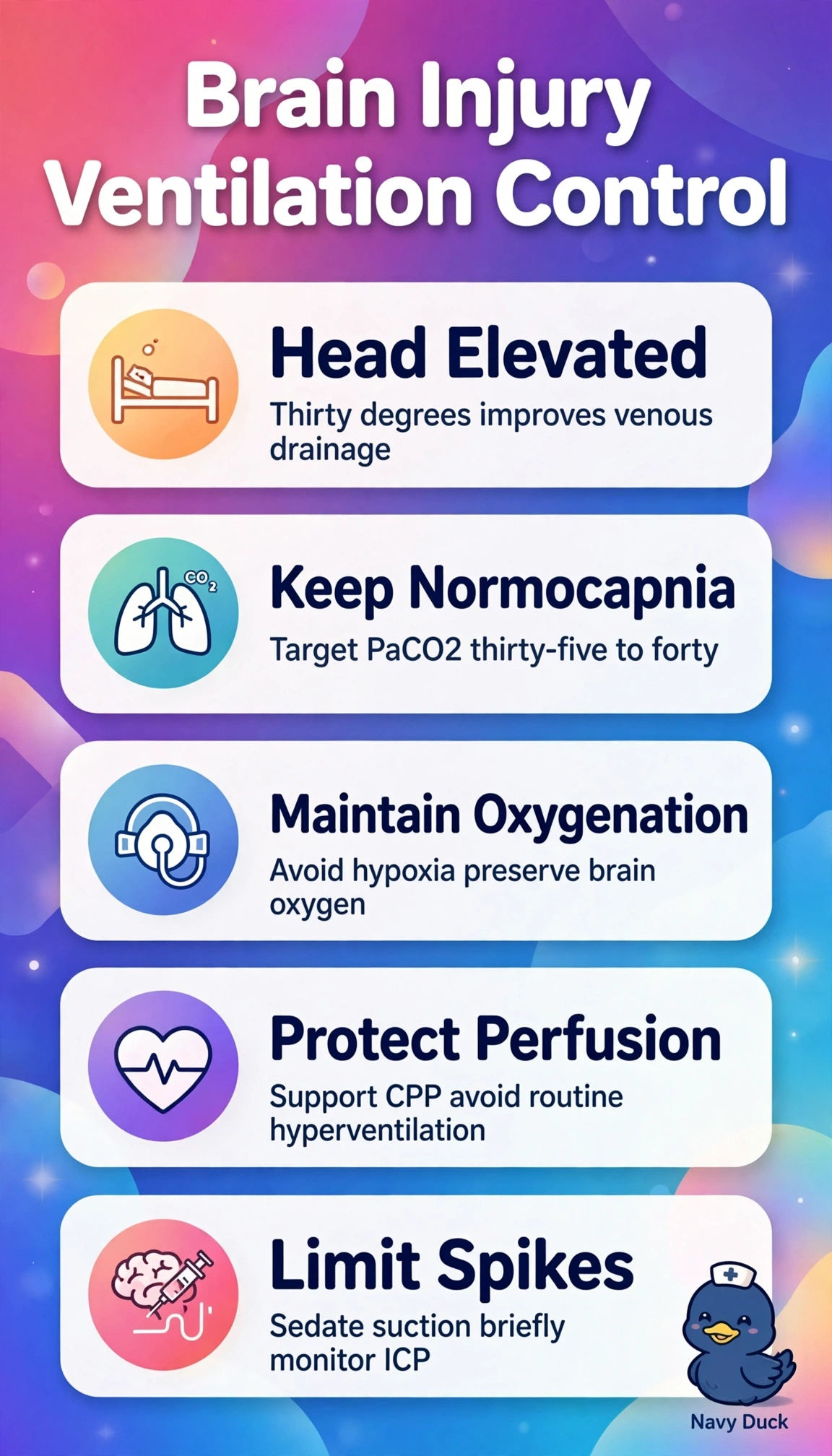
You’re protecting the brain by keeping CO2 steady, not swinging it wildly. Head-up plus normocapnia preserves perfusion while calming those ICP spikes beautifully.
Full Explanation
Severe brain injury requires tight control of PaCO2, oxygenation, and venous drainage because CO2 is a potent cerebral vasodilator and hypoxia and hypercapnia raise intracranial blood volume and ICP while lowering cerebral perfusion pressure. The correct approach combines 30-degree head elevation with neutral neck alignment, adequate sedation and controlled ventilation to maintain normocapnia around PaCO2 35-40 mm Hg, normoxia, and CPP generally above 60 mm Hg, avoiding routine hyperventilation. Prophylactic sustained hyperventilation to PaCO2 25-30 causes cerebral vasoconstriction and ischemia and is reserved only as a brief temporizing measure for active herniation while definitive therapy is arranged. Flat positioning with large tidal volumes impairs jugular venous return and risks ventilator-induced injury without correcting hypercapnia efficiently, and permissive hypercapnia appropriate for ARDS is contraindicated here because acidosis dilates cerebral vessels and raises ICP. Exam caveat is to distinguish transient hyperventilation for herniation from maintenance strategy, and practical check is to correlate ventilator changes with continuous ICP, CPP, SpO2, and end-tidal CO2 trends after suctioning and position changes.