
A 52-year-old with severe OSA is on in-lab CPAP titration at 10 cm H2O. Snoring resolved but the tracing shows persistent hypopneas, REM-related desaturation to 84%, and residual AHI 18/hour with mouth leak noted. Pressure tolerance is good and central events are rare. Which titration adjustment best addresses residual obstruction on this sleep study?
Select an answer to reveal the explanation.
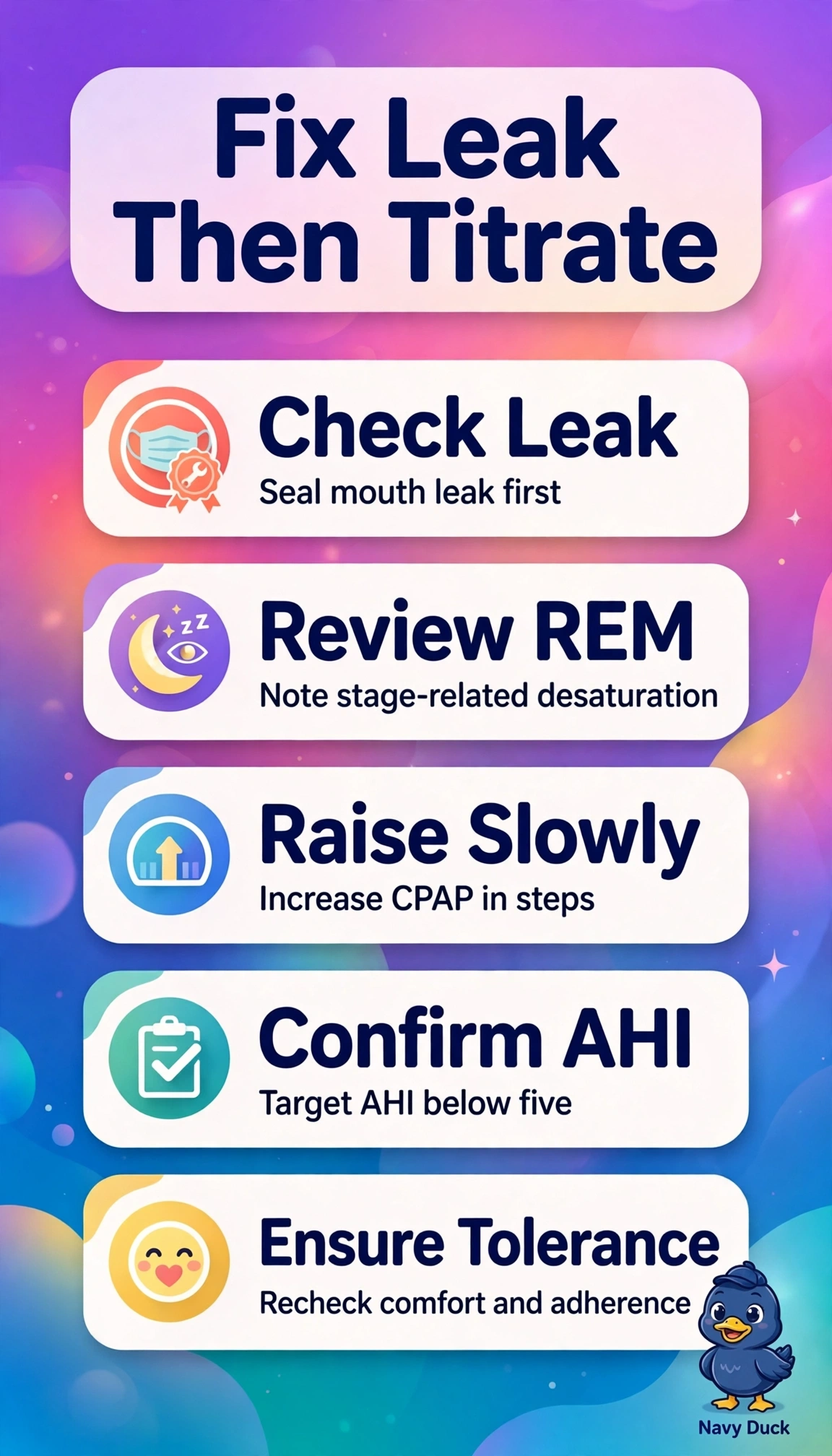
Short Explanation
You've got classic leak plus REM collapse still breaking through. Seal matters as much as pressure, like fixing a drafty window before cranking heat.
Full Explanation
Persistent hypopneas and REM desaturation with mouth leak on fixed CPAP indicate inadequate effective pressure at the airway due to leak and sleep-stage vulnerability, so optimizing seal plus a modest pressure increase restores splinting of the upper airway and lowers residual AHI while preserving tolerance. Adding oxygen alone blunts desaturation without correcting obstruction and leaves hypopneas and sleep fragmentation untreated, so it masks monitoring rather than improving titration. Switching to bilevel ST for rare centrals overtreats a minor finding and introduces trigger and timing complexity that is not indicated when obstructive events dominate. Lowering pressure with positional therapy alone moves the wrong direction when events persist supine and in REM at the current setting and would likely worsen obstruction and desaturation. Exam caveat is to distinguish obstructive residual disease from treatment-emergent centrals by event type and leak signal before changing modes. Practical check is to review leak tracing, oximetry nadir by sleep stage, and pressure-response curve before final prescription.