
A 59-year-old with community-acquired pneumonia has SpO2 86% on 6 L/min nasal cannula, respiratory rate 32/min, increased work of breathing, PaO2 58 mmHg on oxygen, and no hypercapnia or altered mentation. The patient can protect the airway, has no facial trauma or obstruction, and remains hypotensive-free with adequate perfusion. Which oxygenation support should the therapist initiate and titrate to correct refractory hypoxemia?
Select an answer to reveal the explanation.
Short Explanation
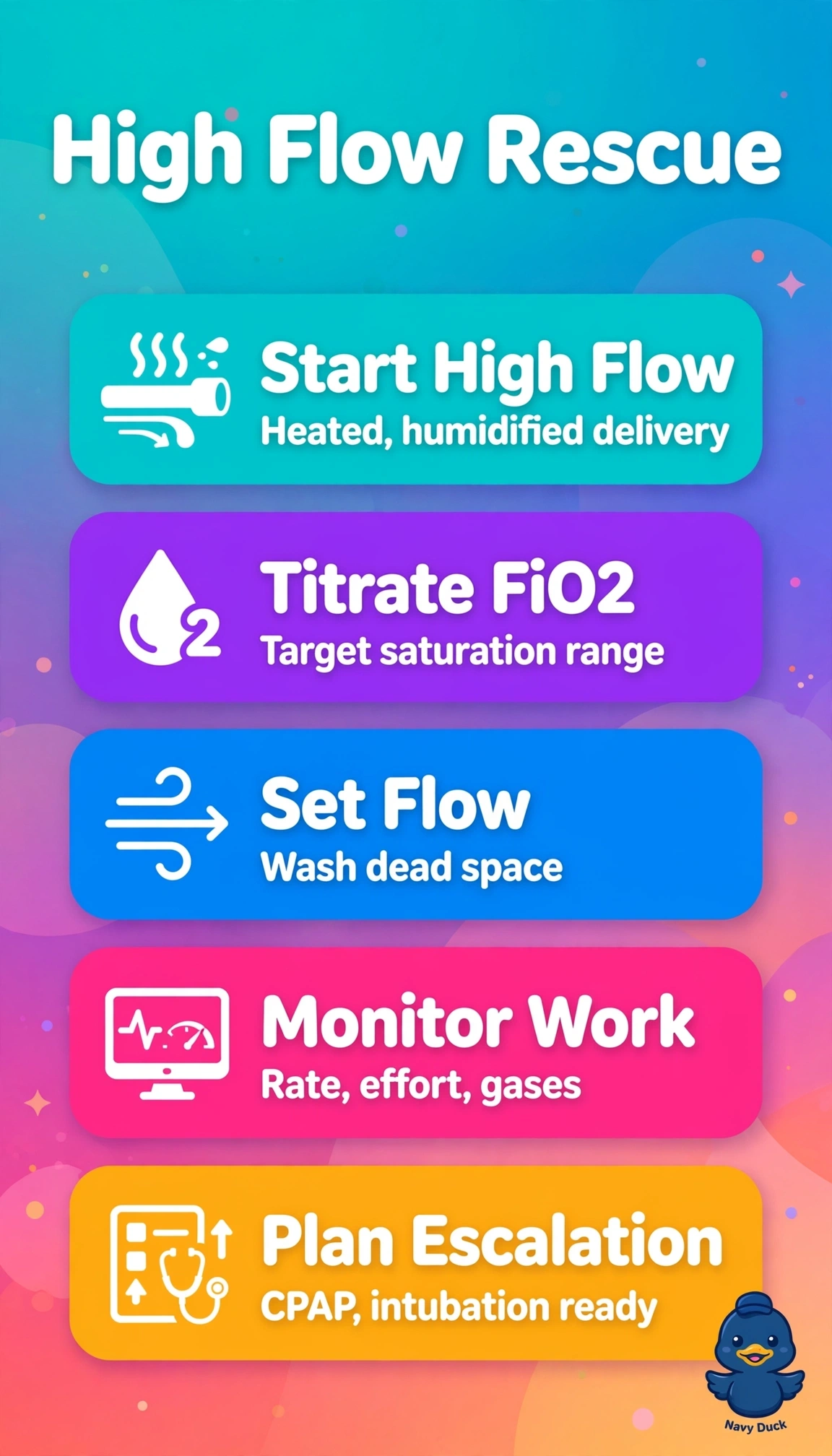
You need to step up support before fatigue wins. High flow washes out dead space and eases work like a cool breeze through a stuffy room. The advantage is flow-plus-FiO2 titration with close watch for escalation.
Full Explanation
Heated high-flow is correct for refractory normocapnic hypoxemia with high demand because it supplies humidified gas at flows that meet tachypneic inspiratory demand, allows independent titration of FiO2 and flow, washes out dead space, decreases work of breathing and rate, and provides low-level distending pressure that improves recruitment and PaO2 while preserving comfort, speech, airway protection and close monitoring with clear escalation criteria, which fits SpO2 86% on 6 L/min, PaO2 58 mmHg, rate 32/min, increased effort, intact airway and stable perfusion without hypercapnia. The Venturi mask approach fails by support concept because precise FiO2 control does not add flow or PEEP, so entrainment of room air persists during high inspiratory demand and effort remains unrelieved without recruitment. The bilevel approach fails by indication concept because pressure support with backup targets hypercapnic ventilatory failure, yet no hypercapnia exists here and routine use in de novo hypoxemic pneumonia risks intolerance and delayed intubation. The nonrebreather approach fails by titration concept because it gives high but variable FiO2 without humidified flow, pressure or washout and cannot be sustained or finely titrated to reduce effort. Exam caveat is to choose flow and PEEP-based support for refractory hypoxemia with effort rather than reflexively selecting bilevel for any dyspnea. Practical check is to titrate to SpO2 92-96%, track rate, effort, SpO2, PaO2/FiO2 and ROX trend, and escalate promptly for fatigue, worsening hypoxemia, hypercapnia, altered mentation or instability.