
A 70-year-old with pneumonia on a nonrebreather mask at 15 L/min remains at SpO2 86% with the reservoir bag fully collapsing on inspiration, mask loosely fitting, and tachypnea at 32/min. Blood pressure is stable and the flowmeter is confirmed open. Which troubleshooting step best restores effective oxygen delivery?
Select an answer to reveal the explanation.
Short Explanation
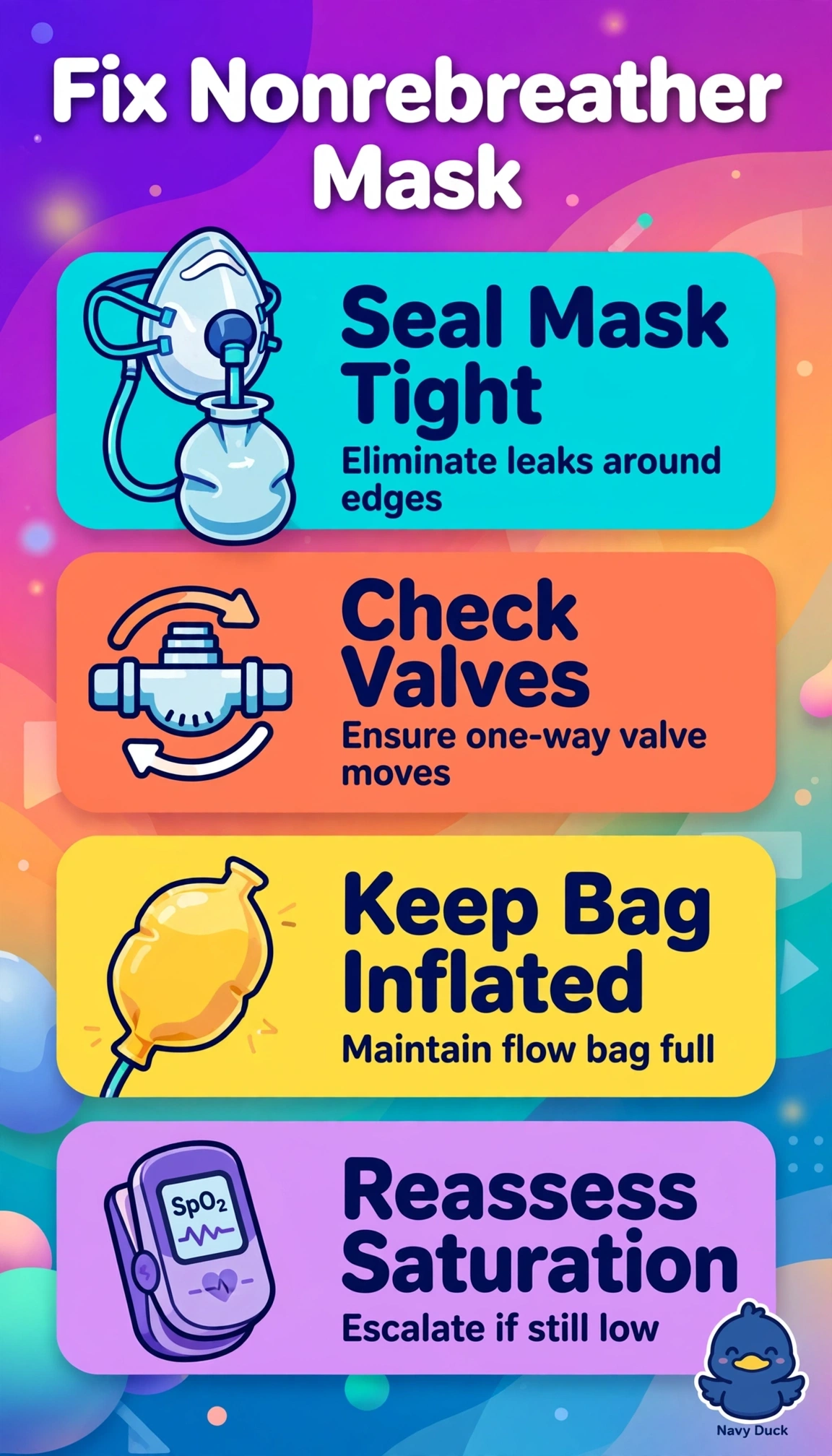
You're watching that bag pancake because room air's sneaking in around the loose edges, like drinking a milkshake through a cracked straw. Tighten the fit, check the valves, and keep the flow up so the bag stays plump and your oxygen delivery actually reaches the lungs.
Full Explanation
The correct troubleshooting step directly corrects the demonstrated delivery failure because a nonrebreather depends on a tight facial seal, competent one-way valves, and sufficient reservoir volume to deliver high FiO2, and here the loose fit allows room-air entrainment while the fully collapsing bag signals inspiratory flow exceeding supply in a tachypneic hypoxemic patient, so refitting, confirming valve movement, and maintaining flow to keep the bag inflated restores the reservoir and minimizes dilution. Transitioning promptly to high-flow nasal cannula is a familiar escalation for pneumonia with high work of breathing, yet it fails by immediacy because it abandons a correctable interface problem while SpO2 remains 86% and requires setup and reassessment rather than restoring the current device. Checking tubing for kinks and increasing flow to preserve bag inflation addresses supply obstruction and reservoir collapse, yet it fails by seal integrity because without refitting the loose mask and verifying valves, entrainment and rebreathing continue despite an inflated bag. Tightening the seal and coaching slower breathing acknowledges leak and excessive demand, yet it fails by reservoir physiology because voluntary rate reduction cannot reliably overcome hypoxic drive at 32/min and does not ensure valve competence or adequate volume. An exam caveat is that stable pressure and an open flowmeter do not rule out delivery failure, and a collapsing bag with persistent hypoxemia should prompt seal and valve assessment before changing modality. A practical check is to observe the bag staying partly inflated throughout inspiration, confirm valves move with each phase, reassess fit at bridge and cheeks, and track SpO2 and rate for improvement.