
A 48-year-old with stridor and a neck mass is evaluated for urgent intubation, with muffled voice, limited mouth opening, Mallampati class IV view, and trachea deviated rightward on palpation and chest film. Oxygenation is borderline on room air. Which airway patency assessment best guides safe management of Mallampati class and tracheal shift?
Select an answer to reveal the explanation.
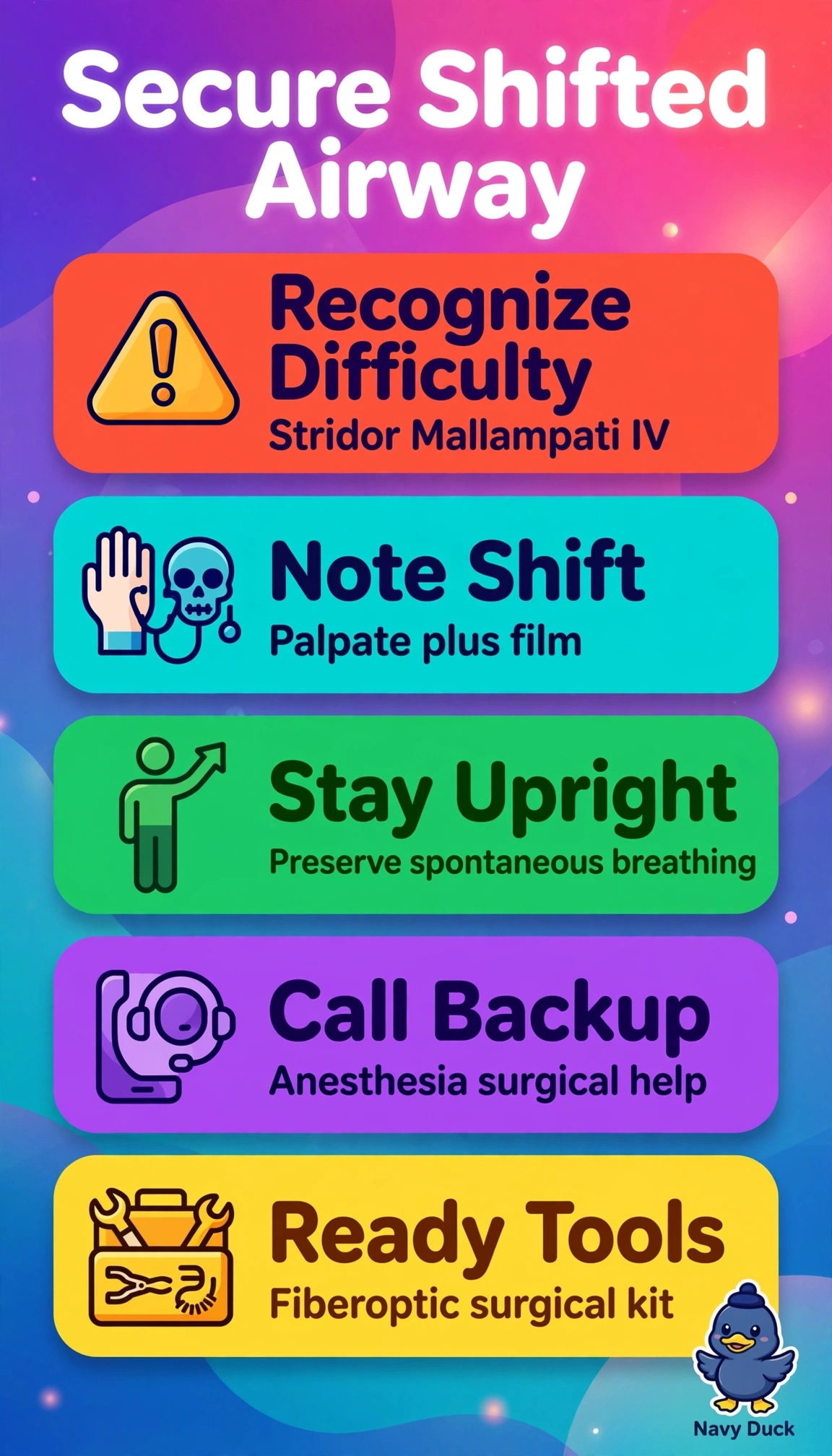
Short Explanation
You're treating visible obstruction plus deviation as a team emergency. Early backup keeps oxygenation and a surgical option ready.
Full Explanation
Correct management is right because stridor, muffled voice, limited opening, Mallampati IV, rightward tracheal deviation, neck mass and borderline oxygenation together indicate tenuous patency at risk of complete loss, so formal declaration activates help, upright posture preserves caliber and oxygen reserve, fiberoptic expertise navigates trismus and distortion without blind trauma, and surgical backup ensures immediate rescue if ventilation fails. Supine rapid-sequence induction with video laryngoscopy after preoxygenation is standard in many emergencies but fails here on physiology because paralysis removes spontaneous drive and supine positioning worsens collapsibility while video view still requires mouth opening and does not bypass compression or lateral shift. Upright awake fiberoptic intubation alone is otherwise ideal but fails on preparedness because sudden desaturation, secretions or obstruction from the mass can defeat fiberoptic progress and need simultaneous surgical rescue. Declaring difficulty with full backup but nursed supine is nearly complete but fails on positioning because supine reduces functional residual capacity and accelerates desaturation with marginal reserve. The exam caveat is that device familiarity never overrides combined obstructive signs plus anatomic shift, so avoid induction-based answers when stridor and deviation coexist. The practical check is to reassess stridor, opening, neck mobility, oximetry, suction, oxygen, upright tolerance and confirm staff, scope and surgical kit with roles ready before sedation.