
A young adult refugee with limited English proficiency, prior ICU trauma, and worsening asthma needs inhaler teaching before discharge in a crowded emergency department with family present. Which communication approach best demonstrates patient-centered, trauma-informed, culturally aware care?
Select an answer to reveal the explanation.
Short Explanation
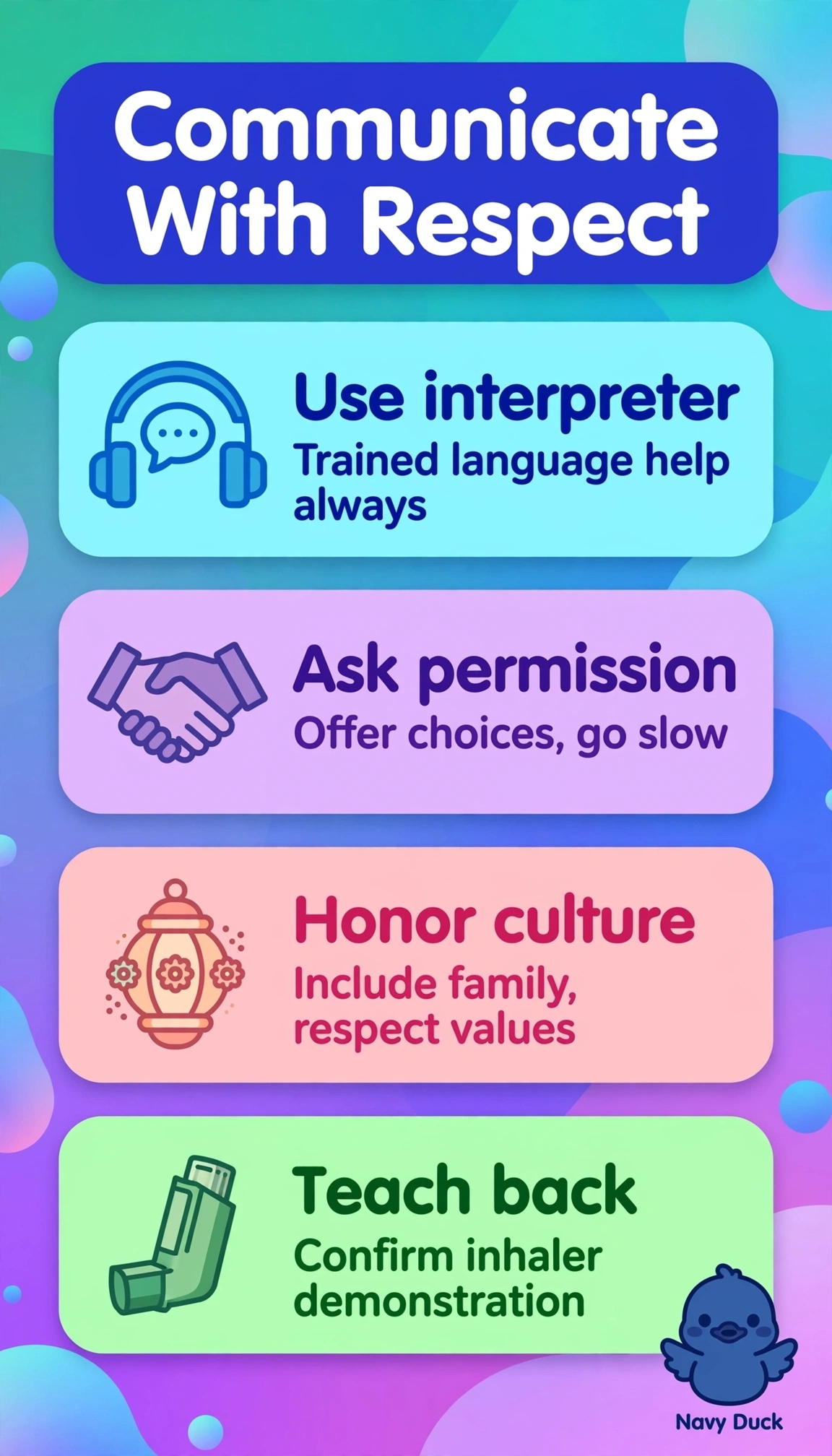
You'll build trust faster when you ask permission, use a trained interpreter, and invite family into teach-back. You're offering choices at each step, which creates partnership more like dancing together than dragging someone across the floor.
Full Explanation
The correct response integrates qualified language access, trauma-informed autonomy, shared decision-making, and verified understanding for a refugee young adult with limited English proficiency, ICU trauma, worsening asthma, and family present in a crowded emergency department. A trained interpreter ensures accurate, confidential communication for inhaler teaching, asking permission and explaining choices restore predictability and control, and teach-back with invited family input confirms technique while respecting values and keeping the patient central. The family-member-as-interpreter approach fails on language-access standards despite preserving permission, choice, and teach-back, because ad hoc interpreters risk omission, distortion, confidentiality loss, and role conflict and do not meet requirements for discharge education. The approach that proceeds without asking permission fails on trauma-informed safety despite strong interpreting, choice discussion, and teach-back, because skipping consent and pacing can retrigger helplessness and undermine engagement. The demonstration-only approach without teach-back fails on health-literacy verification despite strong interpreting and autonomy support, because watching once does not detect inhaler errors that worsen outcomes. Exam caveat: prioritize stem qualifiers over familiar efficient workflows, as routine practices become incorrect when proficiency, trauma, or family context demands more. Practical check: verify qualified interpreter, permission, options offered, and teach-back demonstration with desired family support before discharge.