
A 5-year-old with status asthmaticus is on continuous albuterol, tachypneic with prolonged expiration, SpO2 93% on 2 L cannula, and an attached capnography cannula shows a shark-fin waveform with a sloping alveolar plateau and rising ETCO2 to 48 mm Hg. Blood pressure and perfusion are normal. Which noninvasive monitoring interpretation should guide the next respiratory action?
Select an answer to reveal the explanation.
Short Explanation
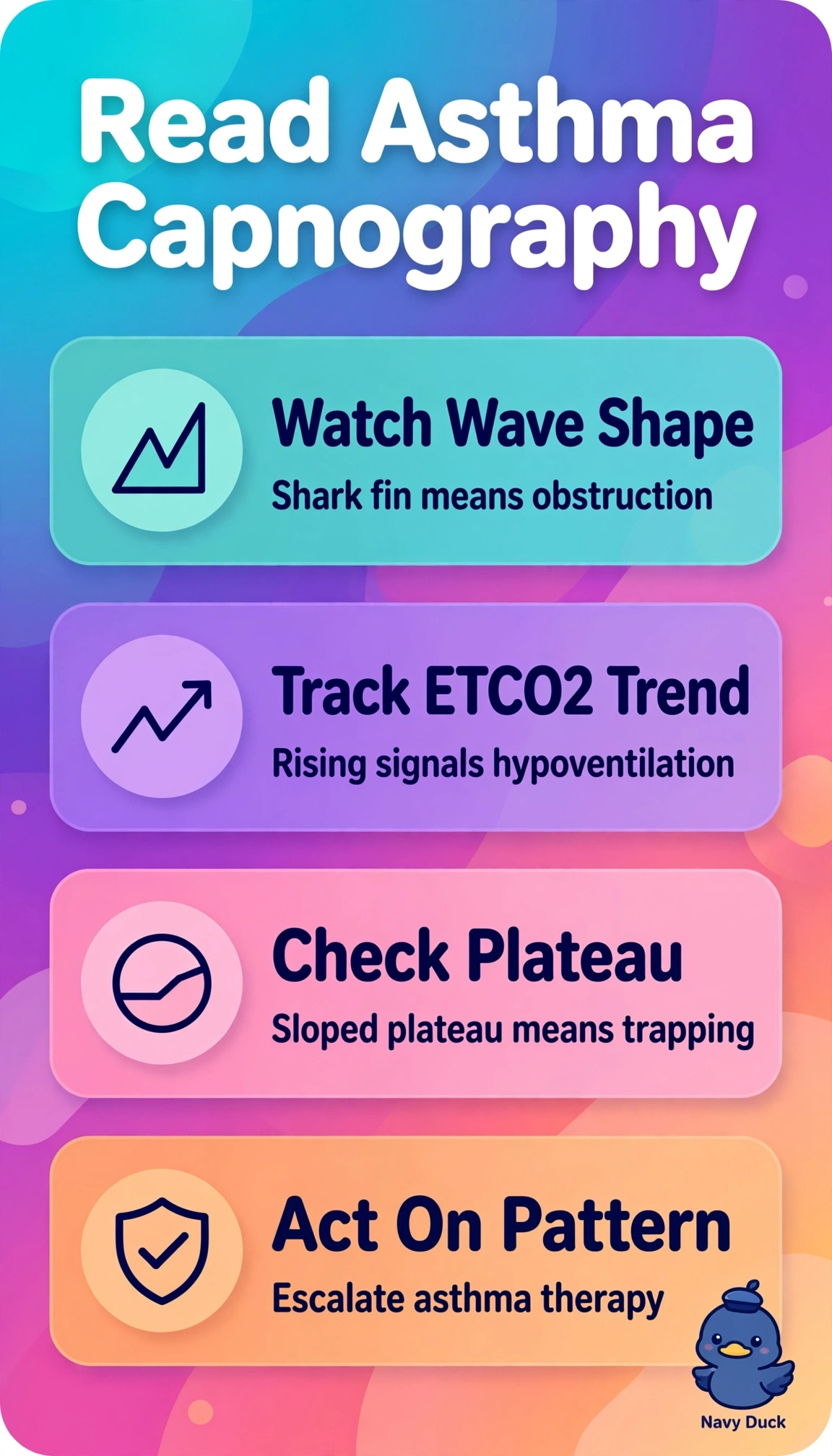
You’re seeing a rising ETCO2 and a shark-fin waveform, which point to trapped air and worsening ventilation from severe bronchospasm. Trust the trend and waveform as you guide the next step, because capnography can reveal deterioration before oxygen levels crash.
Full Explanation
In status asthmaticus, prolonged expiration and tachypnea alongside a shark-fin capnogram, sloping alveolar plateau, and rising ETCO2 to 48 mm Hg indicate uneven alveolar emptying, air trapping, and hypoventilation from severe bronchospasm; the fast respiratory rate does not rule out fatigue. This finding should prompt escalation of therapy and close readiness for higher respiratory support. An SpO2 of 93% on 2 L does not establish adequate ventilation: supplemental oxygen can maintain saturation while CO2 climbs and work of breathing worsens. Interpreting ETCO2 of 48 with tachypnea as effective alveolar hyperventilation reverses the physiology; true hyperventilation generally lowers ETCO2, while obstruction and prolonged expiratory time constants can raise it. Cannula sampling artifact can distort waveform and absolute values through dilution or mouth breathing, but dismissing this characteristic trace is not justified when prolonged expiration and distress agree with it. Exam caveat: nasal ETCO2 may underestimate PaCO2 when obstruction and ventilation-perfusion mismatch are severe, so interpret the trend and waveform with the clinical picture, not a single threshold. At bedside, check cannula position and patency, nasal breathing, secretions, and kinking; reassess retractions, air entry, speech, alertness, and fatigue, and obtain a blood gas with senior support if hypercapnia persists.