
A ventilated adult with new fever, purulent secretions, and left-lobe infiltrate has sputum Gram stain showing many neutrophils with gram-negative rods and pending culture, plus a respiratory pathogen panel detecting rhinovirus. Which interpretation best guides respiratory isolation and secretion management?
Select an answer to reveal the explanation.
Short Explanation
Gram stain hints, culture proves, and panels add context. Acting on the bacterial signal keeps you precautious like carrying an umbrella when clouds gather before rain is confirmed.
Full Explanation
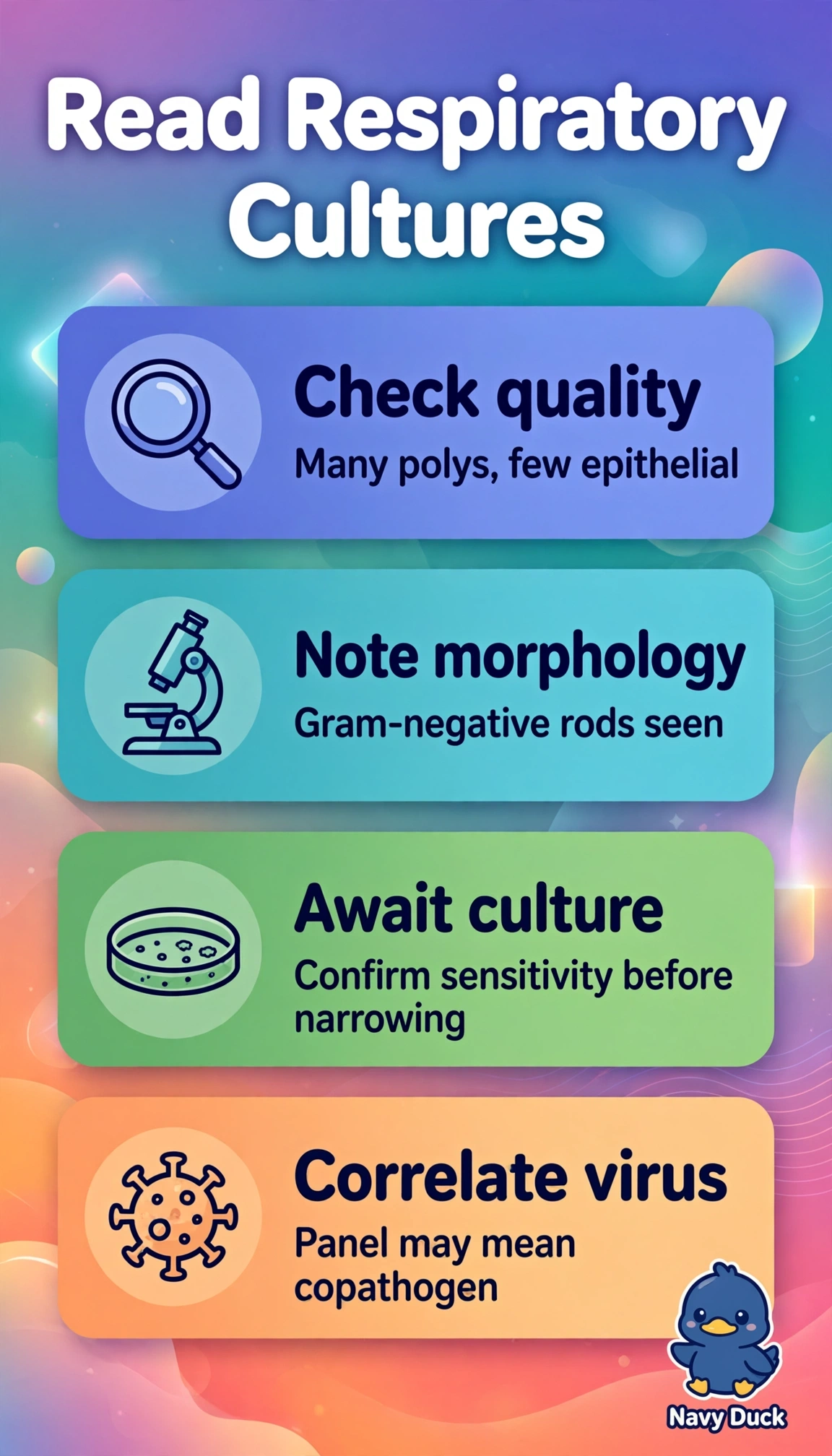
Gram stain provides rapid cellular and morphologic clues where neutrophils suggest acute bacterial inflammation and predominant gram-negative rods raise concern for nosocomial pneumonia, but definitive therapy requires culture with colony counts and sensitivity, while multiplex pathogen panels detect viral nucleic acid that may reflect colonization, prolonged shedding, or copathogen rather than sole cause and must be correlated with purulence, imaging, and severity to guide isolation, airway clearance, and antibiotic stewardship. Treating as likely gram-negative pneumonia with appropriate precautions pending sensitivities balances early coverage with stewardship. Attributing purulent neutrophilic sputum and infiltrate solely to rhinovirus ignores bacterial evidence and risks undertreatment. Selecting definitive narrow therapy from Gram stain alone bypasses resistance testing and risks mismatch. Stopping precautions because neutrophils are present misreads inflammation as reassurance despite fever, purulence, and infiltrate. Exam caveat: NBRC tests that Gram stain never replaces culture and viral detection does not exclude bacterial infection, and practical check is to verify specimen quality, review local antibiogram, maintain precautions, and optimize hydration and clearance.