
A 26-year-old with suspected tuberculosis needs sputum induction in a negative-pressure room, requiring gown, gloves, N95 respirator and face shield for droplet and airborne risks. Which donning and doffing sequence best applies Standard Precautions with isolation?
Select an answer to reveal the explanation.
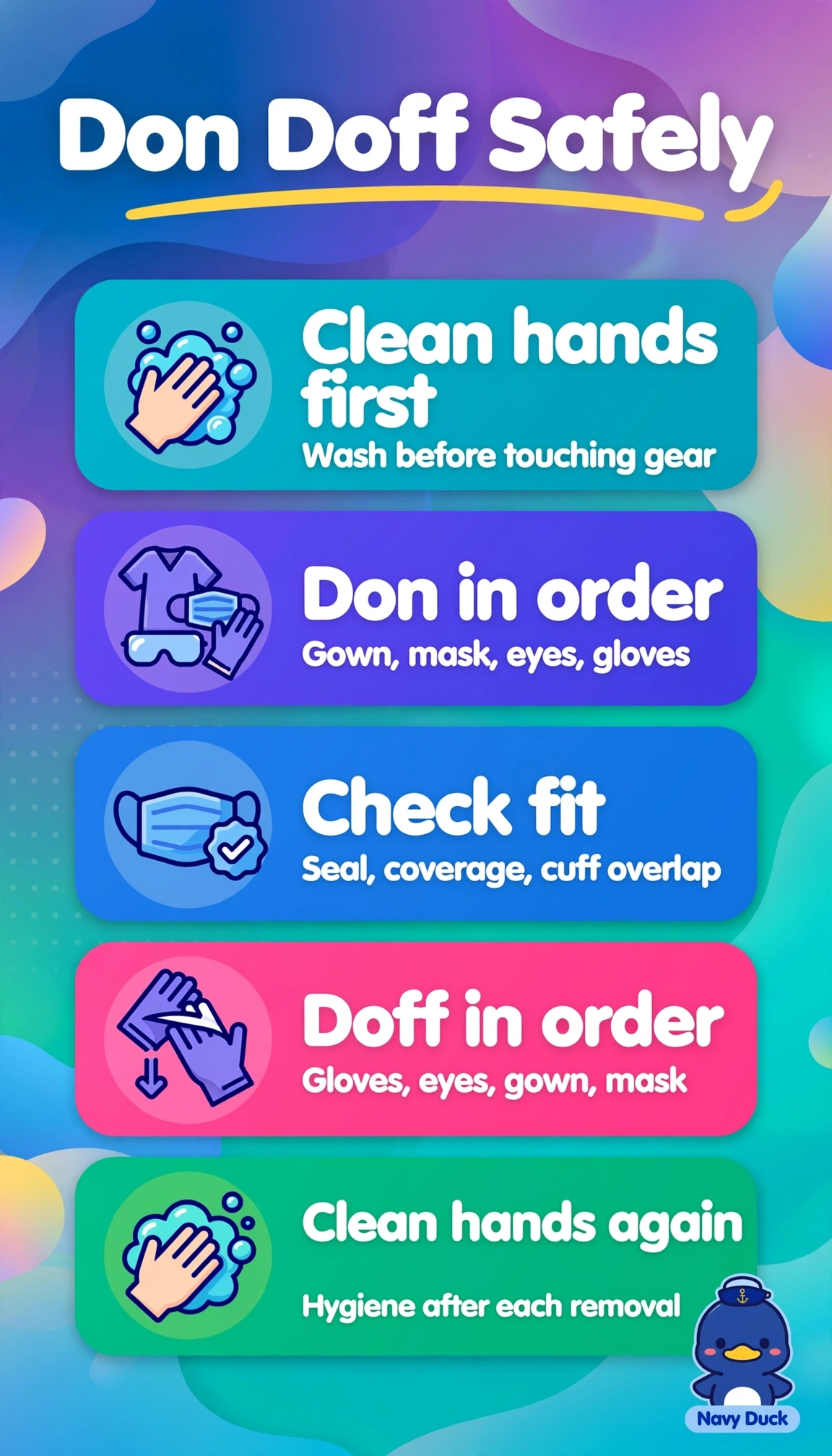
Short Explanation
You are protecting the cleanest air first and shedding the dirtiest gear first. Proper sequencing keeps germs off skin and face, like peeling muddy boots before touching clean clothes.
Full Explanation
Standard Precautions with airborne plus contact and droplet elements require hand hygiene followed by gown fully closed, then respirator or mask secured with fit check, then eye protection, then gloves extended over cuffs, and doffing reverses contamination risk by removing gloves first, then eye protection without touching front surfaces, then gown peeling inward, then respirator without touching front, with hand hygiene between critical steps and after completion. Donning gloves before gown and removing respirator first inside the room reverses protection because early glove contamination spreads to gown and face and early respirator removal exposes airway to airborne particles before leaving the contaminated zone. Donning respirator before hand hygiene and gown order errors plus removing multiple items together fails technique because contaminated surfaces touch clean skin and mucous membranes and combined removal prevents controlled peeling and disposal. Using a surgical mask instead of fit-checked N95 for suspected tuberculosis and removing everything together outside misunderstands airborne isolation because surgical masks do not provide required filtration and bundled removal spreads contamination during transport. Exam caveat is that NBRC tests exact order and that mask or respirator is always last off after leaving room or closing door, and practical check is to perform hand hygiene before donning and after doffing, inspect seal, avoid touching front surfaces, and dispose in designated containers.