
A 62-year-old with obesity hypoventilation syndrome, BMI 44, presents with daytime hypercapnia, nocturnal desaturation, and acute-on-chronic hypoxemic respiratory failure precipitated by cellulitis without neutropenia or new drug exposure. Which ventilatory management should the therapist prioritize for obesity-related hypoventilation with atelectasis and hypercapnia?
Select an answer to reveal the explanation.
Short Explanation
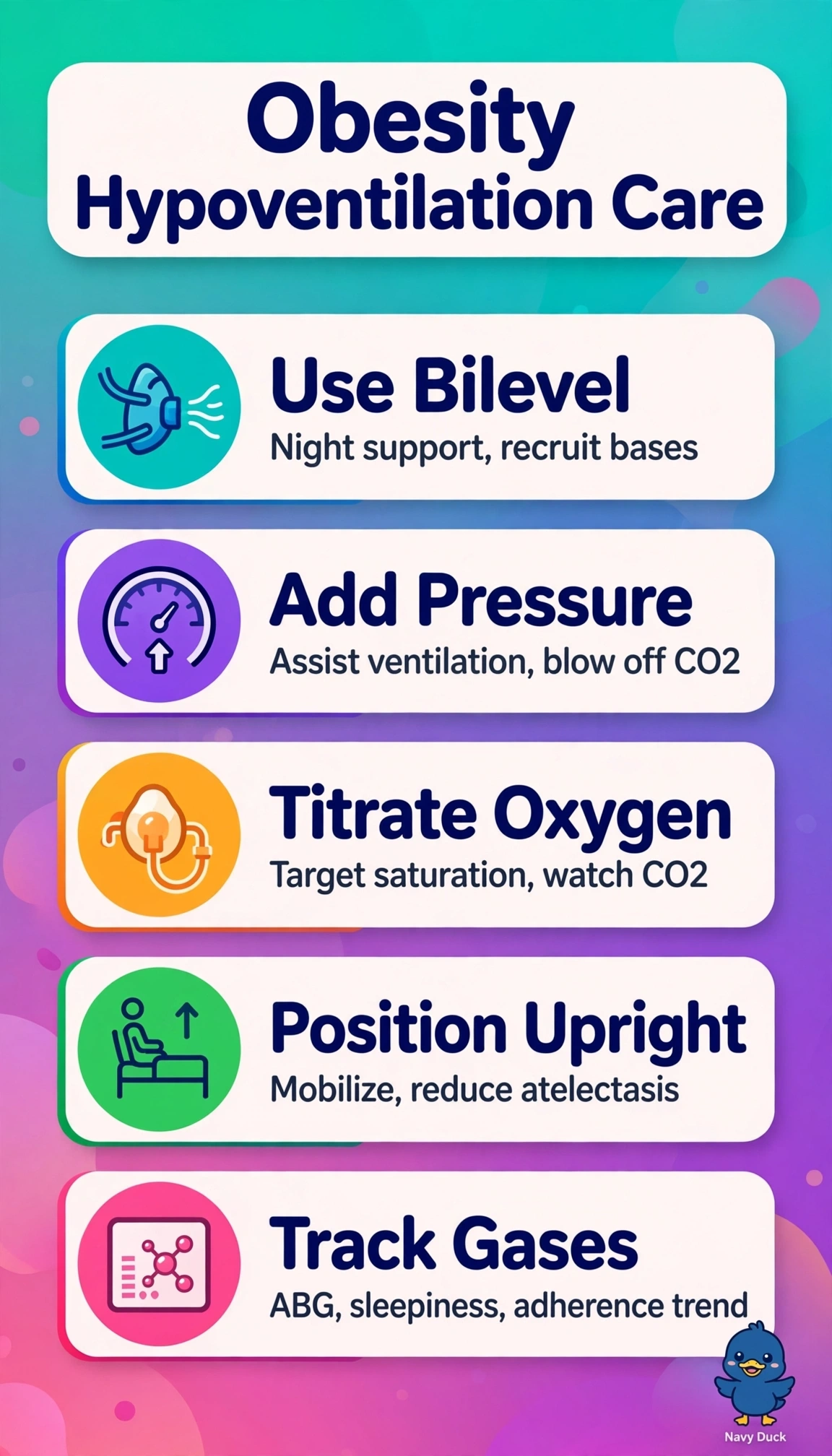
Extra weight squeezes the lungs like a tight belt you cannot loosen. Extra oxygen alone will not lift that load. Bilevel support unloads breathing at night, blows off CO2, and reopens bases.
Full Explanation
The prioritized management is correct because obesity hypoventilation with BMI 44, chronic daytime hypercapnia and nocturnal desaturation reflects sleep-related alveolar hypoventilation compounded by basal atelectasis, reduced chest-wall compliance and blunted drive, so nocturnal bilevel support augments tidal volume, rests muscles, recruits atelectasis and resets chemosensitivity while titrated oxygen relieves hypoxemia without worsening hypercapnia. Supplemental oxygen alone, although standard for isolated hypoxemia and desaturation, fails by gas-exchange concept because it provides no ventilatory assistance and may worsen hypercapnia through ventilation-perfusion mismatch and Haldane effect while leaving atelectasis unresolved. Fixed-pressure CPAP alone, although effective for obstructive apnea and airway patency, fails by support concept because it lacks the inspiratory-expiratory differential needed to augment alveolar ventilation when awake hypercapnia is established. Early invasive ventilation, although definitive for refractory failure, fails by proportionality concept because this acute-on-chronic illness precipitated by treatable cellulitis without neutropenia, collapse or noninvasive failure does not mandate immediate intubation and loses reversibility and airway defense. Exam caveat: distinguish pure apnea responsive to CPAP from hypoventilation with awake hypercapnia requiring bilevel support. Practical check: confirm falling daytime PaCO2, improved overnight oximetry, less morning headache and sleepiness, mask fit, adherence data and oxygen titrated to target saturation.