
A hospitalized adult with cardiogenic pulmonary edema is on bilevel NPPV with high unintentional leak, dry eyes, falling tidal volumes, and persistent SpO2 87% despite intact headgear and a full-face mask fitted yesterday. Which troubleshooting sequence best resolves CPAP/NPPV leak and interface failure?
Select an answer to reveal the explanation.
Short Explanation
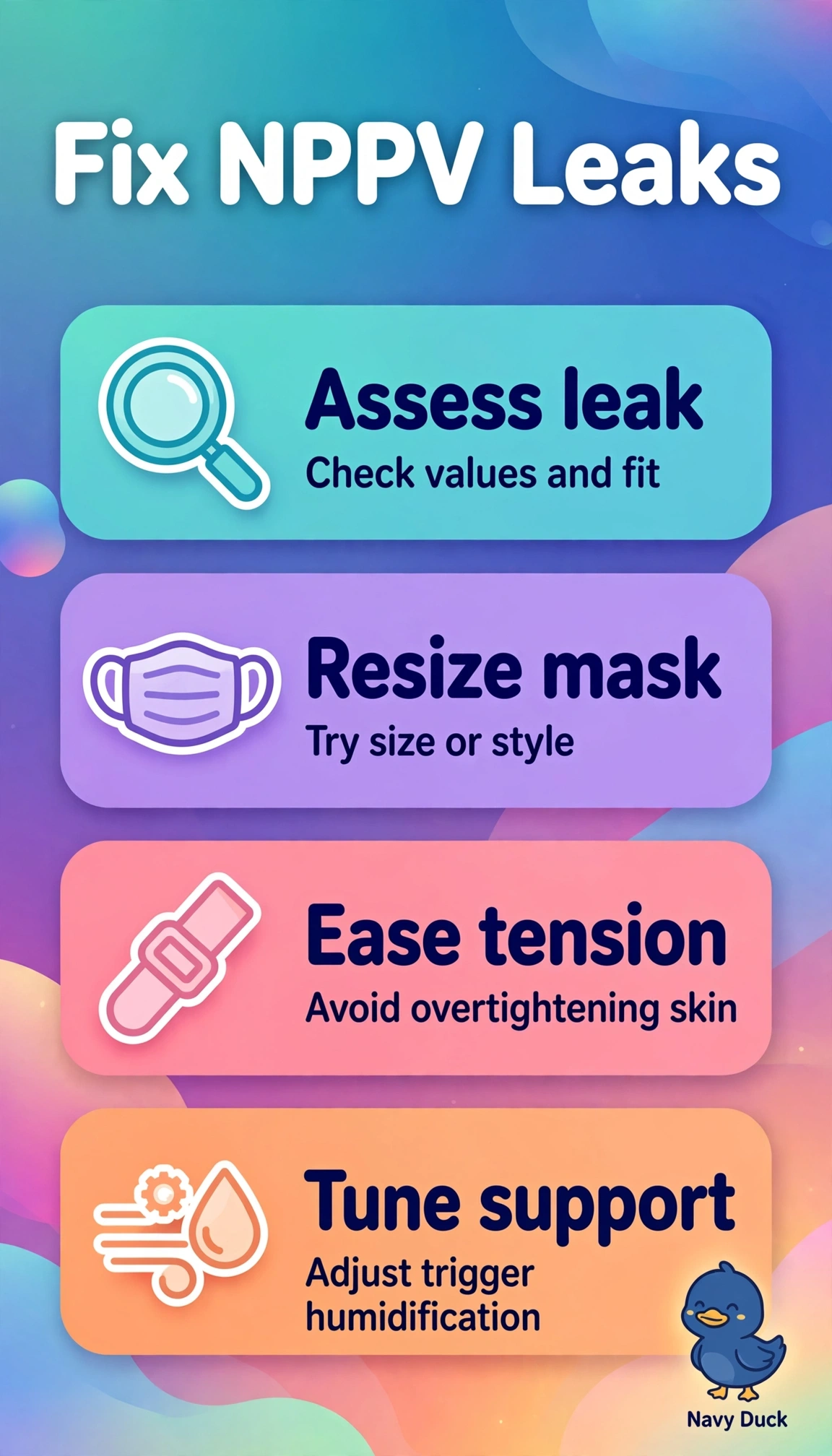
You've got this — leaks don't mean you need tighter straps, they mean your mask needs a kinder reset. Loosen up, refit for your best seal, and add humidity like putting a lid back on straight instead of forcing it down.
Full Explanation
Correct management addresses interface failure as the driver of hypoxemia because high unintentional leak reduces effective bilevel pressure and delivered tidal volume in pulmonary edema, so refitting and resizing restores seal, loosening overtight straps prevents cushion distortion and skin injury while stopping upward air escape that dries eyes, and optimizing leak compensation with humidification improves triggering, comfort and adherence to sustain recruitment. Retaining the same mask size and tension while only tuning humidification and alarms fails on sizing because compensation cannot overcome a mismatched cushion and leak persists with low volumes and SpO2 87%. Refitting with a new cushion but increasing strap tension to control leak fails on pressure mechanics because overtightening deforms the seal, worsens unintentional leak and eye irritation, and risks breakdown despite seeming intuitive. Resizing with looser straps and raising oxygen without humidification fails on airway conditioning because hypoxemia may briefly improve yet dry eyes and mucosal drying continue, undermining tolerance and seal. An exam caveat is to fix leak and fit before escalating inspiratory pressures when volumes fall with high leak. A practical check is to compare unintentional leak, exhaled tidal volume, SpO2 and eye and skin findings before and after refit while verifying humidifier output.