
A 55-year-old with acute bronchospasm receives albuterol MDI with spacer, but 30 minutes later wheeze, accessory muscle use and PEF 55% of personal best persist, with heart rate 112 and tremor. The order allows titration. Which therapy change based on response best addresses persistent bronchospasm?
Select an answer to reveal the explanation.
Short Explanation
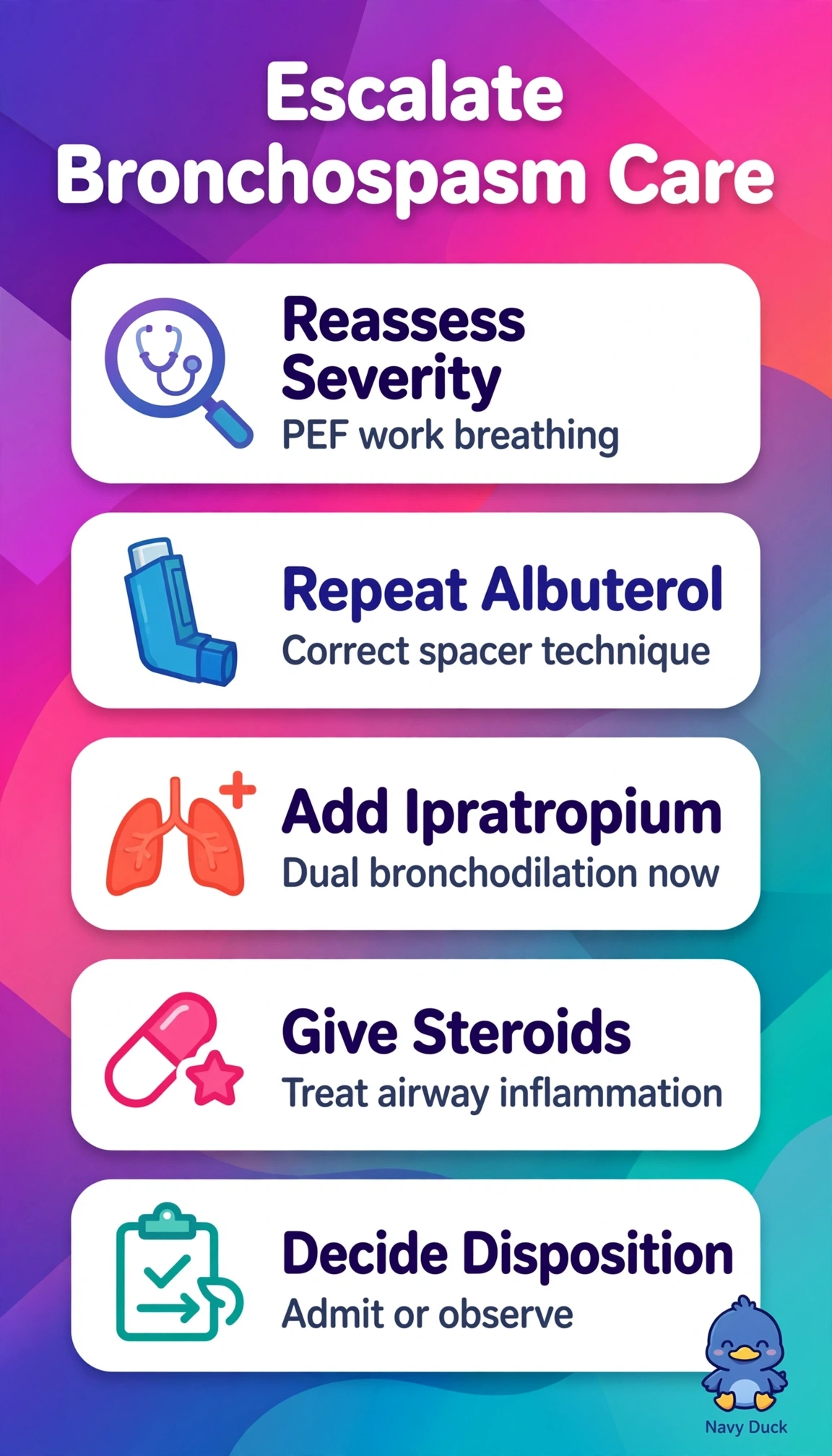
You're stepping up because the airway is still tight despite treatment. Adding ipratropium plus steroids tackles spasm and inflammation together.
Full Explanation
Persistent wheeze with accessory muscle use and PEF 55% of personal best 30 minutes after albuterol indicates moderate to severe incomplete response requiring escalation rather than maintenance, so repeating the short-acting beta-agonist maintains bronchodilation while adding ipratropium provides additive anticholinergic bronchodilation shown to benefit moderate-severe exacerbations and systemic corticosteroids address airway inflammation that bronchodilators do not, followed by reassessment to guide further titration per response-based orders. Repeating albuterol with monitoring but adding no other agents fails by under-escalation because guidelines require added anticholinergic and steroids for incomplete response with increased work of breathing and markedly reduced PEF rather than SABA alone. Giving systemic steroids while withholding further inhaled bronchodilation fails by mismatched timing and mechanism because steroids improve inflammation over hours and do not relieve acute smooth-muscle bronchospasm needing continued inhaled therapy. Holding albuterol because of heart rate 112 and tremor fails by misattributing expected pharmacologic effects, since sinus tachycardia and tremor are common beta-agonist effects and not absolute stop criteria when significant obstruction persists, requiring judgment balancing perfusion and rhythm risk. An exam caveat is to distinguish expected SABA effects from deterioration such as silent chest, falling PEF, altered mentation, or arrhythmia with hypotension that would prompt urgent escalation. A practical check is to confirm spacer technique, remeasure PEF with the same meter, trend pulse, respiratory rate, oximetry and work of breathing, and document response to each intervention before next titration.