
A 60-year-old in the ICU needs radial arterial line placement for hourly gases and blood pressure monitoring, is alert with a palpable radial pulse, normal Allen test, and no wrist infection. The physician asks respiratory therapy to assist with setup and moderate sedation monitoring if needed. Which assistance sequence best supports safe arterial catheter insertion?
Select an answer to reveal the explanation.
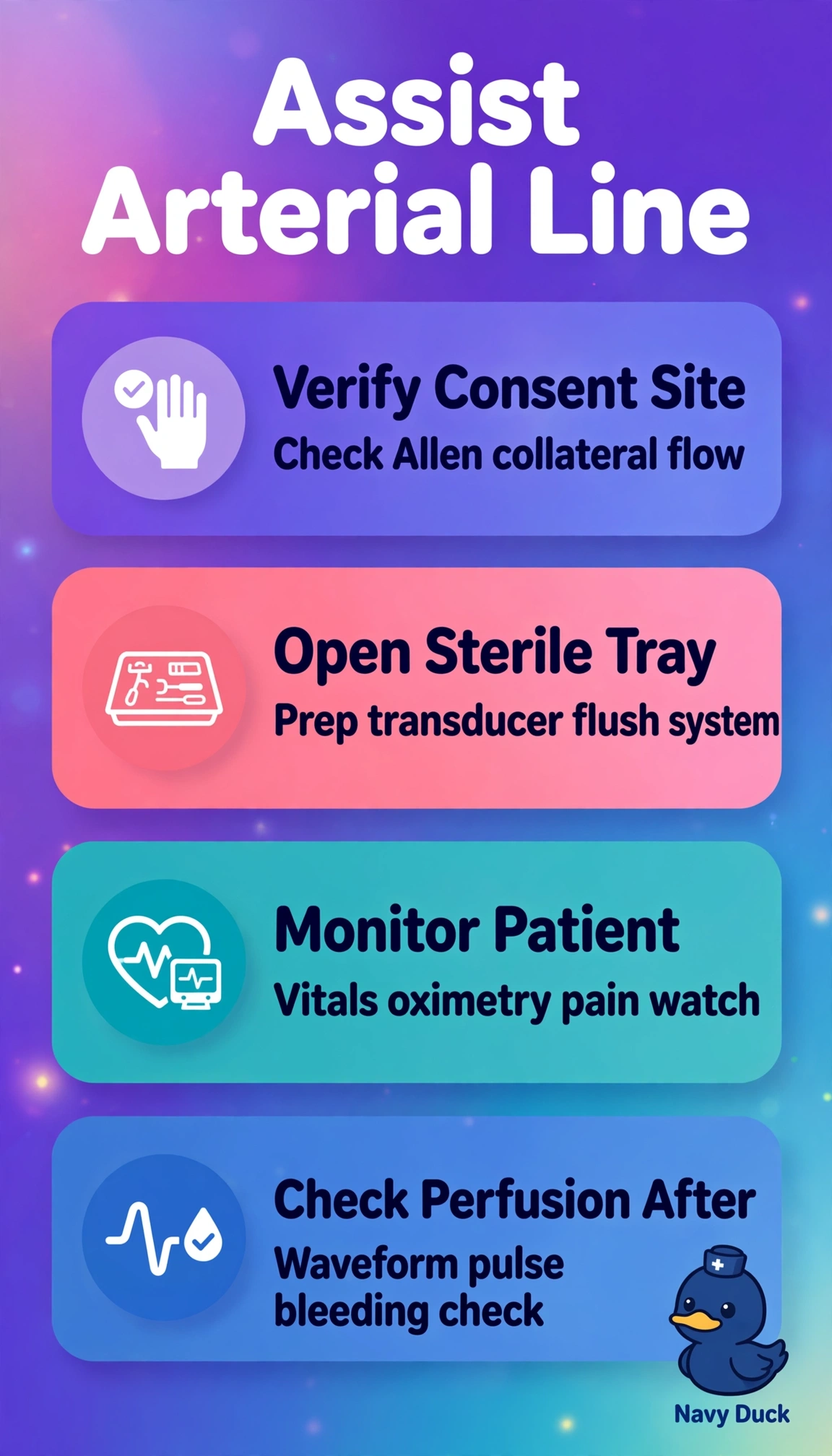
Short Explanation
Clean setup plus a quick perfusion check makes this stick safe and smooth. You set the stage for success with sterile-prep and watchful monitoring throughout.
Full Explanation
The correct sequence is right because hourly arterial gases with continuous pressure monitoring in an alert ICU patient with a palpable radial pulse, normal Allen result, and no wrist infection makes the radial artery the indicated site, and assisting with sterile tray setup plus verification of informed consent and documented collateral flow followed by continuous vital-sign and pulse oximetry surveillance directly supports both aseptic insertion and readiness for moderate sedation if required. The response that substitutes palpable pulse for Allen verification fails by the concept of collateral safety, since patency alone does not prove ulnar compensation if radial thrombosis or spasm occurs. The response that substitutes venous sampling while otherwise preparing correctly fails by the concept of indication, since venous values cannot replace arterial oxygenation, ventilation, and beat-to-beat pressure data required hourly. The response that directs the same preparation and monitoring toward ulnar cannulation fails by the concept of site selection, since a suitable radial site with normal collateral testing and clean tissue should be preferred over a deeper, less standard artery with higher neurovascular risk. An exam caveat is that palpability, consent, sterility, and monitoring can all be correct yet still be insufficient if collateral verification, arterial source, or guideline-preferred site is wrong, so read every element rather than stopping at familiar steps. A practical bedside check is to pause for consent documentation, restate Allen findings, confirm a sterile field and flush system, ensure pulse tone and alarms are active, then confirm a sharp arterial waveform and adequate perfusion after insertion.