
A 26-year-old with severe traumatic brain injury is intubated with an intracranial pressure monitor reading 24 mm Hg, blood pressure 138/82 mm Hg, PaCO2 42 mm Hg, and SpO2 94% on volume control ventilation. Serum sodium is normal and sedation is adequate with head of bed at 15 degrees. Which ventilator-related adjustment best manages elevated intracranial pressure?
Select an answer to reveal the explanation.
Short Explanation
Your lungs and brain are on the same team when pressure climbs. Gentle CO2 control plus good drainage helps fast, so normocapnia with elevation is the balanced fix.
Full Explanation
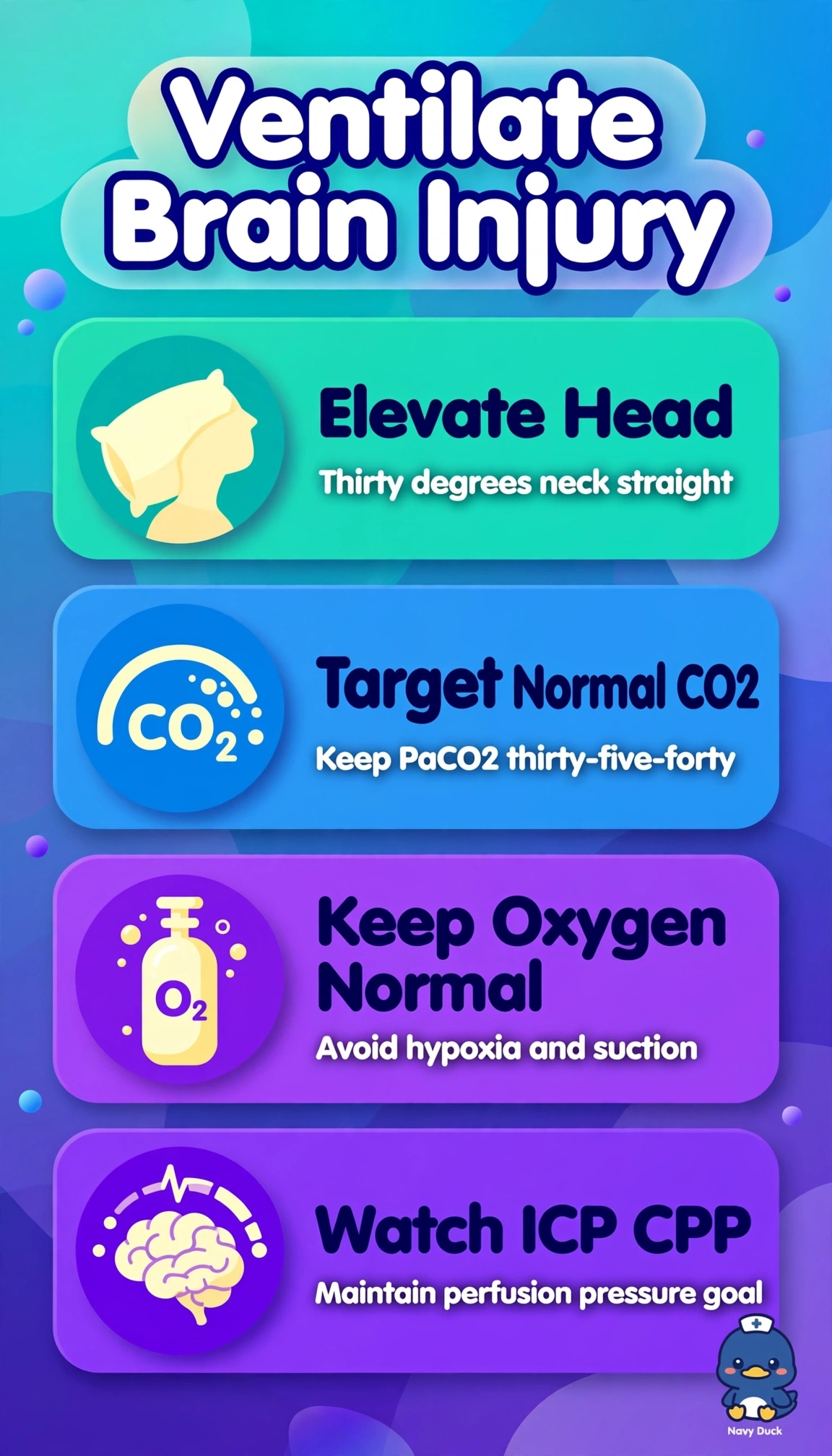
The correct adjustment combines improved venous drainage with controlled CO2 reactivity because ICP 24 exceeds the 20 treatment threshold while MAP near 100 preserves perfusion, so raising head of bed from 15 to 30 degrees with strict neck neutrality reduces jugular obstruction and hydrostatic congestion, and lowering PaCO2 from 42 to 35-38 produces mild vasoconstriction that decreases cerebral blood volume and ICP without ischemic risk. Maintaining lung protective ventilation with permissive hypercapnia accepting PaCO2 46-50 is standard for ARDS but fails here because hypercapnia is a potent cerebral vasodilator that increases blood flow and volume and directly worsens intracranial hypertension. Increasing PEEP to 14 to push SpO2 above 96 percent is routine for significant hypoxemia but fails here because high intrathoracic pressure impedes cerebral venous return and can lower MAP and cerebral perfusion pressure for negligible gain when SpO2 94 percent is acceptable. Using brief hyperventilation to PaCO2 28-30 is accepted as temporizing rescue for active herniation but fails here because profound sustained hypocapnia causes ischemic vasoconstriction without herniation signs or instability to justify it. Exam caveat is to avoid prophylactic severe hyperventilation and maintain CPP 60-70 while preventing hypoxia hypotension fever and hyponatremia. Practical check is to verify EtCO2 to arterial correlation, ventilator synchrony, tie looseness, transducer level, and remeasure ICP MAP and gases after changes.