
At shift change in a busy ICU, a therapist must hand off a ventilated adult with ARDS on lung-protective settings, prone-positioning schedule, norepinephrine infusion, and a planned spontaneous breathing trial in the morning. Which handoff communication best ensures continuity and timely escalation of concerns?
Select an answer to reveal the explanation.
Short Explanation
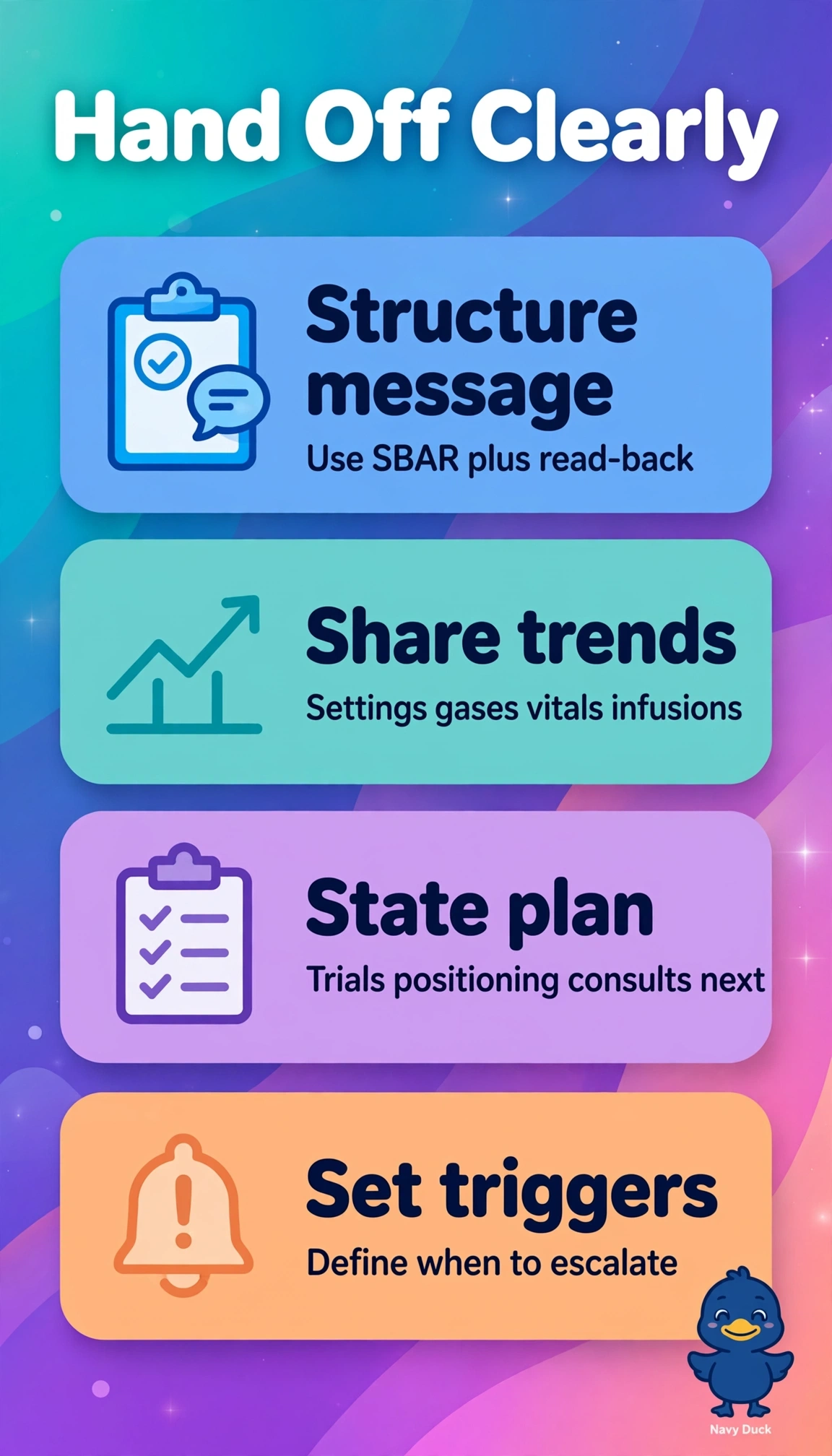
When acuity runs high across teams, details can slip fast. You keep everyone aligned with a structured handoff that passes the baton clearly and safely.
Full Explanation
Structured SBAR covering settings, trends, infusions, the plan, and escalation triggers is best because this patient combines lung-protective ventilation, prone therapy, norepinephrine, and planned liberation. Including current information and what comes next in a structured format helps prevent omissions during a busy shift change and supports timely escalation. A bedside handoff detailing protective settings, prone timing, pressor dose, and trial readiness still lacks escalation thresholds, leaving the oncoming therapist without predefined criteria for worsening hypoxemia, hypotension, dyssynchrony, or alarm response. SBAR covering ventilator trends, infusion rates, escalation criteria, and the morning trial plan omits the prone schedule, which matters for oxygenation, lung recruitment, skin integrity, sedation needs, and staffing. Concise SBAR with protective settings, prone schedule, pressor trends, and escalation thresholds omits the morning spontaneous breathing trial, disrupting liberation planning, including eligibility, sedation management, and multidisciplinary coordination. Exam caveat: when a stem lists multiple high-risk therapies and a future intervention, a handoff missing even one element may be incomplete; completeness matters more than brevity. Practical check: use read-back to confirm settings, the next prone turn, norepinephrine dose and titration limits, trial timing and prerequisites, and exact call parameters for oxygenation, blood pressure, and ventilator alarms.