
A 58-year-old intubated for pneumonia has improved infiltrates, is alert, cough is strong, secretions are scant, RSBI 68, passed 30-minute spontaneous breathing trial on pressure support, and cuff leak is audible. Which airway liberation recommendation best fits this extubation readiness?
Select an answer to reveal the explanation.
Short Explanation
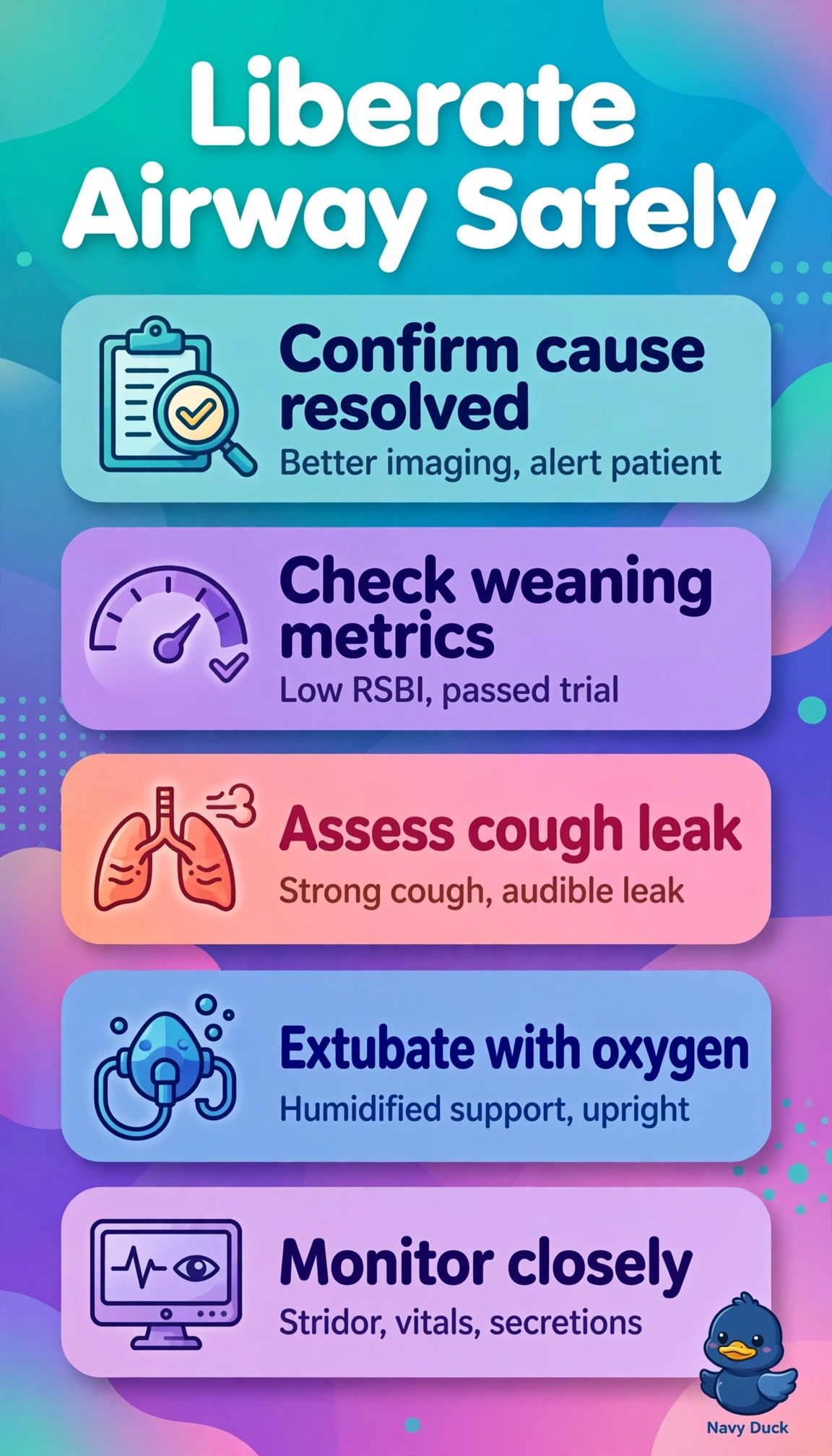
You gathered every green light for liberation in one picture. A passed trial plus strong cough and cuff leak means the airway is ready, like clearing all checks before takeoff.
Full Explanation
This patient shows integrated extubation readiness with resolving pneumonia infiltrates, alert airway protection, strong cough with scant secretions, RSBI 68 well below failure threshold, successful 30-minute pressure-support trial, and audible cuff leak indicating patent peritubal airway, so extubation to humidified oxygen with vigilant monitoring is appropriate because humidification preserves mucociliary clearance while surveillance for stridor, work of breathing, hypoxemia, hypercapnia, and mentation permits early rescue. Prophylactic bilevel ventilation after extubation fails by risk-stratification concept because it is reserved for high-risk phenotypes such as hypercapnia, heart failure, weak cough, or copious secretions rather than this alert, strong-cough, low-secretion success. Extending to a two-hour T-piece trial fails by timing concept because a validated 30-minute trial with favorable physiology is sufficient and delay prolongs sedation, aspiration, and ventilator-associated pneumonia risk without added prediction. Prophylactic steroids for edema fails by patency concept because benefit concentrates when leak is absent or diminished, while audible leak predicts low stridor risk and steroids add glycemic and infectious cost. Exam caveat is to distinguish weaning from airway readiness and not equate pneumonia history alone with need for escalation. Practical check is to confirm leak, keep suction and reintubation equipment at bedside, give titrated humidified oxygen, and reassess rate, accessory-muscle use, voice, stridor, and secretions within minutes to hours.