
A 55-year-old with pneumonia-derived ARDS on volume control has PaO2/FiO2 110 on FiO2 0.70, PEEP 12 cm H2O, plateau pressure 29 cm H2O, and bilateral infiltrates without cardiogenic edema, remaining severely hypoxemic after 12 hours. Which lung-protective escalation should the therapist recommend for moderate-severe ARDS with refractory hypoxemia?
Select an answer to reveal the explanation.
Short Explanation
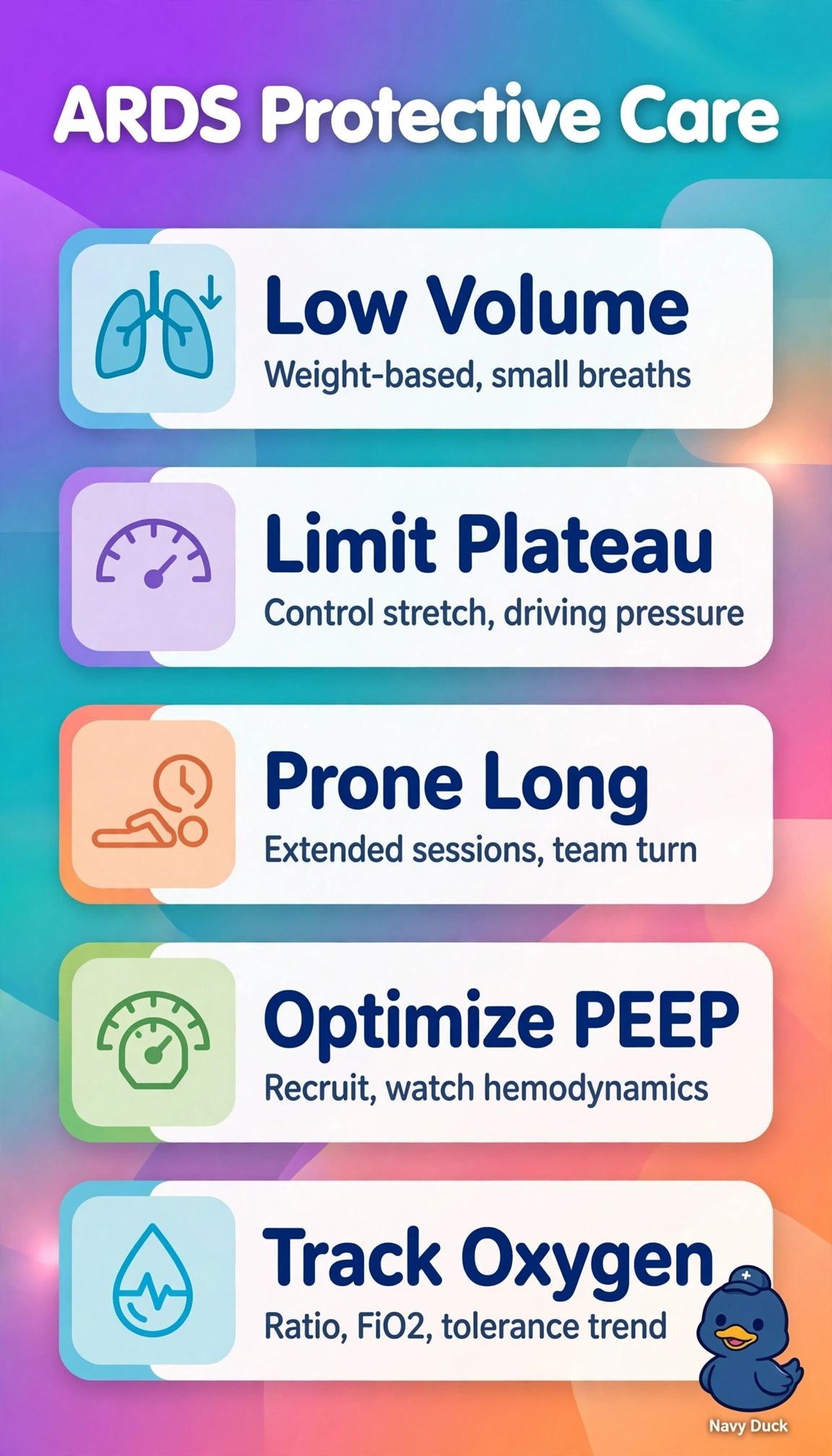
You're protecting fragile lungs when you've got this level of hypoxemia, so you'll want to keep breaths small and pressures capped while turning your patient prone for long stretches. That's like flipping a soggy sponge so air and blood can finally meet where they couldn't before.
Full Explanation
ARDS involves heterogeneous flooded and collapsed alveoli vulnerable to volutrauma, barotrauma, and atelectrauma, so lung protection limits tidal stretch and driving pressure while prone positioning recruits dorsal lung, homogenizes transpulmonary pressure, and improves ventilation-perfusion matching without raising airway pressure. Maintaining approximately 6 mL/kg predicted body weight, plateau below injurious thresholds, and prone sessions typically exceeding twelve hours addresses both injury mechanism and refractory hypoxemia. Increasing tidal volume to normalize PaCO2 with aggressive recruitment fails by prioritizing normocapnia over protection, raising plateau and transpulmonary pressure and risking overdistension while brief high-pressure maneuvers offer transient gains with hemodynamic risk. Reducing PEEP and remaining supine fails by promoting derecruitment and shunt in moderate-severe disease, worsening hypoxemia and requiring higher FiO2 rather than optimizing recruited volume. Large spontaneous breaths with high support fails by permitting excessive transpulmonary pressure swings and patient self-inflicted lung injury, losing the control needed for lung rest and synchrony. Exam caveat is to use predicted body weight for tidal volume, monitor plateau, driving pressure, and hemodynamics, and screen proning contraindications. Practical check is to verify PaO2/FiO2 trends, plateau pressure, sedation and skin protection, and readiness to de-escalate FiO2 after proning.