
A 58-year-old fell from a ladder, sustaining left ribs 5-8 fractures with visible paradoxical motion, severe pleuritic pain, splinting, SpO2 88% on 2 L nasal cannula, and tachypnea at 28/min. Blood pressure is stable and no pneumothorax is seen. Which initial respiratory management strategy should the therapist recommend for flail chest with hypoxemia?
Select an answer to reveal the explanation.
Short Explanation
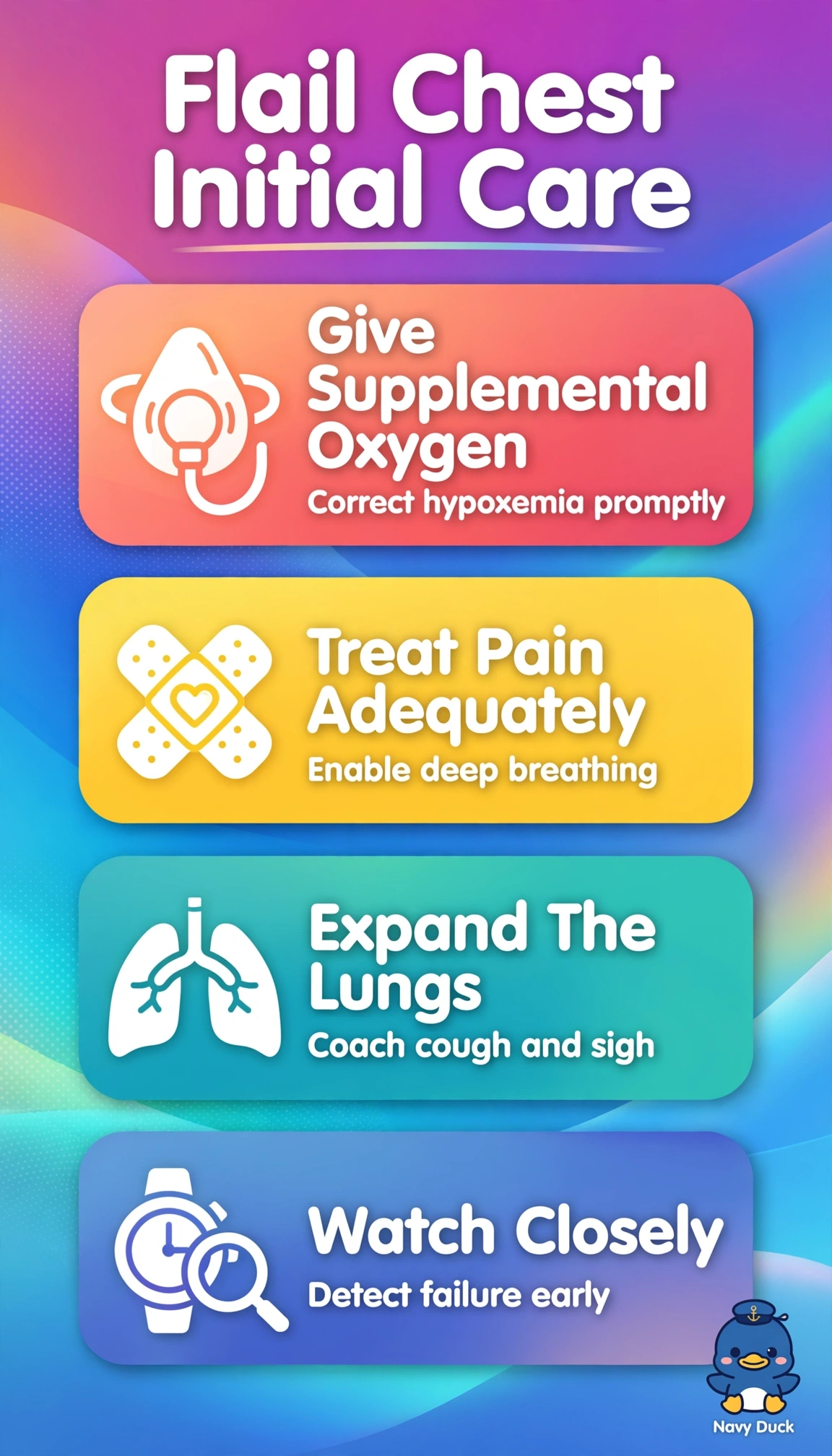
You’re helping a sore chest breathe deeply again without forcing it. When you pair oxygen with pain relief and coaching, analgesia loosens the “tight belt” of splinting so you can restore lung expansion and cough.
Full Explanation
Flail chest with paradoxical motion and severe pain causes splinting, low tidal volumes, atelectasis and hypoxemia. Because this patient is stable and has no pneumothorax, initial care is supplemental oxygen titrated to correct desaturation, effective analgesia to restore chest excursion and cough, and coached lung expansion to reduce pneumonia risk. This addresses the tachypnea, SpO2 of 88% and splinting without premature invasive treatment. Providing oxygen and encouraging expansion and coughing without treating severe pain fails because uncontrolled pleuritic pain can prevent deep inspiration and effective cough, allowing secretions to persist. Continuing 2 L by nasal cannula despite titrated analgesia fails because persistent hypoxemia shows that the current oxygen delivery is inadequate and needs titration rather than simple continuation. Arranging urgent operative fixation as initial management fails on prioritization: fixation is selective and does not replace immediate bedside oxygenation, analgesia and lung expansion in a stable patient. Exam caveat: intubation, ventilation or surgery may be needed for refractory hypoxemia, hypercapnia, instability, deterioration or failure of conservative measures, but stable flail chest alone does not make them the initial strategy. Practical check: reassess pain, respiratory rate and effort, SpO2, mental status and breath sounds frequently; titrate oxygen to target and escalate promptly if work of breathing increases or blood gases worsen.